I still remember sitting in a cramped lab at Georgia Tech, staring at a series of failed lithium-ion cells that looked perfectly fine on the outside but were absolutely dead on arrival. It wasn’t a manufacturing error or a bad batch of electrolyte; it was a fundamental misunderstanding of the material science at the core. Most people looking for a cathode chemistry guide are going to be fed a diet of marketing buzzwords about “infinite range” and “eco-friendly breakthroughs” that don’t actually hold up under a microscope. I’m tired of seeing the industry gloss over the actual hardware just to sell a dream of seamless electric mobility.
I’m not here to give you a glossy brochure or a sales pitch for the latest startup’s proprietary blend. Instead, I’m going to strip away the corporate greenwashing and look at the raw data behind the elements. This is going to be a pragmatic, deep dive into how different cathode compositions actually behave when they’re pushed to their limits in the real world. By the time we’re done, you’ll understand the real trade-offs between energy density, cycle life, and cost, so you can actually see through the hype.
Table of Contents
Decoding the Specific Capacity of Cathode Materials

When we talk about how much “juice” a battery can actually hold, we’re really talking about the specific capacity of cathode materials. Think of it like the fuel tank of an electric vehicle, but instead of liquid volume, we’re measuring how many lithium ions can physically shuttle in and out of the crystal structure during a charge cycle. If the host lattice is too cramped or rigid, you’re essentially leaving energy on the table. In my lab days at Georgia Tech, we saw this constantly: if you can’t move those ions efficiently, your energy density tanks, regardless of how much lithium you’ve pumped into the mix.
This is where the real engineering battle happens. When we analyze NMC cathode performance, we aren’t just looking at a single number; we’re looking at how much charge we can squeeze out before the material starts to physically break down. If you push the capacity too far by overcharging or using extreme temperature swings, you risk triggering thermal runaway and cathode degradation. It’s a delicate balancing act between wanting a massive range and needing a battery that won’t turn into a brick after three years of heavy use.
Why Lithium Ion Battery Electrode Materials Actually Matter
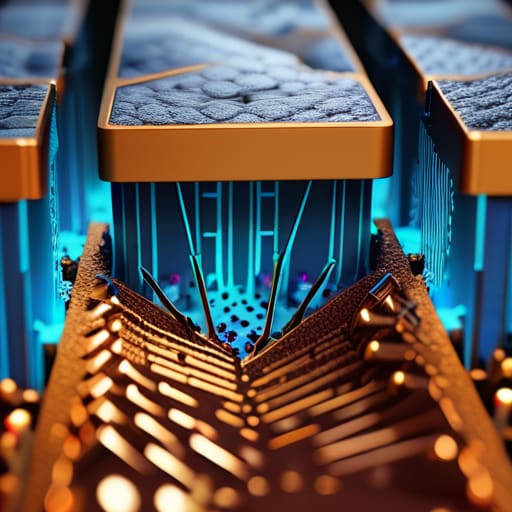
Look, it’s easy to get lost in the marketing jargon about “range anxiety” or “fast charging,” but if you want to understand why an EV actually performs the way it does, you have to look at the hardware level. The lithium-ion battery electrode materials are essentially the engine room of the entire cell. Everything from how much energy you can cram into a single pack to how many years that pack will actually last comes down to the atomic-scale dance happening between the anode and the cathode. If the chemistry is sloppy, the performance will be too.
When we talk about real-world utility, we’re really talking about the stability of those materials under stress. For instance, high-performance setups often rely on NMC cathode performance to balance energy density with longevity, but there’s always a trade-off. If the crystal structure of the cathode can’t handle the constant shuffling of ions, you start seeing structural collapse. It’s not just about theoretical numbers on a spec sheet; it’s about preventing thermal runaway and cathode degradation before they even become a possibility in the field.
How to Actually Read Between the Lines of Battery Specs
- Stop obsessing over just energy density; you need to look at cycle life. A battery that packs a huge punch but dies after 300 cycles is just expensive e-waste in the making.
- Watch the cobalt levels like a hawk. If a company isn’t being transparent about their cobalt sourcing or their move toward high-nickel/low-cobalt chemistries, they’re likely ignoring the massive ethical and supply chain bottlenecks.
- Don’t let “solid-state” marketing hype fool you. It’s the holy grail, sure, but until we see scalable manufacturing processes that don’t cost a fortune, it’s still more lab theory than road-ready reality.
- Pay attention to thermal stability in the data sheets. High capacity is great until the cathode becomes chemically unstable at high temperatures—then you aren’t looking at a battery, you’re looking at a thermal runaway risk.
- Look for LFP (Lithium Iron Phosphate) in stationary storage or budget EVs. It might not have the same range as NMC, but the chemistry is way more robust and sustainable for long-term, heavy-duty cycling.
The Bottom Line: Why the Chemistry Matters
Energy density isn’t just a buzzword; it’s the difference between an EV that actually gets you across the state and one that leaves you stranded because the cathode couldn’t hold enough charge.
We have to look past the marketing hype and realize that the specific material composition—whether it’s LFP or NMC—dictates everything from how much you’ll pay for the car to how many years the battery will actually last before it degrades.
A sustainable transition requires more than just “going electric”; it requires a hard look at the supply chain and the chemical stability of these cells so we aren’t just trading one environmental crisis for another.
## The Real Cost of the Chemistry
“If we’re going to move the needle on electric mobility, we have to stop treating the cathode like a black box. You can have the slickest software in the world, but if your chemistry can’t handle the cycle life or the energy density requirements, you’re just building a very expensive paperweight.”
Desmond Achebe
The Real Bottom Line

At the end of the day, understanding cathode chemistry isn’t just for people like me working in grid analysis or lab settings; it’s the foundation of the entire electric transition. We’ve looked at how specific capacity dictates your range and why the choice between LFP and NMC determines whether your battery survives a decade of heavy use or starts degrading after three years. It’s easy to get lost in the marketing jargon about “next-gen tech,” but if you strip away the corporate fluff, it all comes down to the molecular stability of the cathode and how efficiently it can move ions without falling apart. If we don’t get the hardware right, the software and the charging networks won’t matter.
I’m genuinely optimistic about where we’re heading, but I’m not going to sit here and tell you that the road is easy. The shift from gas-guzzlers to high-density storage is going to be messy, and we are going to see a lot of “breakthroughs” that turn out to be nothing more than incremental tweaks. However, if we prioritize true material sustainability and demand better engineering over cheaper manufacturing, we can actually build a grid that lasts. The hardware is catching up to the hype—we just have to make sure it’s built to stay there.
Frequently Asked Questions
If we switch to LFP (Lithium Iron Phosphate) to save on costs and ethics, how much range am I actually sacrificing in the real world?
Look, it’s the classic trade-off: cost and longevity versus pure energy density. If you swap NCM for LFP, you’re looking at a roughly 20-30% drop in theoretical range because LFP just can’t pack as many ions into the same footprint. But here’s the catch—LFP handles daily charging way better. You can hammer a 100% charge every night without the same degradation fears, so your “real world” usable range might actually stay more consistent over time.
How much does the thermal stability of these different chemistries actually impact the long-term degradation of the cell?
Look, if the chemistry can’t handle the heat, the battery is basically a ticking clock. High thermal instability isn’t just a safety risk; it’s a degradation accelerator. When a cell runs hot, you trigger parasitic side reactions that eat away at your electrolyte and grow that nasty SEI layer thicker every cycle. It’s like running an engine without coolant—sure, it works for a bit, but you’re structurally compromising the hardware until the capacity just tanks.
We talk a lot about capacity, but how do these specific cathode materials handle high-speed charging without causing massive dendrite growth?
That’s the million-dollar question. When you slam a massive amount of current into a cell, you’re basically forcing lithium ions to move faster than the electrolyte can smoothly distribute them. If the cathode structure isn’t optimized, those ions pile up at the anode interface instead of intercalating, creating those nasty metallic spikes we call dendrites. To fight this, we’re looking at doped crystal structures and specialized coatings that act like high-speed lanes, keeping the ion flux steady even during a fast charge.