
I remember sitting in my dorm at Georgia Tech, surrounded by half-disassembled lithium cells and the smell of ozone, staring at a data sheet that promised a revolution that just wasn’t happening. Everyone in the media loves to talk about “range anxiety” like it’s some psychological glitch we just need to “overcome” with more marketing or bigger, heavier battery packs. But let’s be real: you can’t just manifest more miles. When you’re staring at a 5% SoC (state of charge) on a highway in the middle of nowhere, it isn’t a mental hurdle; it’s a fundamental hardware failure between the energy density of the cell and the reality of the grid.
I’m not here to sell you on the dream of a seamless electric future or to parrot the glossy brochures from legacy automakers. Instead, I want to pull back the curtain on the actual chemistry and the infrastructure bottlenecks that are keeping us tethered to the gas station. We’re going to stop chasing vague promises and start looking at the real engineering constraints that dictate how far you can actually go. If we want to kill range anxiety for good, we have to stop treating it like a feeling and start treating it like a technical problem that needs a technical solution.
Table of Contents
- Why Lithium Ion Battery Longevity Dictates Your True Freedom
- The Brutal Reality of Winter Driving Range Impact
- Stop Guessing and Start Managing: 5 Ways to Actually Handle Range Anxiety
- The Bottom Line: Moving Past the Marketing Fluff
- The Real Math of Range Anxiety
- The Bottom Line on Range
- Frequently Asked Questions
Why Lithium Ion Battery Longevity Dictates Your True Freedom
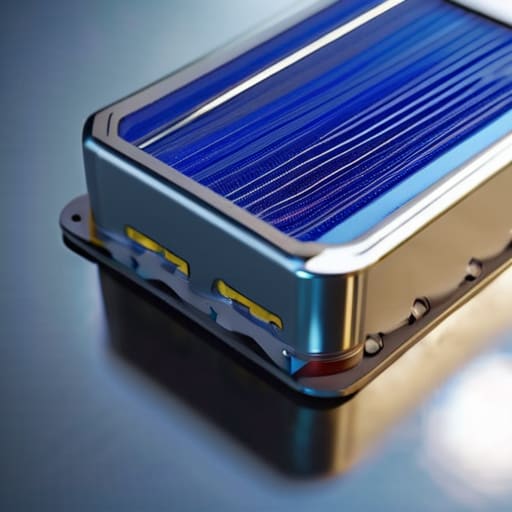
We need to stop treating an EV like a smartphone that you just plug in and forget about. When you’re looking at a car, you aren’t just looking at the miles it can hit on a single charge; you’re looking at the total lifecycle of those cells. To me, true freedom isn’t just about a massive battery pack; it’s about lithium-ion battery longevity. If your capacity drops by 20% after just a few years of heavy use, that “freedom” to road trip becomes a mathematical nightmare of diminishing returns.
I spent way too many hours in the Georgia Tech labs watching how cycle life degrades under stress, and it taught me one thing: the chemistry is the boss. You can have the most advanced EV route planning tools in the world, but if your battery’s internal resistance is spiking because the cells are aging prematurely, those tools are just helping you manage a decline. Real independence comes from hardware that maintains its energy density over a decade, not just a few thousand miles. We need batteries that can handle the grind without losing their soul.
The Brutal Reality of Winter Driving Range Impact

Look, we need to stop pretending that a battery’s rated range is a universal constant. When the temperature drops, the physics of your car changes fundamentally. In my lab days at Georgia Tech, we saw it constantly: cold temperatures increase the internal resistance of the cells, making it harder for ions to move through the electrolyte. It’s like trying to run through waist-deep slush instead of clear water. This winter driving range impact isn’t just a minor inconvenience; it’s a massive hit to your efficiency that most manufacturers gloss over in their glossy marketing brochures.
The real headache isn’t just the lost miles; it’s how the thermal management system fights to keep the pack at an optimal temperature. You’re essentially using your precious stored energy just to keep the battery from freezing, which creates a vicious cycle. While I’m always optimistic about fast charging technology advancements that might include better pre-conditioning, right now, you have to be realistic. If you’re relying on a single charge to get through a mountain pass in January, you aren’t just driving—you’re gambling with the chemistry.
Stop Guessing and Start Managing: 5 Ways to Actually Handle Range Anxiety
- Stop trusting the dashboard’s “estimated range” blindly; it’s a guess based on ideal conditions. Learn to read your real-time Wh/mi (watt-hours per mile) to understand your actual consumption rate.
- Master the 20-80 rule for daily driving. Keeping your state of charge between these markers isn’t just a suggestion; it’s how you prevent the chemical degradation that turns a long-range battery into a short-range headache.
- Plan your charging around high-speed DC infrastructure, not just whatever plug is closest. If you’re relying on slow Level 1 charging for road trips, you aren’t solving range anxiety—you’re just inviting a different kind of stress.
- Get comfortable with “pre-conditioning” your battery. If you’re heading to a charger, use the car’s software to warm or cool the cells beforehand so you’re hitting the station with the optimal chemistry for a fast charge.
- Build a “buffer” mindset rather than a “limit” mindset. Instead of panicking when you hit 15%, start viewing your trip planning around a 20% safety margin to account for unexpected headwind or elevation changes.
The Bottom Line: Moving Past the Marketing Fluff
Stop letting manufacturers define your range based on ideal lab conditions; your real-world freedom depends on understanding how your specific battery chemistry reacts to temperature swings and discharge cycles.
True “range anxiety” isn’t just about the miles on the display—it’s about the long-term health of your cells and whether your hardware can actually handle the rigors of daily, unpredictable use.
If we want a real transition to electric, we have to stop chasing “magic number” range claims and start prioritizing the actual reliability and sustainability of the battery infrastructure itself.
The Real Math of Range Anxiety
“Stop looking at the dashboard miles and start looking at the cell chemistry; we don’t have a range problem, we have a stability and infrastructure problem that no amount of marketing fluff is going to fix.”
Desmond Achebe
The Bottom Line on Range

At the end of the day, range anxiety isn’t some psychological glitch we just need to “mindset” our way out of; it’s a hardware problem. We’ve looked at how much battery degradation eats into your usable miles over time and how much the brutal physics of winter weather can tank your efficiency. You can’t just ignore the math. If the cells aren’t stable and the grid isn’t ready for the load, those massive range numbers on the spec sheet are basically just marketing fluff. To truly solve this, we have to stop chasing bigger, heavier battery packs and start focusing on improving the actual energy density and thermal management of the chemistry itself.
I’m still an optimist, though. I see the progress in solid-state research and the shift toward more sustainable cathode materials, and it makes me think we’re actually on the verge of something massive. The transition to electric mobility is inevitable, but it’s going to be built on real engineering, not just corporate promises. We’re moving away from the era of “will it make it?” and toward an era where the hardware is finally as reliable as the gas engines we’re replacing. It’s going to take a lot of work to get the infrastructure and the chemistry right, but that’s the kind of challenge worth solving.
Frequently Asked Questions
If solid-state batteries actually hit the mass market, will they finally kill range anxiety or just move the goalposts?
Look, solid-state is the holy grail for energy density, but don’t let the headlines fool you. If we swap liquid electrolytes for solid ones, sure, we’ll get massive jumps in mileage and faster charging. But that just moves the goalposts. We’ll stop worrying about the battery dying and start worrying about whether the charging grid can actually handle the massive instantaneous load of everyone hitting a high-speed charger at once. The chemistry is only half the battle.
How much of my "lost" range is actually due to bad cell management software versus the physical chemistry of the battery itself?
It’s a tug-of-war between the code and the chemistry. Think of the BMS (Battery Management System) as the conductor and the cells as the orchestra. If the software is trash, it’ll let certain cells overwork or overheat, causing permanent physical damage. But even with perfect software, you can’t outrun entropy. Eventually, the lithium ions physically degrade or form dendrites. The software manages the symptoms, but the chemistry is the actual disease.
Is it even worth upgrading to a larger battery pack if the local charging infrastructure can't handle the peak power draw?
Honestly? If your local chargers are basically glorified outlets, a bigger pack is just more dead weight. It’s like carrying a massive fuel tank but only having access to a hand pump. You’ll get more range, sure, but your “refill” times will be soul-crushing. Unless you’re planning on long-distance trips where you can hit high-output DC fast chargers, don’t overpay for capacity that you can’t actually replenish in a reasonable timeframe.
