
I remember sitting in my undergrad lab at Georgia Tech, surrounded by the faint, metallic tang of electrolyte solutions, staring at a cell that just wouldn’t hold a charge. While the tech blogs were busy screaming about “revolutionary” breakthroughs and infinite range, my data was telling a much more frustrating story. The reality is that the industry loves to gloss over the math, but if we don’t get energy density right, we’re just building expensive paperweights. We can keep adding more cells to a pack to chase range, but that just adds weight, which kills efficiency—it’s a vicious cycle that no amount of marketing fluff can fix.
I’m not here to sell you on the latest corporate press release or some vague promise of a solid-state miracle coming “next year.” Instead, I want to pull back the curtain on the actual chemistry and the engineering trade-offs that define how much power we can truly squeeze into a single kilogram. I’m going to break down the real bottlenecks in current cell architecture so you can understand what’s actually happening under the hood. No hype, no greenwashing—just the hardware reality of how we’re going to power the future.
Table of Contents
Decoding the Math Gravimetric Energy Density vs Volumetric Reality
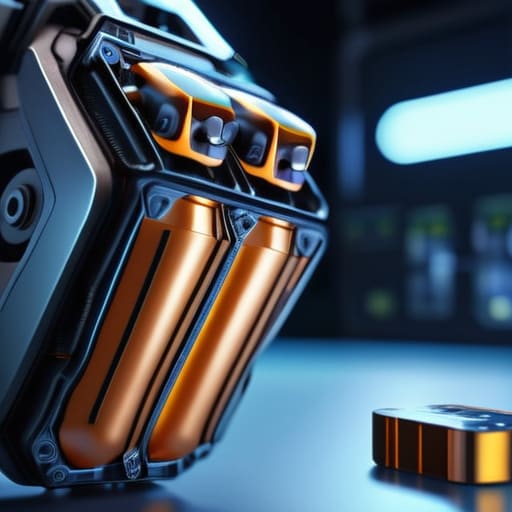
When you’re looking at spec sheets, things get messy fast because people tend to conflate two very different metrics. First, you have gravimetric energy density, which is basically how much juice you can pack into a kilogram of material. This is the holy grail for EVs because, frankly, weight is the enemy of efficiency. If we want to stop building heavy, lumbering SUVs and start making nimble, long-range commuters, we need to maximize that ratio. But here’s the catch: just because a cell is light doesn’t mean it’s practical.
That’s where the battle of gravimetric energy density vs volumetric comes into play. You might have a battery that is incredibly light, but if it takes up half your trunk just to get 200 miles of range, you’ve lost the plot. In the engineering world, we’re constantly fighting the spatial constraints of the chassis. We aren’t just looking for “light” cells; we are hunting for high-density packaging that fits into the tight tolerances of a vehicle’s floor pan. If we can’t solve the volumetric puzzle, even the most advanced chemistry won’t save us from mediocre real-world utility.
Why Lithium Ion Battery Capacity Is Reaching Its Physical Limit

Here’s the reality: we’ve been squeezing every last drop of performance out of the standard lithium-ion cell for over a decade. We’re basically playing a game of diminishing returns now. Every time a manufacturer claims a “breakthrough,” it’s usually just a marginal tweak to the anode or a slightly thinner separator. We are hitting a wall where the electrochemical energy density simply cannot go any higher without compromising the stability of the liquid electrolyte. If we keep pushing the voltage to get more juice, we risk thermal runaway—and nobody wants their car turning into a literal furnace.
The bottleneck isn’t just about how much energy we can pack in; it’s about the physics of the materials themselves. As we try to increase lithium-ion battery capacity, we run into the structural limits of the host materials. The ions physically struggle to move in and out of the lattice without causing cracks and degradation. This is why I’m so focused on the shift toward solid-state battery advancements. We need to move away from these volatile liquids if we ever want to break past the current ceiling and actually make long-range, lightweight EVs a standard reality.
Cutting Through the Noise: How to Actually Evaluate Energy Density
- Stop falling for the “range” trap. A massive battery pack can give you 400 miles, but if that pack weighs 1,500 pounds, you’re just spending half your energy hauling your own weight around. Look for Wh/kg (gravimetric density) to see how efficient the chemistry actually is.
- Watch the temperature delta. High energy density often comes at the cost of thermal stability. If a company claims a massive jump in density without explaining their cooling architecture or solid-state electrolyte, they’re likely ignoring the fact that the battery might want to turn into a thermal runaway event.
- Differentiate between cell-level and pack-level density. Marketing teams love to brag about cell specs, but once you add the housing, the BMS (Battery Management System), and the cooling plates, that “breakthrough” density drops significantly. Always ask what the usable energy-to-weight ratio is at the pack level.
- Keep an eye on cycle life vs. density. There is a massive tug-of-war in the lab right now between shoving more ions into an anode and keeping that anode from cracking after 500 cycles. A high-density battery that dies in two years isn’t a solution; it’s an environmental disaster waiting to happen.
- Don’t ignore the volumetric bottleneck. Even if a battery is light, if it’s physically massive, it’s useless for sleek EV chassis or compact consumer electronics. If you’re designing for real-world integration, Wh/L (volumetric density) is just as critical as the weight specs.
The Bottom Line on Energy Density
We need to stop conflating “more range” with “better tech”; if we don’t solve the volumetric density problem, EVs will always be too heavy for practical, long-haul utility.
The era of easy wins in lithium-ion is closing, meaning the next leap in mobility won’t come from better software, but from fundamental breakthroughs in solid-state chemistry.
True sustainability means looking past the spec sheet—if we increase energy density by using increasingly rare or toxic materials, we’re just trading one environmental crisis for another.
The Real Bottleneck
“We keep treating energy density like a software update we can just patch with better algorithms, but you can’t code your way out of physics. If we don’t solve the fundamental chemistry of how we pack ions into a cell, we’re just building heavier, more expensive versions of the same old limitations.”
Desmond Achebe
The Path Forward

Look, we can’t keep pretending that incremental tweaks to current lithium-ion chemistry are going to solve everything. We’ve spent the last few sections dissecting how the math of gravimetric versus volumetric density dictates everything from how much a car weighs to how much space is left for passengers. We’ve also acknowledged that we are hitting a massive wall with current liquid electrolytes. If we don’t find a way to push past these physical limitations through solid-state breakthroughs or new anode materials, we’re just going to be building heavier, more expensive versions of the same old tech. The bottleneck isn’t just a manufacturing hurdle; it is a fundamental chemistry problem that requires more than just corporate PR to fix.
Despite the skepticism, I’m still incredibly optimistic about what’s coming next. Every time I tinker with a motor or look at new lab data from the solid-state sector, I see the potential for a total paradigm shift. We are moving away from the era of “good enough” and into an era where energy density will finally match our ambitions for a truly mobile, electric world. The transition won’t happen by magic or through vague sustainability pledges; it’s going to happen in the labs and on the production lines where we solve the real hardware challenges. The future is electric, but only if we have the grit to master the chemistry first.
Frequently Asked Questions
If we're hitting a wall with current lithium-ion chemistry, is solid-state tech actually the silver bullet, or just more marketing hype?
Look, I’ve spent enough time in labs to know that “silver bullet” is a dangerous term. On paper, solid-state is the holy grail—replacing that flammable liquid electrolyte with a solid ceramic or polymer could theoretically skyrocket energy density and safety. But the jump from a controlled lab environment to a mass-produced EV pack is massive. Right now, it’s more of a “high-potential marathon” than a quick fix. We’re fighting dendrite growth and manufacturing scalability, not just hype.
How much of the "range anxiety" we hear about is actually a battery problem versus a weight and vehicle aerodynamics problem?
Look, “range anxiety” is a bit of a scapegoat. People blame the battery chemistry, but they’re ignoring the physics of the vehicle itself. If you slap a massive, heavy battery pack into a brick-shaped SUV, you’re fighting a losing battle against drag and inertia. It’s a feedback loop: more range needs more cells, which adds more weight, which requires more power to move. We don’t just need better chemistry; we need smarter, lighter engineering.
Can we actually scale high-density storage without making the supply chain for rare minerals even more of a nightmare?
That’s the million-dollar question. Honestly, if we just keep doubling down on high-nickel chemistries, we’re just trading a carbon crisis for a mining crisis. We can’t build a sustainable future on a supply chain that relies on ethically questionable cobalt or skyrocketing lithium prices. To actually scale, we have to pivot toward things like sodium-ion or silicon anodes—tech that uses more abundant materials. It’s not just about how much energy we can cram in; it’s about where that energy comes from.
