
I remember sitting in a Georgia Tech lab late one Tuesday, staring at a pile of spent lithium-ion cells that were supposed to be part of a “circular economy” pilot program. Instead of being processed, they were just sitting there, gathering dust because the paperwork was a nightmare. It’s incredibly frustrating how much of the conversation around green tech is just corporate theater. Everyone loves to talk about the future of EVs, but nobody wants to talk about the messy, bureaucratic reality of battery recycling regulations that actually determine whether we’re saving the planet or just creating a new kind of toxic landfill problem.
I’m not here to sell you on the glossy marketing brochures or the vague sustainability goals that most companies use to pad their annual reports. I want to dig into the actual hardware and policy that dictates how we reclaim cobalt, lithium, and nickel. In this post, I’m going to break down the current landscape of battery recycling regulations without the fluff, so you can understand the real-world friction points between current laws and the infrastructure we actually need to build.
Table of Contents
- Cracking the Code of Extended Producer Responsibility Laws
- Navigating the High Stakes of Hazardous Waste Compliance
- Stop Guessing and Start Tracking: 5 Ways to Navigate the Regulatory Maze
- The Bottom Line on Battery Policy
- ## Policy vs. Reality
- The Road Ahead: From Policy to Practicality
- Frequently Asked Questions
Cracking the Code of Extended Producer Responsibility Laws

When we talk about extended producer responsibility laws, we aren’t just talking about some bureaucratic hoop for manufacturers to jump through. We’re talking about shifting the entire burden of the product’s “afterlife” back onto the people who built it. For too long, the industry has operated on a “sell and forget” model, where the manufacturer grabs the profit and the consumer is left holding the bag—and the environmental debt—once the cells hit their cycle limit. If we want a true circular economy battery lifecycle, the companies churning out these high-density packs need to be the ones designing the systems to reclaim them.
This isn’t just about being “eco-friendly”; it’s about logistics and chemistry. Implementing these laws forces engineers to think about design-for-disassembly from day one. If a pack is glued shut with industrial-grade epoxy that makes it impossible to extract the cathode material without destroying it, that’s a failure of engineering. We need to move toward a reality where the hardware is built to be harvested, not just discarded.
Navigating the High Stakes of Hazardous Waste Compliance
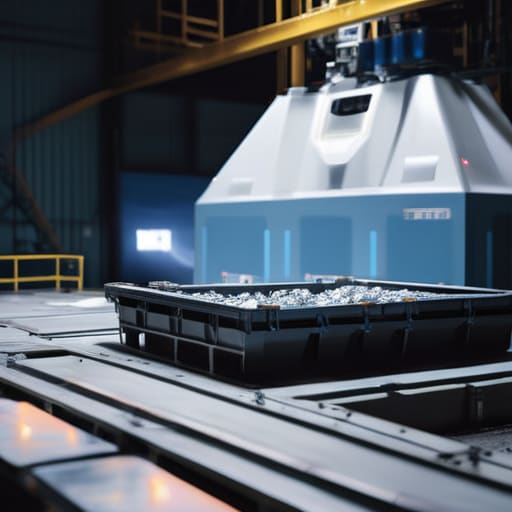
Here’s the reality: handling spent cells isn’t just a logistical headache; it’s a literal minefield. When we talk about hazardous waste compliance, we aren’t just checking boxes for some bureaucrat—we’re dealing with volatile chemistries that can go from stable to thermal runaway in seconds if they’re mishandled. If a recycler doesn’t have the right specialized infrastructure to stabilize these units, we aren’t just failing a regulation, we’re creating a massive safety liability that could tank public trust in EVs before we even hit mass adoption.
The industry is currently playing catch-up with lithium-ion battery waste management protocols that actually match the scale of the hardware we’re shipping. It’s easy to talk about a circular economy battery lifecycle in a boardroom, but the actual grit happens in the specialized facilities designed to strip these packs down without causing a fire or leaking heavy metals into the groundwater. We need more than just “compliance”—we need standardized, high-integrity processes that treat every dead cell as a concentrated source of precious materials rather than just a dangerous piece of trash.
Stop Guessing and Start Tracking: 5 Ways to Navigate the Regulatory Maze
- Treat your battery lifecycle like a digital ledger. If you aren’t implementing a robust “battery passport” system to track chemistry from cradle to grave, you’re going to get crushed by the incoming transparency mandates. You can’t reclaim what you can’t locate.
- Look past the “compliance” checkbox and focus on actual material recovery rates. Regulations are moving away from just “don’t dump this in a landfill” toward “you must recover X% of the cobalt and lithium.” If your recycling partner can’t give you hard data on their recovery percentages, they aren’t a partner—they’re a liability.
- Standardize your disassembly protocols now. The biggest bottleneck in meeting recycling mandates isn’t the chemistry; it’s the mechanical nightmare of opening up different pack architectures. Designing for “disassembly” rather than just “assembly” is the only way to make the math work when the regulators come knocking.
- Don’t get caught in the “Hazardous Waste” trap by ignoring the shift in classification. As battery chemistries evolve—think moving from LFP to solid-state—the legal definitions of what constitutes “hazardous” change. You need a regulatory roadmap that evolves as fast as your lab does.
- Audit your supply chain for “circularity readiness.” It’s easy to talk about sustainability, but if your upstream suppliers aren’t prepared for the end-of-life requirements being baked into new laws, your entire business model is built on sand. Real sustainability is a closed loop, not a straight line.
The Bottom Line on Battery Policy
We have to move past the “compliance as a checkbox” mindset; if manufacturers don’t own the lifecycle of their cells through EPR laws, we’re just trading one environmental crisis for another.
Compliance isn’t just about avoiding fines—it’s about building the actual logistical backbone needed to recover high-value minerals like lithium and cobalt before they hit a landfill.
Real sustainability won’t come from corporate PR statements, but from rigorous, data-driven tracking of hazardous waste that treats old batteries as a resource rather than a liability.
## Policy vs. Reality
“We can pass all the mandates we want, but a regulation is just a piece of paper if there isn’t a physical supply chain capable of actually recovering the cobalt and lithium. We don’t need more ‘sustainability goals’ on a corporate slide deck; we need the hard infrastructure to ensure these cells don’t just end up in a landfill because it was too expensive to do the right thing.”
Desmond Achebe
The Road Ahead: From Policy to Practicality

At the end of the day, navigating the maze of EPR laws and hazardous waste compliance isn’t just about checking boxes to avoid a fine; it’s about closing the loop on the entire lifecycle of the cell. We’ve spent enough time talking about the theoretical benefits of a circular economy while the actual hardware sits in landfills or gets lost in inefficient supply chains. If we don’t get the regulatory groundwork right now—ensuring that manufacturers are actually accountable for the lithium and cobalt they pull from the ground—we’re just building a house of cards. We need a system where reclaiming chemistry is more profitable and efficient than mining virgin materials every single time.
I’m an optimist by nature, but I’m a realist by training. I know that the tech to make this happen exists, from advanced hydrometallurgy to automated disassembly, but tech alone won’t save us if the legal framework remains a mess. We have to move past the era of corporate greenwashing and demand a standardized, transparent infrastructure that treats every spent battery as a goldmine rather than a liability. This transition is inevitable, but let’s make sure it’s actually sustainable by building the foundation today that our generation will rely on tomorrow. It’s time to stop making promises and start engineering the solution.
Frequently Asked Questions
If these EPR laws actually force manufacturers to take back old cells, how do we stop them from just shipping the "waste" to countries with zero environmental oversight?
That’s the million-dollar question, and honestly, it’s where the “green” facade usually cracks. If we don’t tighten the loop, EPR laws just become a legal way to export our pollution. We need blockchain-based digital battery passports—real, unhackable tracking from cell manufacture to final shredding. If a manufacturer can’t prove exactly which facility reclaimed that cobalt, they shouldn’t get the tax credits. We need physical accountability, not just paperwork that disappears once it hits a shipping container.
Are we actually building the specialized facilities needed to recover high-purity lithium and cobalt, or are we just shredding batteries into low-grade "black mass" that's barely worth the energy it took to process?
Honestly? Right now, we’re mostly just making expensive confetti. A lot of the current “recycling” is just shredding cells into black mass—a messy, low-grade sludge that’s a pain to refine. It’s a massive energy sink that barely recovers the high-purity lithium or cobalt we actually need for new cells. We’re hitting the motions, sure, but until we scale hydrometallurgical plants that can actually isolate these elements at scale, we’re just delaying the inevitable waste problem.
How much is the red tape of hazardous waste compliance actually slowing down the scaling of domestic recycling plants?
Honestly? It’s a massive bottleneck. We’re trying to scale a circular economy, but the regulatory framework is still stuck in the era of toxic sludge disposal. Right now, the red tape treats every spent lithium-ion cell like a ticking time bomb rather than a concentrated resource of cobalt and nickel. This “one-size-fits-all” hazardous waste labeling creates a logistical nightmare that drives up costs and keeps small-scale, innovative recyclers from ever getting off the ground.
