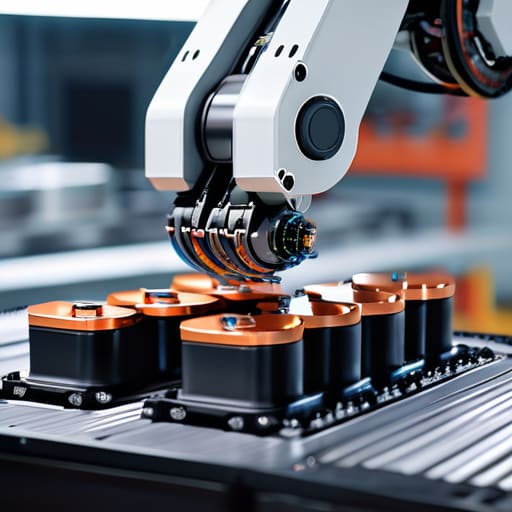
I still remember the smell of ozone and burnt flux in my Georgia Tech lab during my junior year, staring at a prototype cell that had just failed because of a microscopic misalignment in the stacking process. It was a gut punch. Everyone in the industry loves to talk about “scaling up” as if it’s just a matter of building bigger factories, but they completely gloss over the precision nightmare of the actual build. If we’re going to move past the era of gas guzzlers, we can’t just throw more labor at the problem; we have to master battery assembly automation to ensure every single layer is chemically perfect. Without that level of robotic precision, we aren’t building a revolution—we’re just building expensive paperweights.
I’m not here to sell you on some shiny, corporate-approved vision of a fully lights-out factory that ignores the realities of cell degradation. Instead, I want to pull back the curtain on the actual hardware and the specific automated workflows that make high-density storage viable. We’re going to look past the marketing fluff and dive into the technical bottlenecks of precision stacking and electrolyte filling, focusing on the kind of data-driven infrastructure that will actually make electric mobility sustainable for everyone.
Table of Contents
- High Speed Battery Electrode Coating Where Chemistry Meets Speed
- Automated Lithium Ion Cell Manufacturing Solving the Scalability Crisis
- Hard Truths: 5 Ways to Stop Wasting Material and Start Scaling Properly
- The Bottom Line: Why Automation is Non-Negotiable
- The Precision Gap
- The Bottom Line on the Assembly Line
- Frequently Asked Questions
High Speed Battery Electrode Coating Where Chemistry Meets Speed
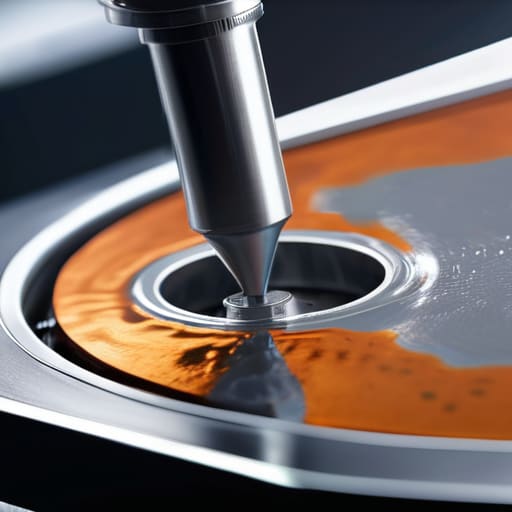
If you want to understand why scaling up is such a nightmare, you have to look at the coating stage. This is where the magic—and the mess—happens. We’re talking about spreading that active chemical slurry onto a current collector with microscopic precision. In a manual or semi-automated setup, even a tiny fluctuation in viscosity or a slight tremor in the applicator can ruin an entire batch. When we talk about high-speed battery electrode coating, we aren’t just talking about moving fast; we’re talking about maintaining absolute uniformity while the line is screaming at full tilt.
This is where the chemistry gets real. If the coating thickness varies by even a few microns, you’re looking at uneven current distribution and, eventually, localized overheating. That’s how you end up with premature cell failure. To prevent that, a smart factory battery production model has to integrate real-time sensors that can “feel” the slurry as it’s applied. We can’t just rely on post-production testing to find flaws; we need to catch the deviations the second they happen, or we’re just manufacturing expensive paperweights.
Automated Lithium Ion Cell Manufacturing Solving the Scalability Crisis
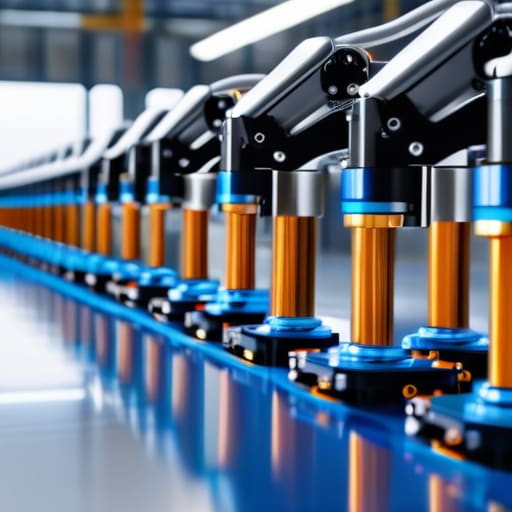
The real bottleneck isn’t just how fast we can coat an electrode; it’s the sheer, punishing scale of turning those individual cells into reliable power sources. When we talk about automated lithium-ion cell manufacturing, we aren’t just talking about faster conveyor belts. We’re talking about the nightmare of maintaining microscopic tolerances across millions of units. If a single cell in a massive pack has a slight deviation in electrolyte distribution or internal resistance, you’re not just looking at a failed unit—you’re looking at a potential thermal runaway event. That’s why we can’t just “scale up” using old-school manual methods; we have to scale through intelligence.
This is where the transition from a lab setting to a massive production floor gets messy. To move the needle, we need smart factory battery production environments where every single movement is logged and verified by sensors in real-time. We need systems that treat every chemical component with the respect it deserves, ensuring that the leap from a prototype to a gigafactory doesn’t result in a massive spike in defect rates. If we want to make high-density storage actually affordable, the hardware has to be flawless by design, not just by luck.
Hard Truths: 5 Ways to Stop Wasting Material and Start Scaling Properly
- Stop treating moisture like an afterthought. If your automation line isn’t integrating real-time humidity sensors directly into the dry room environment, you’re basically inviting lithium degradation to ruin your yield before the cells even leave the factory.
- Prioritize precision over raw velocity in electrode stacking. I’ve seen too many lines optimized for speed that end up causing micro-cracks in the active material; you need vision systems that can catch a micron-level misalignment before it becomes a thermal runaway risk.
- Close the loop on scrap data. Don’t just automate the assembly; automate the feedback loop so that if a coating thickness fluctuates, the system adjusts the slurry flow instantly instead of just churning out thousands of sub-par cells.
- Invest in modularity, not just massive, monolithic machines. The chemistry is moving too fast—from liquid electrolytes to solid-state—to be locked into a rigid assembly line that can’t be reconfigured when the next breakthrough hits the lab.
- Get serious about end-of-line testing automation. If you’re still relying on manual sampling to verify cell impedance or capacity, you’re missing the statistical reality of your entire batch; you need 100% automated, high-throughput testing to ensure every cell meets the spec.
The Bottom Line: Why Automation is Non-Negotiable
We can’t scale our way out of the climate crisis using manual labor; true sustainability requires high-precision automation that minimizes material waste and keeps electrode consistency within razor-thin tolerances.
The bottleneck isn’t just making cells—it’s making them reliably. Automation turns battery production from a finicky lab experiment into a predictable, high-output industrial reality.
If we want to actually drive down the cost of energy storage, we have to stop cutting corners on the assembly line and start investing in the hardware that respects the complex chemistry of the cell.
The Precision Gap
“We can talk about energy density and solid-state breakthroughs all day, but if our assembly lines are still treating cell production like a manual craft, we’re never going to bridge the gap between lab-scale miracles and the affordable, mass-market hardware the planet actually needs.”
Desmond Achebe
The Bottom Line on the Assembly Line
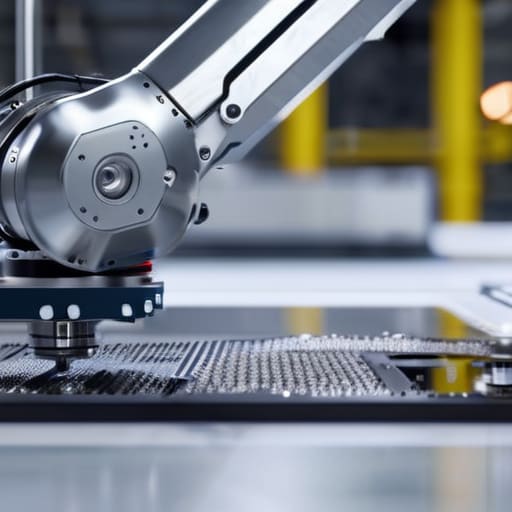
At the end of the day, we can’t just wish our way into a decarbonized grid. We’ve seen how critical it is to nail the precision of electrode coating and how massive the scalability gap is in cell manufacturing. Automation isn’t just about cutting labor costs or chasing higher throughput; it’s about eliminating the human error that leads to microscopic defects and, eventually, thermal runaway. If we want to move past the era of gas guzzlers and into a world of reliable, high-density storage, we have to treat the assembly line as a precise extension of the chemistry itself. We need integrated, data-driven automation that respects the delicate nature of lithium-ion components from the moment the slurry is poured to the final casing seal.
I’m often skeptical when I hear corporate leaders talk about “green revolutions” without mentioning the hardware required to back them up. But looking at the trajectory of automated manufacturing, I’m genuinely optimistic. We are finally moving away from the “black box” era of battery production and into a time of radical transparency and precision. The transition to electric mobility is inevitable, but its success depends on whether we build the infrastructure to support it correctly. Let’s stop settling for vague promises and start focusing on the engineered reality of the hardware. That is how we build a future that actually lasts.
Frequently Asked Questions
If we automate the entire assembly line, how do we ensure that microscopic contaminants don't compromise the long-term stability of the lithium-ion chemistry?
That’s the million-dollar question. If we automate for speed but ignore cleanliness, we’re basically building high-tech ticking time bombs. Even a microscopic speck of dust or a stray metal particle can cause an internal short during cycling, leading to dendrite growth and eventual thermal runaway. To prevent this, we can’t just slap robots on a floor; we need fully enclosed, dry-room environments integrated with real-time vision inspection and ultra-high-precision sensors that catch deviations before the cell is even sealed.
Can these high-speed automated systems actually handle the shift toward solid-state electrolytes, or are we building infrastructure that's already obsolete?
That’s the million-dollar question. Honestly? We’re walking a fine line. If we over-optimize today’s liquid-electrolyte lines, we’re basically building expensive monuments to yesterday’s tech. However, the core mechanics—precision coating and stacking—are transferable. The real pivot isn’t the speed; it’s the environment. Solid-state requires ultra-dry rooms and different pressure profiles that current high-speed setups aren’t built for. We aren’t building obsolete hardware, but we are building systems that will need serious, costly retrofits.
How much of the "sustainability" in battery manufacturing is actually real, and how much is just companies using automation to mask inefficient, high-waste processes?
Look, let’s be real: a lot of it is just window dressing. If a company uses high-speed automation just to churn out more mediocre cells with high scrap rates, they aren’t being sustainable—they’re just scaling waste. True sustainability happens when we use automation for precision, not just speed. We need closed-loop systems that minimize electrode sludge and reclaim solvents. If the automation isn’t actively reducing the chemical footprint, it’s just greenwashing with a faster assembly line.
