
I remember sitting in a Georgia Tech lab at 2:00 AM, staring at a thermal imaging camera as a test cell started to glow a dangerous shade of orange. Everyone in the industry loves to throw around the term fast charging technology like it’s a magic wand that solves everything, but they conveniently forget to talk about the thermal runaway that happens when you force ions through an electrolyte too quickly. It’s easy to market a “0 to 80% in ten minutes” headline, but if that speed is cooked by sacrificing the long-term health of the lithium-ion cells, we aren’t actually solving the EV problem—we’re just building expensive paperweights.
I’m not here to sell you on the glossy marketing brochures or the corporate greenwashing that ignores the actual physics of energy density. Instead, I want to pull back the curtain on the real hardware. We’re going to look past the hype and dive into the actual chemistry and infrastructure required to make rapid charging sustainable. My goal is to help you understand what’s happening inside those cells so you can distinguish between a genuine breakthrough and just another way to degrade your battery.
Table of Contents
- Why Lithium Ion Battery Degradation Is the Silent Killer
- Wattage vs Amperage Explained the Hard Truth of Power
- How to Fast Charge Without Killing Your Cells
- The Bottom Line: What Actually Matters for the Future of Charging
- ## The Speed Trap
- The Bottom Line on Fast Charging
- Frequently Asked Questions
Why Lithium Ion Battery Degradation Is the Silent Killer

Everyone loves the convenience of a full charge in twenty minutes, but there’s a massive physiological cost to the battery that most manufacturers won’t highlight in their glossy brochures. When we push massive amounts of current into a cell, we aren’t just moving electrons; we are inducing significant mechanical stress. This is where lithium-ion battery degradation becomes a real problem. High-speed charging essentially forces ions through the electrolyte at a frantic pace, which can lead to lithium plating—basically, instead of sliding neatly into the anode, the lithium starts building up on the surface like unwanted frost. Once that happens, you’ve permanently lost capacity.
It’s not just about the speed; it’s about the heat. Think of it like redlining a car engine for an hour straight; eventually, something is going to warp. This is why thermal management in charging is the real unsung hero of the EV world. If the cooling system can’t keep up with the exothermic reaction happening inside the pack during a high-wattage session, you aren’t just losing range—you’re actively shortening the lifespan of the entire vehicle. We need to stop treating batteries like infinite buckets and start respecting the chemistry.
Wattage vs Amperage Explained the Hard Truth of Power

Look, I see this mistake all the time in spec sheets: people treat wattage like it’s the only number that matters. It’s not. If you want to understand how your gear actually pulls juice, you have to look at the relationship between voltage and current. Think of it like water flowing through a garden hose. Voltage is the water pressure, and amperage is the volume of water moving through. When you see a massive wattage number on a charger, it’s usually because the manufacturer is cranking up one or both of those variables. But here’s the catch—if you push too much amperage through a cell that isn’t ready for it, you’re essentially trying to force a fire hose through a straw.
This is where thermal management in charging becomes the actual bottleneck. You can have the most advanced USB-C Power Delivery standards on the planet, but if the heat generated by high current isn’t managed, you’re just cooking your cells from the inside out. It’s a delicate balancing act. We need to stop chasing raw speed and start focusing on intelligent power delivery that respects the physical limits of the hardware.
How to Fast Charge Without Killing Your Cells
- Respect the “Charging Curve.” You aren’t going to pull max wattage from 0 to 100%. Most fast chargers taper off significantly after 80% to prevent thermal runaway and lithium plating. If you’re trying to squeeze out that last 20% at high speeds, you’re basically just cooking your battery for no real gain.
- Temperature is your biggest enemy. Think of lithium ions like commuters in a subway station; if it’s too cold, they move like sludge, and if it’s too hot, they start causing chaos. If you’re charging in a heatwave, look for a station with active thermal management, or you’re just accelerating the degradation of your anode.
- Stop treating 100% as the goal. If you want your battery to last through your next three car upgrades, try to keep your state of charge between 20% and 80%. Constant deep cycling to full capacity puts immense mechanical stress on the electrode structure. It’s better to do three quick “top-ups” than one massive, high-heat marathon charge.
- Watch the C-rate, not just the “minutes.” Manufacturers love saying “0 to 80 in 15 minutes,” but that’s a lab number. Look at the actual C-rate—the ratio of charge current to the battery’s capacity. High C-rates push ions into the anode faster than they can intercalate, which leads to that nasty lithium plating I’m always talking about.
- Invest in the cable and the hardware. Not all DC fast chargers are created equal. A cheap, poorly maintained station with high internal resistance will generate massive amounts of wasted heat. If the charger feels like it’s struggling, it’s losing efficiency—and that lost energy is being dumped straight into your battery’s chemistry as heat.
The Bottom Line: What Actually Matters for the Future of Charging
Speed is a trap if it kills your battery life; we have to prioritize thermal management and chemical stability over just chasing higher C-rates.
Real infrastructure isn’t just about more plugs, it’s about intelligent grid integration that understands the difference between a quick top-off and a heavy-duty charge cycle.
Stop falling for the marketing fluff—true progress in EV adoption will be measured by how we manage ions and heat, not just by how many kilowatts we can shove into a cell in ten minutes.
## The Speed Trap
“Everyone wants to talk about how fast we can shove electrons into a cell, but if we aren’t talking about the thermal management and the dendrite growth that comes with it, we’re just building high-speed ovens that kill their own lifespan.”
Desmond Achebe
The Bottom Line on Fast Charging
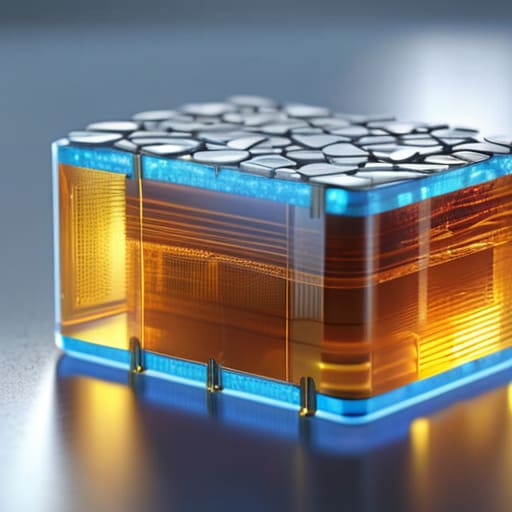
At the end of the day, fast charging isn’t just about seeing a massive number on a charging station display; it’s a delicate balancing act between speed and longevity. We’ve looked at how aggressive amperage can accelerate lithium plating and how the thermal management of your battery cell is just as important as the charger itself. If we keep ignoring the real-world chemistry happening inside the pack, we’re just trading long-term battery health for a few minutes of convenience. We have to move past the marketing hype and focus on intelligent charging protocols that respect the hardware.
I’m still an optimist about where we’re headed, but I’m not going to fall for the “charge in five minutes” slogans without seeing the data on cycle life first. The transition to electric mobility is going to be massive, but it has to be built on a foundation of sustainable, durable hardware—not just flashy specs that burn out your cells in two years. We are moving toward a world where energy is everywhere, and once we actually get the chemistry right, the infrastructure will finally catch up to our ambitions. Let’s build a future that actually stays powered.
Frequently Asked Questions
If I keep using DC fast chargers every single day, how much faster am I actually going to kill my battery's cycle life?
Look, if you’re hitting a DC fast charger every single day, you’re essentially redlining your battery’s chemistry. It’s not just about the “cycles”; it’s about the heat and the lithium plating happening during those high-voltage pushes. You’re likely looking at a significantly accelerated degradation curve—potentially losing capacity much faster than the manufacturer’s conservative estimates. If you want your car to last a decade, treat DC fast charging like an emergency tool, not a daily habit.
Is the bottleneck for faster charging really the car's onboard tech, or is it just the grid's ability to handle those massive power spikes?
It’s a bit of a “chicken or the egg” situation, but honestly? It’s both. We’re trying to shove a firehose of energy into a straw. The car’s onboard charger is definitely a bottleneck for AC charging, but for those ultra-fast DC sessions, the real headache is the grid. If every station on a block pulls massive spikes simultaneously, we’re looking at localized transformer meltdowns. We can’t just build faster cars; we need smarter, more resilient distribution.
We talk a lot about speed, but how much of a role will solid-state electrolytes play in making "ultra-fast" charging actually safe for the hardware?
Look, speed is useless if you’re melting your battery from the inside out. Right now, liquid electrolytes are the bottleneck; they’re flammable and hate the heat generated during rapid ion movement. Solid-state changes the game because those solid electrolytes are way more thermally stable. They can handle the intense heat of ultra-fast charging without the risk of thermal runaway. We’re talking about pushing higher currents without the constant fear of degrading the cell’s architecture.
