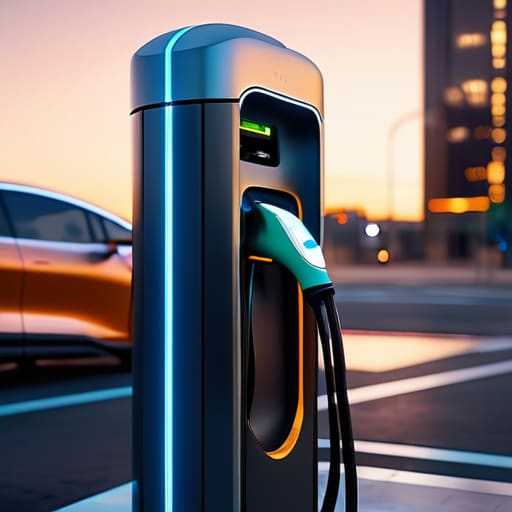
I remember sitting in my dorm at Georgia Tech, staring at a spreadsheet of lithium-ion degradation rates, while my roommate complained that his gas-guzzling SUV was “too expensive to run.” He thought the solution was just more subsidies or flashy concept cars, but he was missing the entire point. The real bottleneck isn’t the cars themselves; it’s the fact that our ev charging infrastructure is currently a patchwork of unreliable hardware and outdated grid connections that can’t handle the actual load. We’re trying to run a 21st-century mobility revolution on a grid that’s still thinking in the 1950s, and frankly, the corporate hype about “seamless transitions” is starting to feel like pure greenwashing.
I’m not here to sell you on the utopian dream or parrot the marketing brochures from big auto manufacturers. Instead, I want to pull back the curtain on the actual hardware and the grid-level physics that make or break a charging network. We’re going to look past the glossy renders and talk about the real-world chemistry and the massive electrical upgrades required to make high-density storage work for everyone. If we want this transition to actually stick, we need to stop chasing headlines and start focusing on the hard engineering that powers the future.
Table of Contents
- Beyond the Plug Why Rapid Ev Charging Station Deployment Matters
- Level 2 vs Dc Fast Charging Separating Hype From Hardware
- Real-World Specs: What Actually Matters When You’re Planning an Infrastructure Build
- The Bottom Line: Moving Past the Hype
- The Infrastructure Reality Check
- The Road Ahead: Beyond the Hype
- Frequently Asked Questions
Beyond the Plug Why Rapid Ev Charging Station Deployment Matters
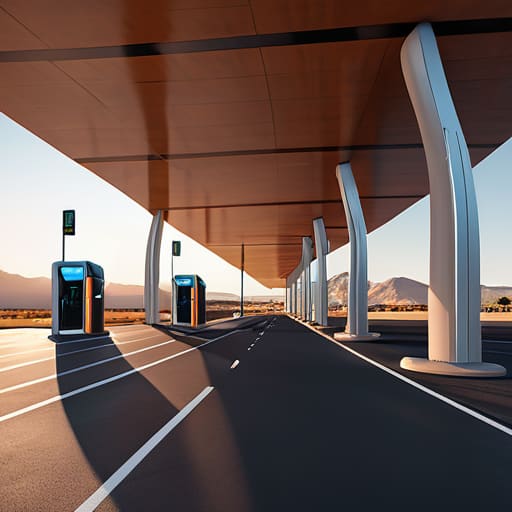
Look, everyone focuses on the convenience of a quick charge, but we need to talk about the actual velocity of rollout. It’s not enough to just sprinkle a few chargers around a shopping mall and call it progress. For electric mobility to actually scale, we need massive, coordinated EV charging station deployment that mirrors the density of the gas station networks we’re trying to replace. If you’re driving a long-haul route and the next high-speed stall is fifty miles away, that’s not a “transition period”—that’s a failure of planning.
We also have to stop treating every plug like it’s the same. There is a massive functional gap between level 2 vs DC fast charging that most people don’t grasp until they’re staring at a dead battery. Level 2 is great for when you’re parked overnight, but if we want to kill range anxiety, we need to prioritize the heavy-duty hardware that can dump high amperage into a cell quickly without cooking the chemistry. It’s about building a backbone of fast charging technology that actually respects the limits of the battery while keeping the driver moving.
Level 2 vs Dc Fast Charging Separating Hype From Hardware
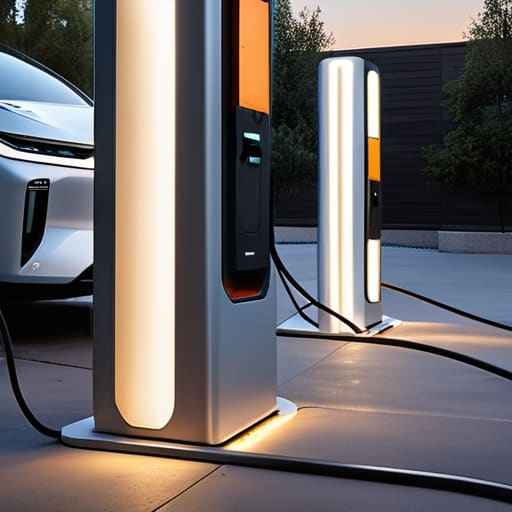
Look, if you’re scrolling through tech news, it’s easy to get lost in the marketing fluff that treats all chargers like they’re the same. They aren’t. When we talk about level 2 vs DC fast charging, we’re really talking about two completely different ways of interacting with a battery’s chemistry. Level 2 is your steady workhorse—think of it like a slow-drip IV for your car. It’s perfect for overnight stays or when you’re parked at the office, and it’s much kinder to the long-term health of your cells because it avoids the massive thermal spikes you get with high-voltage juice.
On the other hand, DC fast charging is where the real engineering heavy lifting happens. This isn’t just “faster” charging; it’s a massive injection of power that bypasses the onboard charger entirely to hit the battery directly. While fast charging technology is a game-changer for road trips, it’s a double-edged sword. If the hardware isn’t managed correctly, you’re essentially forcing electrons through a straw at high pressure, which can accelerate lithium plating if the thermal management isn’t top-tier. We need to stop treating these as interchangeable and start designing our grids for the specific stress each one puts on the system.
Real-World Specs: What Actually Matters When You’re Planning an Infrastructure Build
- Stop obsessing over the number of plugs and start looking at the transformer capacity; a row of chargers is useless if your local grid connection can’t handle the massive current draw without tripping a breaker.
- Prioritize hardware with modular power sharing, because if one module fails in a rigid system, the whole station goes dark, whereas modular setups let you swap components without killing the entire site’s uptime.
- Look past the “fast charging” marketing and check the thermal management systems; if a station doesn’t have robust liquid cooling for the cables and the internal power electronics, those charging speeds are going to tank the second the ambient temperature hits 90 degrees.
- Demand interoperability standards that go beyond just the physical plug—we need software protocols that actually communicate battery state-of-charge and temperature data efficiently to prevent unnecessary cell degradation during high-voltage sessions.
- Build for the “middle of the night” reality by integrating smart load management, so the infrastructure can throttle power intelligently during peak grid demand instead of just being a massive, unmanaged drain on the local substation.
The Bottom Line: Moving Past the Hype
Charging speed isn’t just about a bigger plug; it’s a complex dance between the station’s hardware and the battery’s internal chemistry, so don’t expect a magic fix without addressing thermal management.
We have to stop treating Level 2 and DC Fast Charging as interchangeable; one is for steady, overnight energy soaking, while the other is a high-stress sprint that requires a robust, grid-ready infrastructure.
Real progress won’t come from flashy marketing campaigns about “green travel,” but from building a reliable, high-density power network that actually respects the physical limits of lithium-ion tech.
The Infrastructure Reality Check
“We can keep marketing the dream of seamless electric travel, but until we stop treating charging stations like glorified outlets and start building them as high-performance nodes integrated with the grid’s actual chemistry, we’re just building a house on sand.”
Desmond Achebe
The Road Ahead: Beyond the Hype
At the end of the day, building a world-class EV infrastructure isn’t just about slapping more plugs into the ground and calling it a day. We’ve seen that the real battle is fought in the gap between Level 2 convenience and the high-voltage demands of DC fast charging. If we don’t get the hardware-to-chemistry alignment right—ensuring our grid can actually handle the massive current draws without frying local transformers—then all these shiny new stations are just expensive paperweights. We need to stop treating charging like an afterthought and start treating it like the critical grid component it actually is.
I’m still an optimist, but I’m a realistic one. The transition to electric mobility is going to happen, but it won’t be won by marketing departments or vague corporate sustainability goals. It will be won by the engineers, the grid analysts, and the people willing to do the dirty work of upgrading our physical infrastructure. We have the chemistry; now we just need the backbone to support it. Let’s stop chasing the hype and start building the resilient, high-density energy network that our generation actually deserves to inherit.
Frequently Asked Questions
If we keep pushing for more DC fast chargers, how are we going to stop the local grid from absolutely cratering during peak demand?
That’s the million-dollar question, and honestly, it’s what keeps me up at night. We can’t just keep slapping high-kilowatt chargers onto aging local transformers and hope for the best; that’s a recipe for brownouts. We need to stop viewing chargers as simple loads and start treating them as smart nodes. Integrating onsite BESS (Battery Energy Storage Systems) to buffer those massive DC draws and using smart V2G protocols is the only way to prevent the grid from cratering.
Beyond just finding a plug, how much of a factor does battery thermal management play in how fast I can actually charge on a long trip?
Think of your battery like a high-performance athlete. If they’re too cold, they can’t sprint; if they’re overheating, they’ll crash. On a long trip, thermal management is everything. If your car’s cooling system isn’t actively prepping the cells to handle high-voltage throughput, the BMS (Battery Management System) will throttle your charging speed to prevent permanent degradation. You might see a “fast charger” sign, but without smart thermal regulation, you’re just sitting there waiting.
Are we actually making progress on sustainable battery chemistries, or are we just swapping one resource dependency problem for another?
Look, if we’re being honest, we’re currently in the “resource swap” phase. We’ve moved from a crude dependency on oil to a high-stakes scramble for lithium, cobalt, and nickel. It’s a massive bottleneck. But the real progress isn’t in the hype; it’s in the lab. I’m watching solid-state breakthroughs and sodium-ion developments closely. We aren’t out of the woods, but we are finally moving toward chemistries that won’t bankrupt the planet to build.
