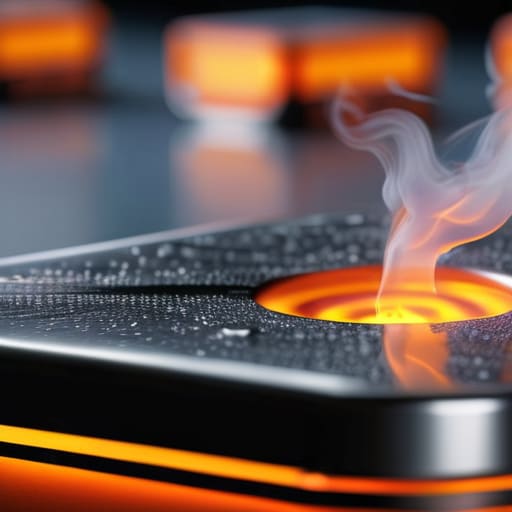
I still remember the smell of that afternoon in the Georgia Tech lab—a sharp, sickly-sweet chemical odor that hits the back of your throat before you even see the smoke. I was working on a prototype cell when it happened; one minute it was a stable piece of hardware, and the next, it was a miniature sun. That’s the reality no one wants to talk about in the glossy EV brochures: battery thermal runaway isn’t just a theoretical failure mode in a textbook, it’s a violent, self-sustaining chain reaction that turns a high-density energy cell into a literal blowtorch.
I’m not here to sell you on the magic of electrification or to hide behind the vague safety jargon that corporate PR departments love to use. Instead, I want to pull back the curtain on the actual chemistry that causes these cells to fail. We’re going to skip the fluff and look directly at the mechanics of how these fires start, why current cooling systems sometimes fail, and what the industry actually needs to do to make high-density storage safe. This is about the real hardware that’s going to power our lives, flaws and all.
Table of Contents
Decoding the Electrolyte Decomposition Process

To understand why things go south, you have to look at the liquid inside the cell. Most lithium-ion setups rely on an organic solvent to move ions back and forth, but that liquid is essentially a ticking time bomb if things get too hot. When the temperature climbs past a certain threshold, we hit the electrolyte decomposition process, where the solvent literally starts breaking apart chemically. It’s not just a gradual warm-up; it’s a molecular breakdown that releases heat, which in turn speeds up the reaction. It’s a classic, brutal feedback loop.
Once that decomposition kicks in, it releases flammable gases and more thermal energy, which is exactly what triggers the chain reaction we all dread. This is why I’m such a stickler for robust thermal management system design. If your cooling loop can’t pull heat away faster than the chemistry can generate it, you’ve already lost the battle. We can’t just rely on software patches or vague safety promises; we have to engineer the hardware to handle these chemical shifts before they turn a simple cell malfunction into a full-blown hardware failure.
Uncovering the Real Battery Cell Overheating Causes

So, why does this actually happen? It’s rarely just one thing; it’s usually a perfect storm of mechanical and chemical failures. One of the most common battery cell overheating causes I see in the lab is internal short-circuiting. This isn’t always some dramatic collision, either. It can be as subtle as dendrite growth—tiny, microscopic spikes of lithium that pierce the separator during rapid charging cycles. Once that barrier is breached, you have a direct path for current to flow where it shouldn’t, creating a localized hot spot that the cooling system can’t keep up with.
Then you have the external factors, which are often overlooked in the rush to push higher energy densities. If the thermal management system design is mediocre, the battery can’t shed heat effectively during high-drain events, like flooring it on a highway or fast-charging on a cold day. We see a lot of “optimization” in the industry that prioritizes range over robust cooling, but that’s a dangerous trade-off. When the heat builds up faster than the hardware can dissipate it, you’re essentially sitting on a chemical ticking clock.
Survival Strategies: How We Actually Stop the Chain Reaction
- Prioritize solid-state research over incremental liquid electrolyte tweaks. If we want to kill the risk of thermal runaway, we need to move away from these highly flammable organic solvents and toward solid electrolytes that just don’t catch fire when things get hot.
- Stop treating Battery Management Systems (BMS) like an afterthought. A smart BMS shouldn’t just monitor voltage; it needs to be proactive, using machine learning to spot the tiny, subtle temperature spikes that signal a cell is about to go rogue before the heat becomes unmanageable.
- Demand better cell-to-pack thermal isolation. We can’t just pack cells tightly together to save space and call it a day; if one cell fails, it shouldn’t be able to cook its neighbor. We need physical, non-combustible barriers between every single unit to break the propagation chain.
- Rethink how we handle fast charging. Everyone wants a full charge in ten minutes, but slamming high current into a cell creates massive internal heat and accelerates lithium plating. We need to balance the “convenience” of speed with the chemical reality of heat dissipation.
- Build a real circular economy for end-of-life cells. A huge part of the safety conversation is ignored: how we handle degraded batteries. We need standardized recycling infrastructure so that “tired” cells don’t end up in landfills where they can eventually short out and start a fire.
The Bottom Line on Thermal Runaway
We have to stop treating thermal runaway like a freak accident and start treating it like an inherent chemical reality that our current cell designs aren’t quite ready to handle.
Solving the heat issue isn’t just about better cooling fans; it’s about deep-diving into electrolyte stability and finding ways to prevent that initial, catastrophic decomposition before it turns into a chain reaction.
Real progress in EVs won’t come from flashy marketing, but from the boring, hard work of engineering more resilient battery chemistries that can survive the physical stress of real-world use.
The Reality Check
“We can talk about range anxiety and sleek UI all day, but until we master the chemistry of thermal stability, we’re just building high-performance energy bombs. If we want the grid—and the cars plugged into it—to be truly reliable, we have to stop treating thermal runaway like a rare glitch and start treating it like the fundamental engineering hurdle it actually is.”
Desmond Achebe
The Path Forward
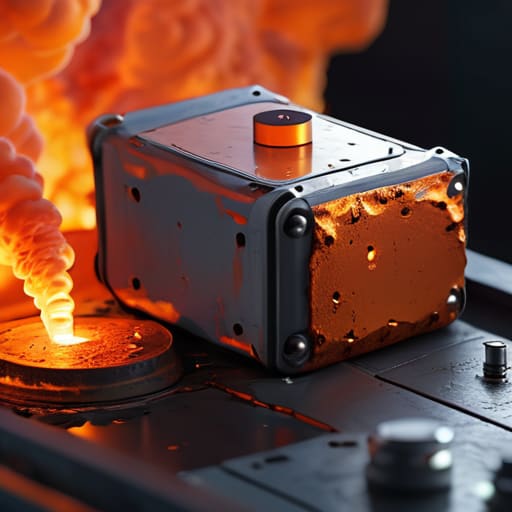
At the end of the day, thermal runaway isn’t some mysterious ghost in the machine; it’s a predictable, chemical chain reaction triggered by everything from manufacturing defects to aggressive fast-charging cycles. We’ve looked at how electrolyte decomposition turns a stable cell into a tiny furnace and how internal shorts act as the spark for the whole mess. If we keep treating these failures as “freak accidents” instead of addressing the fundamental instability of current liquid electrolytes, we’re just spinning our wheels. We can’t build a reliable grid or a massive EV fleet on hardware that requires us to ignore the underlying chemistry just to keep the lights on.
I’m not a pessimist, though. I’ve spent enough hours in labs seeing the data to know that the shift toward solid-state electrolytes and advanced thermal management isn’t just a dream—it’s a technical necessity. The transition to electric mobility is going to happen, but it has to be built on a foundation of safety and real engineering, not just marketing slogans. We have the blueprints; now we just need the grit to move past the status quo and engineer the hardware that actually deserves our trust. Let’s stop chasing hype and start building a future that is actually sustainable.
Frequently Asked Questions
If we can't completely stop the chemical decomposition, what kind of cooling systems are actually effective at preventing a single cell failure from turning into a total pack meltdown?
Look, we have to be realistic: you can’t kill the chemistry entirely, so you have to manage the heat like a pro. Passive cooling isn’t going to cut it for high-performance packs. We need aggressive liquid cooling—think cold plates or immersion cooling—that keeps the delta between cells minimal. If one cell starts redlining, the system needs to pull that heat away instantly before it triggers a domino effect across the entire module.
Are solid-state batteries actually the "silver bullet" for thermal runaway, or is that just more corporate hype to keep investors happy?
Look, I’ll give it to you straight: solid-state is the holy grail, but calling it a “silver bullet” right now is pure investor bait. By swapping out that volatile liquid electrolyte for a solid ceramic or polymer, we’re essentially removing the fuel for the fire. It’s a massive win for safety. But we’re still fighting massive hurdles with dendrite growth and manufacturing scalability. It’s real science, not just hype, but we aren’t there yet.
How much of this risk is due to bad cell design versus the way these massive battery packs are being integrated into the vehicle's chassis?
Honestly, it’s a bit of both, and that’s the problem. You can have a perfectly engineered cell, but if the pack integration is sloppy, you’re asking for trouble. I see it all the time: engineers focus so hard on cell-level chemistry that they forget about thermal management at the pack level. If the chassis design doesn’t account for heat soak or uneven cooling across the modules, even the best cell design will eventually succumb to a thermal runaway loop.
