
I remember sitting in a cramped lab at Georgia Tech, staring at a degraded lithium-ion cell that looked like it had been through a war. I had spent weeks chasing software optimizations and “smart” battery management systems, only to realize the real culprit was something much more visceral: the physical breakdown at the interface. Everyone in the industry loves to talk about AI-driven charging cycles, but they’re ignoring the fundamental reality that if your anode coating technologies aren’t up to par, all the code in the world won’t stop your battery from dying. We’ve become too obsessed with the digital layer while the actual chemistry is crumbling underneath.
I’m not here to sell you on some vague, corporate-approved roadmap for the “future of energy.” Instead, I want to pull back the curtain on the actual hardware. I’m going to break down how different anode coating technologies actually function to stabilize the SEI layer and prevent capacity fade. My goal is to give you a grounded, data-driven look at the materials that will actually determine whether electric mobility becomes a sustainable reality or just another expensive, short-lived trend.
Table of Contents
- Solving Capacity Retention in Lithium Batteries Through Real Hardware
- Beyond Vague Promises Mastering Solid Electrolyte Interphase Formation
- Hard Truths: 5 Ways to Actually Level Up Anode Performance
- The Bottom Line: Why We Can't Afford to Ignore the Micro-Level
- ## The Real Bottleneck
- The Bottom Line on Anode Chemistry
- Frequently Asked Questions
Solving Capacity Retention in Lithium Batteries Through Real Hardware
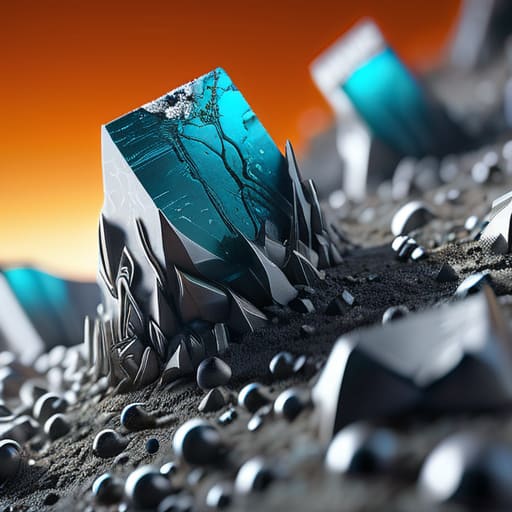
If we want to stop seeing EVs lose their range after just a few years, we have to stop treating the battery like a “black box” and start looking at the microscopic chaos happening at the interface. The biggest killer of capacity retention in lithium batteries isn’t just cycle count; it’s the uncontrolled growth of the SEI layer. Every time that layer thickens uncontrollably, you’re essentially eating your own battery, consuming active lithium to build a crust that eventually chokes the system.
To fix this, we need to move past the “hope and pray” method of managing degradation. I’m talking about precision-engineered anode surface modification techniques that create a stable, predictable barrier from day one. Instead of letting the chemistry react wildly during the first few charge cycles, we can use methods like atomic layer deposition for electrodes to build a protective shield one single layer of atoms at a time. It’s the difference between slapping a coat of house paint on a wall and using a high-tech sealant that actually integrates with the substrate. If we can master this level of control, we aren’t just building better batteries; we’re building hardware that actually lasts a lifetime.
Beyond Vague Promises Mastering Solid Electrolyte Interphase Formation

Every time I see a corporate press release promising “revolutionary” battery life, I immediately look for the data on the SEI. If they aren’t talking about solid electrolyte interphase formation, they aren’t actually talking about the hardware. In my labs back at Georgia Tech, we learned pretty quickly that you can have the most efficient lithium-ion setup in the world, but if that interface is unstable, your battery is essentially a ticking clock of degradation. The SEI is that thin, messy layer that forms on the anode during the first few cycles; if it grows uncontrollably, it eats your capacity for breakfast.
To actually fix this, we have to move past trial-and-error and get surgical with anode surface modification techniques. I’m talking about using precision methods like atomic layer deposition for electrodes to create a protective shield that is uniform at the molecular level. We need a layer that is robust enough to withstand the mechanical stress of ions moving in and out, but permeable enough to let the charge flow without resistance. That is the only way we achieve the kind of stability needed for long-range EVs.
Hard Truths: 5 Ways to Actually Level Up Anode Performance
- Stop treating the SEI like a side effect; if you aren’t engineering your coating to stabilize the Solid Electrolyte Interphase from cycle one, you’re just building a battery with an expiration date.
- Prioritize mechanical toughness in your coatings to handle the “breathing” problem—if your anode coating can’t withstand the physical expansion and contraction of silicon during lithiation, it’s going to crack and fail.
- Look past the marketing fluff on “high capacity” and start asking about cycle life; a massive capacity boost is useless if the coating can’t prevent continuous electrolyte consumption.
- Focus on conductive additive integration within the coating layer itself, because if your electrons can’t move efficiently through the interface, all that fancy chemistry is just dead weight.
- Demand transparency in material sourcing for these coatings; we can’t claim to be building a sustainable future if our “advanced” anode tech relies on supply chains that are just as dirty as the gas guzzlers I grew up around.
The Bottom Line: Why We Can't Afford to Ignore the Micro-Level
If we’re serious about making EVs affordable for everyone, we have to move past software patches and focus on the physical stability of anode coatings to stop capacity fade before it starts.
Mastering the SEI layer isn’t just a lab experiment; it’s the literal frontline of battery longevity and the only way to prevent the kind of degradation that turns a high-end EV into a paperweight after five years.
Real sustainability in the energy transition depends on hardware that lasts—meaning our focus must shift from chasing massive energy density numbers to perfecting the chemistry that keeps those cells stable over thousands of cycles.
## The Real Bottleneck
“Everyone wants to talk about software updates and autonomous driving, but if we don’t get the physics of anode coatings right, we’re just building high-tech paperweights that die after three years of heavy use.”
Desmond Achebe
The Bottom Line on Anode Chemistry
At the end of the day, we can’t keep pretending that software updates or clever marketing will fix a fundamental hardware deficit. We’ve looked at how controlling the SEI layer and perfecting anode coatings aren’t just “nice-to-have” engineering tweaks; they are the actual gatekeepers of battery longevity. If we don’t get the chemistry right at the interface, we’re just building expensive, short-lived bricks that will end up in a landfill long before they’ve paid for themselves. To move the needle on EV adoption, we have to stop chasing the hype and start mastering the microscopic stability of the anode.
I’m optimistic about where we’re headed, but I’m not going to be a cheerleader for companies that ignore these technical realities. The transition to a truly electric future depends on our ability to build hardware that is actually sustainable, not just “green” on paper. We need more engineers who are willing to get their hands dirty in the lab and focus on the grueling, unglamorous work of material science. That is how we build a grid—and a transportation system—that actually lasts for my generation and the ones coming after us.
Frequently Asked Questions
If these coatings are so effective at stabilizing the SEI, why aren't we seeing them used in every budget EV on the market right now?
Because “effective” doesn’t always mean “scalable.” Look, in the lab, these coatings are magic. But in a mass-production factory? They’re a headache. Most of these advanced coatings require specialized deposition processes—like atomic layer deposition—that are incredibly slow and expensive compared to the standard slurry methods used for budget cells. Manufacturers are stuck in a loop: they want the performance, but they aren’t willing to overhaul their entire assembly line just to squeeze out an extra 5% cycle life.
How much of a hit are we actually taking on energy density when we add these extra layers of coating to the anode?
Look, it’s a trade-off, and I won’t sugarcoat it: adding coating layers does add “dead weight” to the cell. You’re essentially trading a bit of theoretical energy density for actual, usable cycle life. But here’s the reality—a battery with slightly higher density that dies after 300 cycles is just a paperweight. I’d rather have a slightly heavier pack that actually lasts a decade than a high-spec dream that ends up in a landfill in three years.
From a manufacturing standpoint, does adding these advanced coating steps make the whole battery production process too expensive to scale?
Look, I get the skepticism. On paper, adding more steps to a high-speed production line looks like a recipe for a massive price hike. But we have to look at the lifecycle cost, not just the upfront BOM (Bill of Materials). If a coating process adds 5% to the manufacturing cost but doubles the cycle life of the pack, the cost-per-mile actually plummets. We aren’t just building gadgets; we’re building infrastructure. Efficiency wins in the long run.
