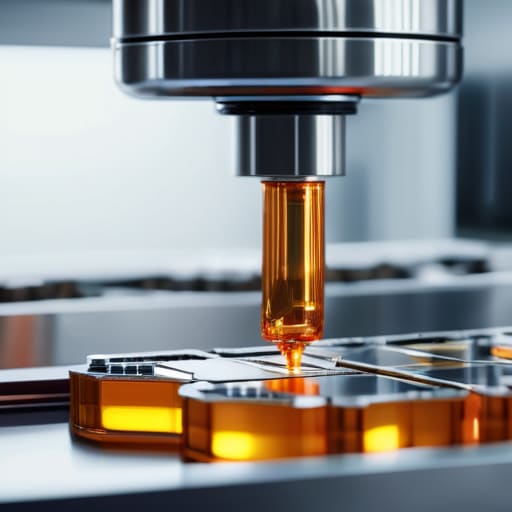
I still remember the smell of ozone and burnt flux in my Georgia Tech lab during my junior year, staring at a prototype cell that had just undergone a catastrophic thermal event. It wasn’t some high-tech failure from a sci-fi movie; it was a fundamental breakdown in how we were applying battery manufacturing techniques to the electrode coating. Most people think scaling up production is just about building bigger factories and throwing more capital at the problem, but that’s total corporate nonsense. The real battle isn’t won in a boardroom; it’s won in the microscopic precision of the slurry application and the drying stages where even a tiny deviation in humidity can ruin an entire batch of cells.
I’m not here to sell you on the “green revolution” through glossy PR brochures or vague promises of 2030 milestones. My goal is to strip away the marketing fluff and look at the actual hardware and the messy chemistry required to build better cells. We’re going to dive deep into the specific, high-stakes processes that actually determine whether a battery lasts for ten years or fails after ten months. If you want to understand the real engineering behind the energy transition, let’s get into it.
Table of Contents
- The Raw Truth of Slurry Preparation and Mixing
- Precision Engineering in the Lithium Ion Cell Fabrication Process
- Making It Real: 5 Ways We Move from Lab Prototypes to Mass Production
- The Real Bottom Line on Battery Production
- ## The Gap Between Lab Success and Mass Production
- The Road Ahead is Built on Chemistry
- Frequently Asked Questions
The Raw Truth of Slurry Preparation and Mixing
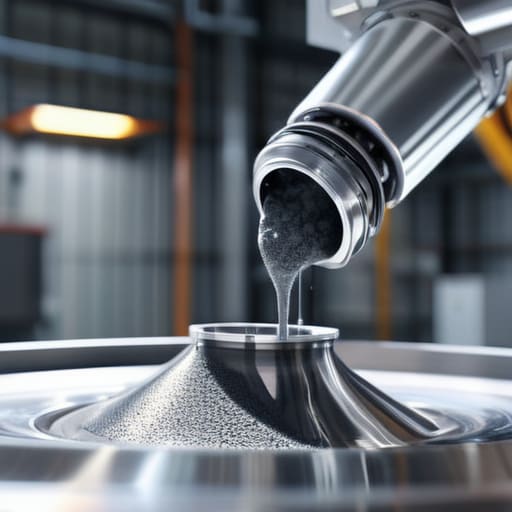
Before we even get to the high-tech coating or the assembly lines, we have to talk about the messy, foundational step: slurry preparation and mixing. Think of it like making a high-stakes batter for a cake, but instead of flour and sugar, you’re balancing active materials, conductive additives, and binders in a precise solvent. If the particles aren’t distributed perfectly at the molecular level, you end up with “hot spots” in the cell. These spots cause uneven current distribution, which is basically a death sentence for cycle life. I’ve seen enough data to know that a single microscopic clump of unmixed material can turn a high-performance cell into a paperweight after only a few hundred cycles.
Right now, most gigafactories rely on “wet” methods using toxic solvents like NMP, which requires massive energy to dry out. It’s inefficient, and frankly, it’s a bottleneck in the lithium-ion cell fabrication process. There’s a lot of buzz around dry electrode manufacturing technology as a way to cut out the drying ovens and the chemical waste, but moving from lab-scale success to massive industrial throughput is where the real engineering headache begins.
Precision Engineering in the Lithium Ion Cell Fabrication Process

Once you’ve moved past the messy business of slurry preparation and mixing, you hit the part where things actually get intense: the precision engineering phase. This isn’t just about slapping materials together; it’s about micron-level accuracy. During the lithium-ion cell fabrication process, even a microscopic speck of dust or a slight deviation in coating thickness can turn a high-performance cell into a literal fire hazard. I’ve spent enough hours in labs to know that if your electrode coating isn’t perfectly uniform, you’re looking at uneven current distribution and, eventually, premature degradation.
The industry is currently caught in a tug-of-war between traditional wet coating and the promise of dry electrode manufacturing technology. While the wet method is the current standard in most gigafactory production workflows, it’s incredibly energy-intensive because you have to bake out all those solvents. Moving toward dry processes is the holy grail for me—it’s cleaner, faster, and way more efficient. But until we can scale that without losing precision, we’re stuck obsessing over every single millimeter of the coating process to ensure long-term stability.
Making It Real: 5 Ways We Move from Lab Prototypes to Mass Production
- Stop treating electrode coating like it’s just “painting” a surface. If your slurry isn’t perfectly homogeneous, you’re basically building a ticking time bomb of uneven current distribution. We need to prioritize high-shear mixing that actually respects the chemistry.
- Dry electrode manufacturing isn’t just a “nice-to-have” anymore; it’s a necessity. Eliminating the massive solvent recovery systems used in wet coating can slash the energy footprint of the factory itself, which is the only way to avoid that corporate greenwashing I’m always talking about.
- Tighten the tolerance on calendering. If you over-compress the electrode to chase energy density, you risk micro-fractures in the active material. It’s a delicate balance between packing those ions tight and making sure the structure doesn’t crumble after fifty cycles.
- Watch the moisture like a hawk during assembly. Even a few parts-per-million of water ingress during the cell filling stage can lead to electrolyte decomposition. It’s not just about efficiency; it’s about preventing the internal gas buildup that kills long-term stability.
- Implement real-time, AI-driven inspection instead of relying on batch testing. In a high-speed production line, waiting until the end of the run to find out a whole batch has dendrite risks is a massive waste of raw materials. We need to catch the defects at the millisecond level.
The Real Bottom Line on Battery Production
It’s not just about dumping chemicals in a bucket; the entire lifecycle of a cell depends on the precision of the slurry mix and the microscopic consistency of the coating.
We have to move past the marketing fluff and recognize that true sustainability in EVs is won or lost in the engineering tolerances of the fabrication line.
If we don’t master the hardware-level complexities of electrode deposition now, we’re just building expensive paperweights instead of a scalable energy revolution.
## The Gap Between Lab Success and Mass Production
“Everyone loves to talk about the theoretical energy density of a new solid-state cell in a controlled lab setting, but the real battle isn’t won in a cleanroom—it’s won on the factory floor, where we have to figure out how to scale these precise chemical recipes without turning the whole process into a massive, wasteful headache.”
Desmond Achebe
The Road Ahead is Built on Chemistry
At the end of the day, we can’t just treat battery production like a black box and hope for the best. We’ve looked at how everything from the initial slurry mixing to the high-stakes precision of cell fabrication dictates whether a battery lasts ten years or two. If the slurry isn’t homogenous or the coating thickness is off by even a few microns, you aren’t just losing efficiency—you’re creating a ticking time bomb of degradation. Moving from the lab to mass production isn’t just about scaling up; it’s about maintaining that microscopic level of control across millions of individual cells.
I know it’s easy to get lost in the technical weeds, but there’s a massive reason why this level of detail matters. Every time we refine a manufacturing technique or solve a stability issue in the fabrication line, we are one step closer to making high-density energy storage something that isn’t just for luxury EVs, but for everyone. The transition to electric mobility is going to be won or lost in these factories, not in marketing meetings. We need to focus on the real hardware and the hard science, because that is the only way we build a truly sustainable future for the next generation.
Frequently Asked Questions
If the slurry mixing process is so sensitive, how do manufacturers prevent tiny impurities from causing those massive, unexpected thermal runaway events?
It’s a nightmare scenario for anyone working in grid stability or EV design. To stop those micro-impurities from turning into a thermal runaway, manufacturers use ultra-cleanroom environments and high-precision filtration. We’re talking about passing the slurry through micron-level filters to catch any stray metallic particles before they ever hit the coating stage. They also use real-time spectroscopic monitoring to scan the chemical consistency. If the data shows even a tiny deviation, the whole batch is scrapped. No shortcuts.
We talk a lot about precision in fabrication, but how much of the current high cost of EVs is actually due to these manufacturing complexities versus just scaling the supply chain?
It’s a bit of both, but don’t let the “scale” argument fool you into thinking it’s a simple volume game. While scaling the supply chain for raw materials like lithium and nickel is a massive headache, the real cost driver is the yield. If your fabrication process is so sensitive that a microscopic speck of dust or a slight temperature shift ruins a batch of cells, you aren’t just paying for materials—you’re paying for waste. Precision is expensive because perfection is hard.
As we move toward solid-state tech, are we looking at a complete overhaul of the current coating and drying infrastructure, or can we adapt the existing lines?
Honestly, it’s a bit of both, but mostly a massive headache for manufacturers. We aren’t throwing out every machine overnight—that’s too expensive. We can repurpose a lot of the coating heads and drying ovens, but the “soul” of the process changes. Solid-state requires much tighter control over moisture and pressure. You can’t just run a standard liquid electrolyte line and call it a day; you’re looking at significant retrofits to handle the new material physics.
