
I still remember the smell of scorched electrolyte in my Georgia Tech lab during my junior year—that sharp, metallic tang that hits your throat when a cell goes sideways. It was a brutal reminder that while everyone else was reading glossy brochures about the “green revolution,” the actual reality of battery manufacturing is a gritty, high-stakes game of precision chemistry and massive industrial scale. Most people think we just need more factories, but they’re missing the point. You can build a thousand gigafactories, but if you haven’t mastered the microscopic consistency of the electrode coating, you’re just building very expensive piles of scrap metal.
I’m not here to sell you on the utopian marketing fluff that tech CEOs use to pump their stock prices. Instead, I want to pull back the curtain on the actual hardware and the messy, complicated processes that make these cells tick. We’re going to dive into the real bottlenecks of battery manufacturing, from raw material purity to the scaling issues that keep engineers like me up at night. My goal is to give you a grounded, data-driven look at what it actually takes to build a sustainable energy future, one cell at a time.
Table of Contents
- Mastering Lithium Ion Battery Production Stages
- Why Anode and Cathode Coating Technology Dictates Success
- Hard Truths from the Factory Floor: 5 Ways to Avoid Manufacturing Failure
- The Bottom Line: Why Manufacturing Precision Matters
- ## The Reality of the Assembly Line
- The Bottom Line on Battery Production
- Frequently Asked Questions
Mastering Lithium Ion Battery Production Stages
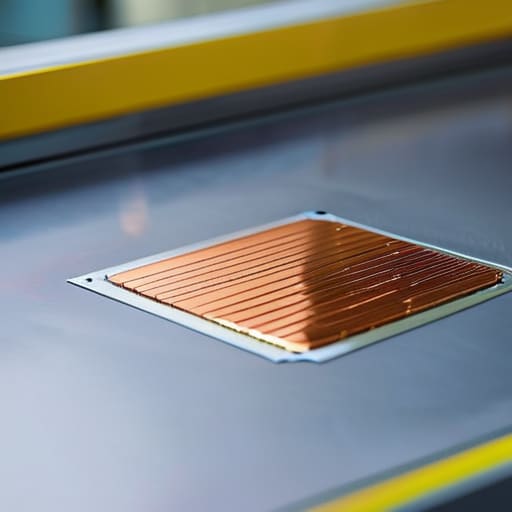
To understand how we actually get from raw materials to a functional pack, you have to look past the massive scale of a factory floor and focus on the precision of the lithium-ion battery production stages. It starts with the slurry—a messy, highly sensitive mixture of active materials, conductive additives, and binders. This isn’t just like mixing paint; the anode and cathode coating technology requires extreme uniformity. If your coating thickness varies by even a few microns, you’re looking at uneven current distribution and, eventually, premature cell failure.
Once the coatings are dried and calendered, we move into the high-stakes world of electrochemical cell assembly. This is where the “sandwich” comes together: stacking the anode, separator, and cathode with surgical precision. It’s a tight window where even a microscopic speck of dust can cause a short circuit. Then comes the electrolyte formulation, where we inject the liquid that allows ions to move. This is the heart of the cell, but it’s also where most manufacturers struggle with maintaining chemical stability during high-speed production. It’s a delicate balance of chemistry and mechanical engineering.
Why Anode and Cathode Coating Technology Dictates Success
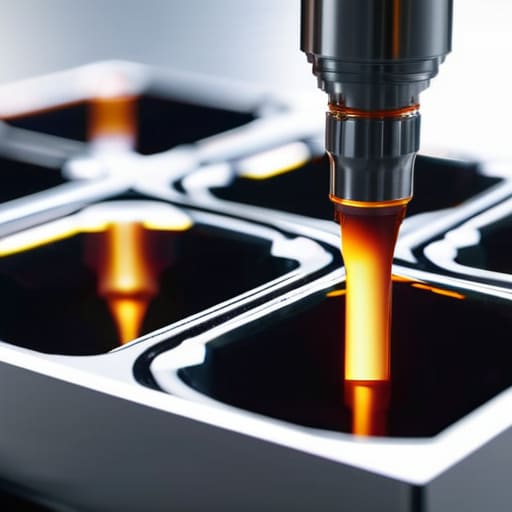
If you want to understand why some cells last a decade while others degrade after a few hundred cycles, you have to look at the coating process. This isn’t just about slapping chemicals onto a foil; it’s about precision. Anode and cathode coating technology is essentially the foundation of the entire cell’s performance. If the slurry isn’t perfectly homogeneous or if the drying process creates micro-cracks in the active material, you’re looking at uneven current distribution. That’s how you get hot spots, and hot spots are the fastest way to kill a battery’s lifespan.
When we talk about gigafactory scaling challenges, this is exactly where the friction happens. It’s one thing to get a perfect coating in a controlled university lab at Georgia Tech, but it’s an entirely different beast to maintain that level of uniformity across kilometers of high-speed production lines. Any inconsistency in thickness or adhesion during these lithium-ion battery production stages creates a ripple effect. It messes with the electrochemical cell assembly later on and ultimately forces the manufacturer to choose between lower yields or lower-quality cells. We can’t afford to compromise on the chemistry just to hit volume targets.
Hard Truths from the Factory Floor: 5 Ways to Avoid Manufacturing Failure
- Stop treating moisture like a minor inconvenience. If your dry room isn’t dialed in perfectly, you’re basically inviting lithium plating to ruin your cycle life before the cell even leaves the line.
- Focus on coating uniformity or don’t bother starting. Even a tiny deviation in your slurry application creates hot spots that turn a high-performance cell into a thermal runaway liability.
- Prioritize real-time data over end-of-line testing. If you’re waiting until the battery is fully assembled to find a defect, you’ve already wasted a massive amount of expensive raw material.
- Don’t get blinded by “theoretical” energy density. A cell that looks amazing on a white paper is useless if the manufacturing process can’t scale it without massive yield losses.
- Treat your electrolyte filling like a surgical procedure. It’s the most sensitive part of the assembly, and if your vacuum-filling process is sloppy, your impedance numbers will be a nightmare.
The Bottom Line: Why Manufacturing Precision Matters
It’s not just about slapping materials together; the real battle for energy density is won or lost in the microscopic precision of the coating process. If your anode and cathode aren’t uniform, your battery is dead on arrival.
We need to move past the “more is better” mindset regarding raw materials and start focusing on manufacturing yields. A battery that’s hard to build is a battery that’s too expensive for the average person to actually drive.
Scaling up is a massive engineering headache, not just a financial one. Transitioning from a lab-scale breakthrough to a gigafactory-ready process is where most “green” tech companies fail, and that’s where we need to keep our eyes glued.
## The Reality of the Assembly Line
“Everyone wants to talk about the ‘revolution’ of electric vehicles, but the revolution isn’t happening in a marketing meeting—it’s happening in the microscopic precision of the coating process. If your manufacturing can’t handle the chemical tolerances required for high-density cells, you aren’t building a future, you’re just building expensive paperweights.”
Desmond Achebe
The Bottom Line on Battery Production

At the end of the day, making a battery isn’t just about slapping together some chemicals and hoping for the best. We’ve seen how the entire lifecycle—from the precision of the electrode coating to the delicate management of the drying process—determines whether a cell becomes a reliable powerhouse or just expensive scrap metal. If the anode and cathode layers aren’t perfectly uniform, the whole system fails, regardless of how much marketing budget a company throws at it. To move the needle on electric mobility, we have to focus on mastering these microscopic details and ensuring that our manufacturing processes are as efficient as the energy they store.
I know it’s easy to get lost in the hype of “next-gen” breakthroughs, but the real revolution is happening right now in the manufacturing plants, not just in theoretical lab papers. We are building the backbone of a new era, and that requires a relentless focus on scalable, sustainable hardware. It’s going to be messy, and the engineering hurdles are massive, but if we get the chemistry and the production lines right, we aren’t just making batteries—we’re building the foundation for a world that actually moves. Let’s stop chasing the shiny promises and start building the real stuff.
Frequently Asked Questions
If we're moving toward solid-state tech, how much of our current manufacturing infrastructure is actually going to become obsolete?
Honestly? A lot of it. We’re talking about a massive hardware pivot. While the high-precision coating machines and slurry mixers we use for liquid electrolytes might see some repurposed life, the assembly lines themselves are a different story. Transitioning to solid-state means ditching the liquid injection steps for entirely different deposition processes. It’s not just a software update; it’s a complete overhaul of the factory floor. We’re looking at significant stranded assets if we don’t plan the transition carefully.
We talk a lot about coating quality, but how much does the actual purity of the raw slurry impact the long-term degradation of the cell?
Honestly, purity is everything. If your slurry is even slightly contaminated with trace metals or moisture, you’re basically planting landmines inside the cell. Those impurities trigger parasitic side reactions that chew through your electrolyte and build up up on the anode. You might see fine specs on your initial discharge curves, but it’s a slow-motion train wreck for cycle life. High-quality coating doesn’t matter if the chemistry inside is already fighting itself.
Is the industry actually scaling up sustainable sourcing for these materials, or are we just trading one environmental crisis for another in the supply chain?
Honestly? Right now, it feels like we’re just swapping one set of problems for another. We’re moving away from fossil fuels, sure, but the rush for cobalt and nickel is creating massive ecological and ethical debt in the Global South. The industry talks a big game about “sustainability,” but until we see massive investment in closed-loop recycling and LFP chemistries that ditch these problematic minerals, we’re just trading carbon emissions for mining scars.
