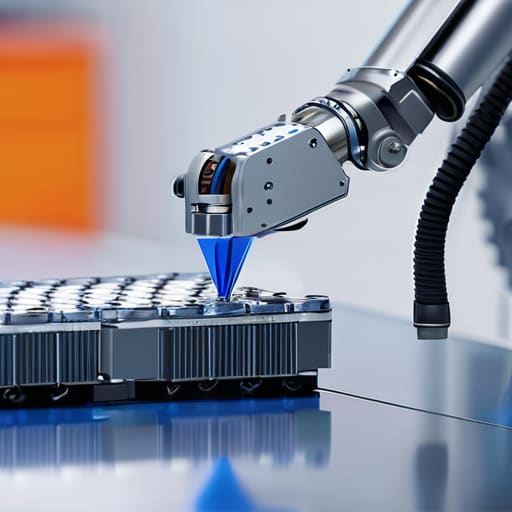
I still remember the smell of scorched electrolyte in my sophomore year lab at Georgia Tech—a sharp, metallic tang that hits you right in the back of the throat when a cell goes sideways. Most people look at a sleek EV and see a futuristic gadget, but when I look at one, I see the incredibly volatile, high-stakes dance of the battery manufacturing process. There is so much corporate fluff out there claiming we’ve “solved” energy density, but if you actually step onto a factory floor, you realize the reality is much more granular and, frankly, much more difficult. We aren’t just building machines; we are trying to control molecular-level chaos at a massive scale.
I’m not here to sell you on the utopian dream or parrot some CEO’s vague sustainability roadmap. Instead, I want to pull back the curtain on the actual hardware and the chemical hurdles that dictate whether a battery lasts five years or fifteen. We’re going to strip away the greenwashing and look at the real engineering behind cell production, from slurry mixing to formation. By the time we’re done, you’ll understand the technical friction that stands between us and a truly sustainable grid.
Table of Contents
- Decoding the Critical Lithium Ion Battery Production Stages
- Anode and Cathode Fabrication Where the Real Chemistry Begins
- Beyond the Lab Bench: 5 Real-World Realities of Scaling Battery Production
- The Bottom Line on Battery Production
- ## The Gap Between Hype and Hardware
- The Reality Behind the Cells
- Frequently Asked Questions
Decoding the Critical Lithium Ion Battery Production Stages
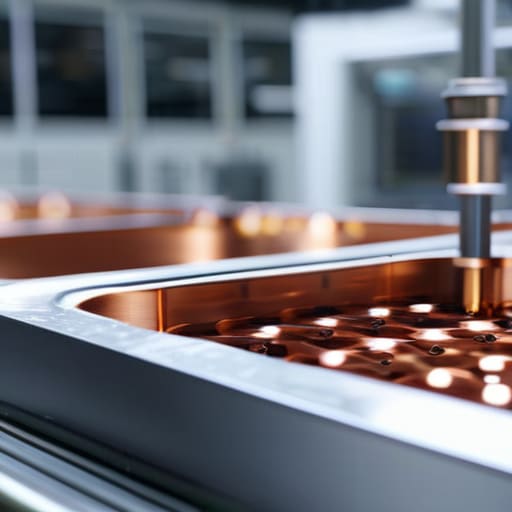
To understand how we actually get from raw minerals to a functional pack, you have to look at the heavy lifting happening during the anode and cathode fabrication phase. This isn’t just mixing powders; it’s precision engineering at a molecular level. We start with slurry preparation, where active materials are blended with conductive additives and binders. The real debate in the industry right now, though, is the shift toward dry electrode manufacturing vs wet coating. Wet coating is the current standard, but it’s incredibly energy-intensive because you have to bake off massive amounts of solvent. If we can perfect dry processing, we’re not just saving time—we’re slashing the carbon footprint of the factory itself.
Once those electrodes are ready, we move into cell assembly, where the layers are stacked or wound with a separator in between. This is where things get high-stakes. We then move into the electrolyte filling techniques, injecting the liquid medium that allows ions to actually move. If the vacuum pressure or the temperature is even slightly off during this stage, you’re looking at a cell that might fail prematurely. It’s all about maintaining chemical purity to ensure the battery doesn’t just work today, but lasts for a decade.
Anode and Cathode Fabrication Where the Real Chemistry Begins

This is where the theoretical physics I studied at Georgia Tech actually hits the metal. In the anode and cathode fabrication stage, we aren’t just mixing ingredients; we’re engineering the very architecture of energy movement. For the cathode, you’re working with metal oxides—usually nickel, manganese, or cobalt—that have to be coated onto an aluminum foil substrate with surgical precision. If the coating is uneven by even a few microns, you’re looking at massive impedance issues down the line. It’s a high-stakes game of chemical consistency where even a tiny impurity can trigger a thermal runaway event.
Lately, I’ve been tracking the massive industry shift regarding dry electrode manufacturing vs wet coating. The traditional “wet” method involves using toxic solvents like NMP that have to be evaporated in massive, energy-hungry ovens. It’s inefficient and, frankly, a bit of a headache for true sustainability. Moving toward dry coating—where we use a binder to create a film without the liquid solvent—is the kind of hardware-level optimization we actually need. It cuts down the factory footprint and slashes the carbon cost of production, which is the only way we’re going to hit those density targets.
Beyond the Lab Bench: 5 Real-World Realities of Scaling Battery Production
- Stop ignoring the “Dry Room” factor. You can have the most advanced cathode slurry in the world, but if your humidity control isn’t surgical, you’re basically inviting moisture to ruin your cell chemistry before it even leaves the factory.
- Prioritize material purity over sheer volume. It’s tempting to chase high-throughput manufacturing to hit quarterly targets, but a single microscopic impurity in your electrolyte can lead to dendrite growth and catastrophic failure down the line.
- Look for circularity in the supply chain, not just marketing buzzwords. Real manufacturing efficiency means designing the production line with end-of-life recycling in mind—if we can’t recover the cobalt and nickel easily, we haven’t actually solved the problem.
- Watch the coating uniformity like a hawk. If your electrode coating has even a slight variance in thickness, you’re creating uneven current distribution, which is basically a death sentence for the battery’s cycle life and thermal stability.
- Demand data-driven quality control at every single stage. We need to move past “batch testing” and toward real-time, in-line monitoring of every cell; in the world of high-density energy storage, “good enough” is how you end up with a massive recall.
The Bottom Line on Battery Production
Forget the marketing fluff; the actual performance of an EV depends entirely on the precision of the electrode coating and the purity of the chemical slurry used during fabrication.
We can’t claim to be “green” if we don’t solve the massive energy and material waste issues inherent in the current manufacturing loop.
Scaling up isn’t just about building bigger factories—it’s about perfecting the microscopic chemistry that prevents degradation before the battery even leaves the plant.
## The Gap Between Hype and Hardware
“Everyone wants to talk about the sleek EV driving down the highway, but nobody wants to talk about the messy, high-precision reality of the slurry coating or the dry room environments required to make it happen. If we don’t get the manufacturing physics right at the cell level, all the software in the world won’t save us from a grid that can’t keep up.”
Desmond Achebe
The Reality Behind the Cells

At the end of the day, manufacturing a battery isn’t just about scaling up a factory or cranking out more units; it’s a high-stakes game of precision chemistry. We’ve looked at how the slurry preparation, the delicate coating of electrodes, and the intense drying processes all dictate whether a cell becomes a powerhouse or just a glorified paperweight. If we mess up the anode-cathode balance or let even a microscopic amount of moisture into the assembly line, the whole system fails. We have to move past the superficial metrics of “how many cells per hour” and start prioritizing the integrity of the chemical architecture and the sustainability of the supply chain if we want these systems to actually last.
I know the scale of the challenge looks massive, and the corporate talking points often make it sound like we’ve already solved it. They haven’t. But seeing the actual hardware—the way we manipulate ions and manage thermal stability—makes me realize how close we are to a real breakthrough. We aren’t just building components; we are building the foundation for a world that doesn’t rely on fossil fuels. It’s going to take more than just hype to get us there; it’s going to take rigorous engineering and a refusal to settle for mediocre chemistry. Let’s get to work on the real stuff.
Frequently Asked Questions
If we're getting the chemistry right in the lab, what's the biggest bottleneck when we actually try to scale those processes to a massive gigafactory level?
The biggest bottleneck isn’t the chemistry itself—it’s the “dry room” problem. In a lab, you can control every milligram of moisture. But when you’re scaling to a gigafactory, you’re dealing with massive rolls of electrode material that are hyper-sensitive to humidity. If even a tiny amount of water hits that lithium, you get side reactions that ruin the cell’s stability. Scaling means maintaining surgical-grade environmental control across thousands of square feet, and that’s incredibly expensive and difficult to do.
How much of the current manufacturing cost is tied to the raw materials versus the actual energy required to run the production lines?
If you look at the spreadsheets, the raw materials—lithium, nickel, cobalt—are the heavy hitters, usually eating up about 60% to 70% of the total cell cost. The actual electricity used to run the dry rooms and sintering ovens is a smaller slice, but don’t let that fool you. As we scale, the energy intensity of manufacturing becomes a massive bottleneck for both margins and our actual sustainability goals. It’s a math problem we haven’t solved yet.
Once these cells are manufactured, how much of the process is actually designed with end-of-life recycling in mind, or are we just building future e-waste?
Honestly? Right now, we’re mostly just building future e-waste. Most current manufacturing is optimized for energy density and cost-per-kWh, not for how easy it is to pull a cell apart. We’re basically gluing high-tech materials together in ways that make recovery a nightmare. If we don’t shift toward “design-for-disassembly” and standardized chemistries, we’re just trading a carbon crisis for a massive, toxic mineral graveyard. We need circularity baked into the hardware, not added as an afterthought.
