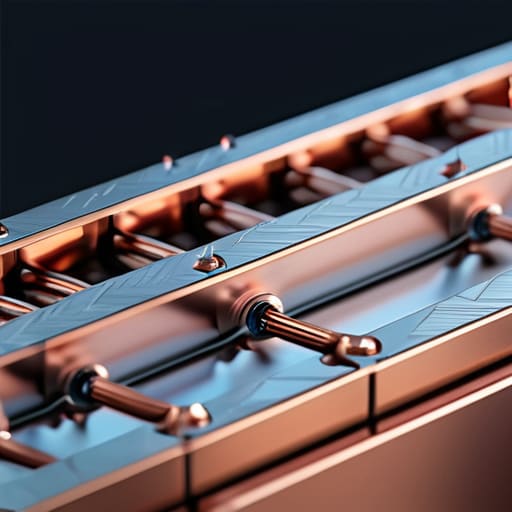
I still remember the smell of ozone and scorched epoxy from my sophomore year lab at Georgia Tech—the unmistakable scent of a high-voltage mistake. I was tinkering with a custom pack for a prototype board, thinking I had the math perfect, only to watch a poorly routed connection turn into a literal heating element. It wasn’t a chemistry failure; it was a failure of battery busbar design. We spend so much time obsessing over the theoretical energy density of new cathode materials that we completely ignore the physical metal paths that actually move the current. If your busbars aren’t up to the task, all that fancy solid-state chemistry in the world won’t save you from a thermal runaway event.
I’m not here to sell you on some overpriced, “revolutionary” component that just adds more weight and cost to a build. Instead, I want to get into the actual hardware reality of how we scale this tech. We’re going to break down the real-world mechanics of battery busbar design, focusing on thermal management, material conductivity, and the structural integrity needed to survive years of vibration and cycling. No corporate fluff—just the hard engineering principles you need to build systems that actually last.
Table of Contents
- Solving Voltage Drop Optimization to Stop Wasting Energy
- Busbar Material Conductivity Comparison Moving Beyond Vague Promises
- Hard Truths: 5 Design Realities That Determine Whether Your Battery Pack Succeeds or Fails
- The Bottom Line: Why Busbar Integrity Matters for the Next Generation of EVs
- ## The Hardware Reality Check
- The Bottom Line on Hardware Integrity
- Frequently Asked Questions
Solving Voltage Drop Optimization to Stop Wasting Energy
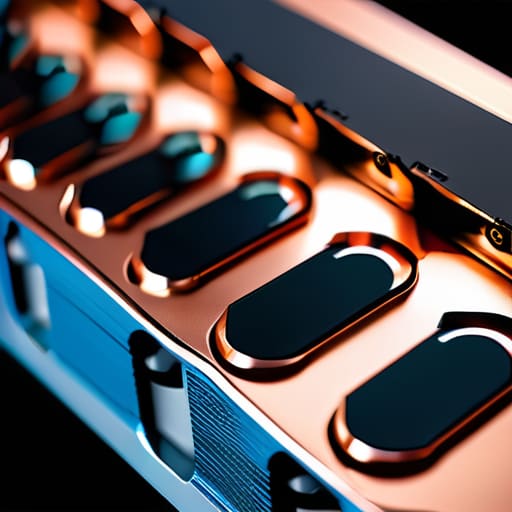
When we talk about efficiency, everyone wants to obsess over cell chemistry, but they completely overlook the “plumbing” of the pack. If your busbars aren’t optimized, you’re essentially trying to run a fire hose through a cocktail straw. Every millivolt lost to resistance is energy that’s being stolen from your range and turned into useless heat. This is where voltage drop optimization becomes a non-negotiable part of the engineering process, not just an afterthought for the CAD team.
To get this right, you have to look at the math behind the material. I’ve spent way too many late nights in the lab looking at busbar material conductivity comparison data, realizing that even a slight deviation in copper purity or an inefficient geometry can tank your system’s performance. It’s not just about connecting Point A to Point B; it’s about managing the real-world physics of high current density. If we don’t solve for these losses at the hardware level, we’re just building expensive, inefficient paperweights that fail the moment they hit a high-load scenario.
Busbar Material Conductivity Comparison Moving Beyond Vague Promises
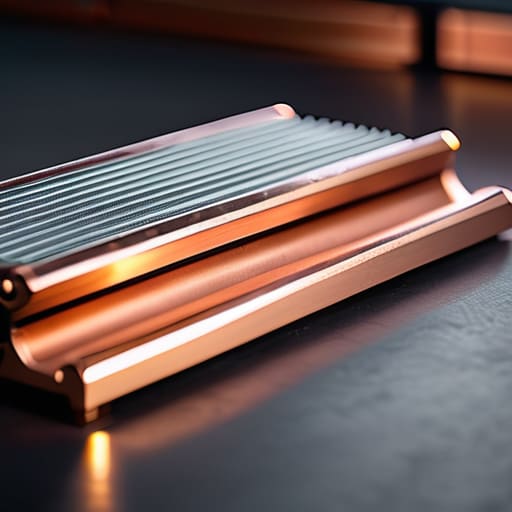
When you’re sitting in a design review, it’s easy to get swept up in the cost-per-unit hype, but we need to talk about the actual physics of what we’re putting in these packs. Everyone wants to default to aluminum because it’s lighter and cheaper, but if you aren’t doing a serious busbar material conductivity comparison, you’re just setting yourself up for a thermal nightmare. Copper is the gold standard for a reason—its electron mobility is leagues ahead—but in the real world of high-performance EVs, the trade-off between mass and efficiency isn’t just a math problem; it’s a sustainability problem.
If we over-rely on lower-conductivity alloys to save a few bucks on the bill of materials, we end up forcing the cooling system to work twice as hard. This creates a vicious cycle where poor material choices lead to massive heat soak, which then complicates your entire thermal management in busbar design. We can’t keep pretending that “good enough” conductivity is acceptable when we’re trying to push high current density through a compact architecture. We need to stop chasing the lowest upfront cost and start designing for the long-term thermal stability of the cell interconnects.
Hard Truths: 5 Design Realities That Determine Whether Your Battery Pack Succeeds or Fails
- Stop treating busbars like simple wires; they are heat sinks. If you don’t design for thermal dissipation, you’re basically building a localized oven inside your pack that will accelerate cell degradation faster than anything else.
- Geometry matters more than you think. Avoid sharp 90-degree bends that create current crowding; instead, use smooth, sweeping curves to ensure the electron flow doesn’t get bottlenecked and heat up like a resistor.
- Don’t get blinded by cheap aluminum. While it’s lighter, if your connection points aren’t perfect, you’re going to deal with massive contact resistance. If you can’t afford high-grade copper, you better have a damn good plan for your joints.
- Vibration is the silent killer. I’ve seen too many “perfect” designs fail because they didn’t account for the mechanical stress of a moving vehicle. If your busbars aren’t secured against harmonic resonance, they will eventually crack or shake themselves loose.
- Plan for the lifecycle, not just the spec sheet. A busbar that works on a lab bench at 25°C is useless if it can’t handle the thermal expansion and contraction cycles of a real-world EV battery pack over ten years.
The Bottom Line: Why Busbar Integrity Matters for the Next Generation of EVs
Stop treating busbars as an afterthought; if your architecture can’t handle real-world voltage drops and thermal stress, your entire battery pack is essentially leaking potential.
Material choice isn’t just a line item on a spreadsheet—moving beyond basic copper to optimized conductivity is the only way to ensure we aren’t wasting precious energy through heat dissipation.
True sustainability in electric mobility requires a hardware-first mindset where we design for long-term cycle life and thermal stability, rather than just chasing the cheapest possible assembly.
## The Hardware Reality Check
“We can keep obsessing over theoretical energy densities in the lab, but if your busbar architecture is a bottleneck, you’re basically trying to push a firehose’s worth of current through a drinking straw. True efficiency isn’t just about the cells; it’s about the hardware that actually connects them.”
Desmond Achebe
The Bottom Line on Hardware Integrity

At the end of the day, we can’t just keep obsessing over cell chemistry and forget the actual pathways that move the electrons. We’ve looked at why optimizing for voltage drop is non-negotiable if we want to stop bleeding energy as heat, and why picking the right material conductivity isn’t just a luxury—it’s a requirement for system longevity. If the busbar architecture is weak, the most advanced solid-state battery in the world is essentially a paperweight. We have to treat these components as the critical nervous system of the entire pack, rather than just an afterthought in the assembly line. Real efficiency is built from the copper up.
I know it’s easy to get lost in the hype of “next-gen” breakthroughs and massive range claims, but the transition to sustainable mobility is going to be won or lost in the details of the hardware. We need to stop settling for “good enough” engineering and start designing for the extreme thermal and electrical stresses that real-world driving demands. If we get the fundamental infrastructure right—the busbars, the connections, the thermal management—then we actually have a shot at a scalable, reliable electric future. Let’s build something that actually lasts instead of just something that looks good on a spec sheet.
Frequently Asked Questions
How do we balance the thermal management requirements of high-current busbars with the need to keep the overall battery pack weight down for EV range?
It’s the classic engineering tug-of-war: thermal headroom vs. energy density. If we over-engineer the busbars with massive cross-sections to keep temperatures low, we’re just adding dead weight that kills our range. I look at it through the lens of material efficiency—using high-conductivity alloys or even integrated liquid cooling channels within the busbar structure itself. We shouldn’t just be adding mass to shed heat; we need smarter geometry that optimizes airflow and thermal dissipation without the bulk.
Are there specific manufacturing techniques, like laser welding versus mechanical fastening, that actually improve long-term reliability under constant vibration?
Look, if we’re talking long-term reliability under constant vibration—think pothole-ridden roads or high-frequency motor hum—laser welding is the clear winner. Mechanical fasteners are fine for prototyping, but they eventually loosen or suffer from fretting corrosion. It’s a nightmare for contact resistance. Laser welding creates a monolithic connection that basically turns the busbar and cell terminal into one continuous piece. It eliminates the “wiggle room” that leads to micro-arcing and thermal runaway.
When we talk about moving away from copper to save costs, what are the real-world implications for impedance and heat buildup in high-density cells?
Look, the math is brutal. If you swap copper for aluminum to pad the margins, you’re essentially trading capital for thermal chaos. Aluminum has significantly higher resistivity, which spikes your impedance. In high-density cells, that isn’t just a theoretical loss; it’s actual heat buildup right at the connection point. If we don’t design for that increased thermal load, we’re just creating localized hotspots that accelerate cell degradation. We can’t optimize for cost by sacrificing the hardware’s lifespan.
