I remember sitting in my dorm at Georgia Tech, surrounded by half-disassembled lithium cells and a stack of data sheets, trying to figure out why my DIY electric board would die after ten minutes of heavy uphill riding. It’s the same frustration I see every day in the industry: we’ve been taught that one technology is the “holy grail,” but the reality of supercapacitors vs batteries is way more nuanced than a marketing brochure tells you. Most people think it’s a simple choice between capacity and speed, but if you don’t understand the underlying chemistry, you’re just chasing phantom specs that won’t hold up when you actually hit the road.
I’m not here to sell you on some corporate greenwashing or vague promises about “next-gen” breakthroughs that are still a decade away. Instead, I’m going to break down the actual hardware—the physics of how these things store charge—so you can see where each one actually wins. We’re going to look past the hype and get into the real-world trade-offs of energy density versus power density. By the end of this, you’ll stop looking at these as competing products and start seeing them as specific tools for a much larger, more complex grid.
Table of Contents
- The Battery: The Long-Distance Workhorse
- The Supercapacitor: The Sprint Specialist
- Decoding the Electrochemical Energy Storage Mechanisms That Matter
- The Brutal Truth of Specific Energy vs Specific Power
- The Bottom Line: Picking the Right Hardware for the Job
- The Energy Density Trap
- The Bottom Line: It’s Not a Zero-Sum Game
- Frequently Asked Questions
The Battery: The Long-Distance Workhorse

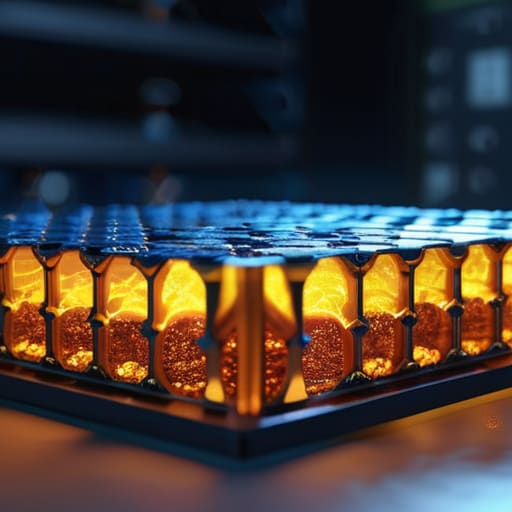
Batteries are electrochemical devices that store energy through chemical reactions, providing a steady flow of power over extended periods. At their core, they rely on the movement of ions between an anode and a cathode to facilitate energy discharge, making them the undisputed kings of energy density. When you’re looking at the showdown of supercapacitors vs batteries, the battery is the one you choose when you need to actually go somewhere without stopping every ten miles.
I remember watching my dad struggle to get his old truck through a single tank of gas, and that’s exactly why I’m so obsessed with battery chemistry. In the EV world, the battery is your lifeline; it’s the difference between a smooth, 300-mile road trip and being stranded on a shoulder with a dead cell. While the chemistry is complex and the degradation rates can be a headache, the ability to pack a massive amount of “juice” into a relatively small footprint is what makes modern electric mobility a reality rather than just a science experiment.
The Supercapacitor: The Sprint Specialist
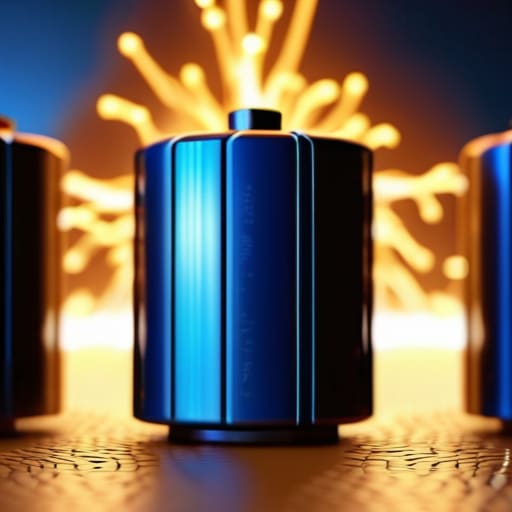
Supercapacitors are electrostatic devices that store energy by accumulating electrical charges on the surface of electrodes through a process called adsorption. Unlike the slow chemical dance of a battery, these components use an electric field to move ions almost instantly, offering unmatched power density and incredibly fast charge-discharge cycles. In the context of supercapacitors vs batteries, think of them as the high-performance sprinters of the energy world—they can’t run a marathon, but they can hit top speed in a heartbeat.
I see this play out constantly when I’m tinkering with my vintage electric skateboards; if you need a sudden, massive burst of torque to tackle a steep hill, a battery alone can sometimes feel sluggish. That’s where the “punch” of a capacitor comes in. They are perfect for applications that require rapid energy bursts, like regenerative braking systems in EVs that need to soak up a huge spike of energy in a split second. They aren’t meant to replace the battery, but they are the secret weapon for handling the heavy lifting that would otherwise cook a standard lithium-ion cell.
Comparison of Energy Storage Technologies
| Feature | Supercapacitors | Batteries |
|---|---|---|
| Energy Density | Low | High |
| Power Density | Very High | Low |
| Charge/Discharge Cycle Life | Extremely Long | Limited |
| Charging Speed | Seconds to Minutes | Minutes to Hours |
| Discharge Duration | Short Bursts | Long Duration |
| Cost per Cycle | Low | High |
| Best For | High-power bursts | Steady energy supply |
Decoding the Electrochemical Energy Storage Mechanisms That Matter

If we want to move past the marketing fluff, we have to look at how these devices actually move electrons. It’s easy to talk about “capacity,” but if you don’t understand the underlying physics, you’re just guessing which tech will actually survive a decade of heavy use. The way energy is stored determines everything from how fast your EV can charge to how long that battery will last before it’s basically a paperweight.
Batteries rely on a slow, chemical dance called intercalation, where ions physically wedge themselves into the lattice structure of an electrode. It’s a high-density process, but it’s also mechanically stressful, which is why your phone battery eventually dies. Supercapacitors, on the other hand, don’t play that game; they use an electrostatic process where ions just hang out near the surface of the electrode. There’s no deep chemical change, just a quick charge-and-release cycle that happens almost instantly.
Because of this, batteries win on sheer energy density, but supercapacitors are the undisputed kings of power density and cycle life. For long-range travel, you need the battery’s chemistry, but for rapid bursts of energy, the capacitor is the real MVP.
The Brutal Truth of Specific Energy vs Specific Power
Here’s the thing: if you don’t understand the tug-of-war between energy and power, you’re basically just reading marketing brochures. In the grid and EV world, it’s not enough to know how much juice a system holds; you have to know how fast that juice can actually move. This is the fundamental trade-off that dictates whether a vehicle actually moves or just sits there with a full tank it can’t tap into quickly enough.
Batteries are the marathon runners here. They have high specific energy, meaning they can pack a massive amount of electrons into a relatively small footprint to keep you driving for hundreds of miles. But they’re slow to react; if you demand a massive burst of current, the chemistry struggles to keep up without heat buildup. Supercapacitors are the opposite—they’re the sprinters. They have terrible energy density, but their specific power is off the charts, allowing them to dump or absorb massive amounts of energy in seconds.
If we’re talking about raw endurance and long-range capability, the battery wins this round. But for pure, high-intensity bursts? The supercapacitor takes the crown.
The Bottom Line: Picking the Right Hardware for the Job
It’s not a winner-take-all fight; it’s about application. If you need to power a long-range EV for a highway commute, you’re sticking with high-density lithium-ion batteries. But if you’re looking at regenerative braking systems or quick-burst industrial tools, supercapacitors are the real MVPs for handling those sudden spikes in power.
We have to stop treating “energy” as a single metric. Batteries are the marathon runners—they carry a lot of fuel but move at a steady pace. Supercapacitors are the sprinters—they can’t go the distance, but they can dump massive amounts of energy instantly without breaking a sweat (or the chemistry).
The real future isn’t one or the other; it’s hybrid integration. The smartest engineering move we can make is building systems that use supercapacitors to buffer the heavy lifting, protecting the battery from the kind of high-stress cycles that kill its lifespan and make it unsustainable.
The Energy Density Trap
“We keep obsessing over how much juice a battery can hold, but we’re ignoring how fast we can actually use it. It’s like the difference between a massive, slow-moving reservoir and a high-pressure fire hose; if your tech can’t handle the surge, the most energy in the world won’t save your grid.”
Desmond Achebe
The Bottom Line: It’s Not a Zero-Sum Game
Look, if you’re looking for a single winner in this fight, you’re looking at the wrong metric. We’ve spent this deep dive breaking down how batteries are the undisputed kings of energy density—they are what get you from point A to point B without stopping every twenty miles—while supercapacitors own the high-power, high-cycle arena. One provides the long-haul endurance we need for daily commuting, while the other handles the massive, instantaneous bursts of energy that would cook a standard lithium-ion cell. It isn’t about which one is “better”; it’s about realizing that our grid and our EVs need both architectures working in tandem to actually function.
We need to move past the binary thinking that suggests one technology will eventually kill the other. The real breakthrough isn’t going to be a single “magic bullet” chemistry; it’s going to be the intelligent integration of these systems into hybrid storage solutions. As someone who spends my days staring at grid stability data, I’m telling you: the future is hybrid. If we can bridge the gap between high-capacity storage and high-power delivery, we stop chasing incremental gains and start building a truly resilient, electrified world. Let’s stop waiting for a miracle and start engineering the solution.
Frequently Asked Questions
If supercapacitors can dump energy so much faster, why aren't we seeing them used as the primary power source in long-range EVs right now?
It boils down to the energy density problem. Think of a battery like a massive water tank with a narrow faucet—it holds a ton of water, but you can only get it out so fast. A supercapacitor is more like a bucket; you can dump it instantly, but you’re going to run out of water way too quickly. If we used supercapacitors for long-range EVs, you’d need a car the size of a house just to get 50 miles of range.
Can we actually combine both—like a hybrid system using a battery for the long haul and a supercapacitor for quick bursts—or is the hardware overhead too much to justify?
Honestly? That’s the million-dollar question. We’re already seeing hybrid setups in heavy-duty transit and some niche EVs, but it’s a balancing act. You’re essentially adding a layer of complexity—extra DC-DC converters and a more sophisticated Battery Management System (BMS)—to handle the handoff between the two. It’s not “too much” if you’re looking at grid-scale storage or high-performance racing, but for your average commuter car, the extra weight and cost might just kill the ROI.
From a sustainability standpoint, which one is actually going to be easier to recycle when these things hit the end of their lifecycle in ten years?
If we’re being real about the lifecycle, supercapacitors win on simplicity. Most are just layers of carbon and electrolytes—basically just physical structures that are much easier to strip down and reuse. Batteries, on the other hand, are a chemical nightmare. Trying to reclaim high-purity lithium, cobalt, and nickel without a massive energy footprint is a massive hurdle. If we want true sustainability, we can’t just swap one waste problem for another.
