
I was sitting in a cramped parking lot outside a highway rest stop last summer, staring at a “Fast Charging” station that had been dead for three weeks, while my phone battery hovered at a precarious 4%. It’s the same frustration I felt growing up in a suburb of gas-guzzlers: the promise of a new era is great, but the execution is often a mess. Everyone is obsessed with the sheer number of plugs being installed, but we need to stop treating ev charging networks like a simple game of “more is better.” If the hardware is unreliable and the grid integration is an afterthought, then all those shiny new stations are just expensive paperweights waiting to fail.
I’m not here to sell you on the corporate marketing fluff or the “revolution” promised in glossy brochures. Instead, I want to pull back the curtain on what actually makes a network viable, from the stability of the local transformer to the real-world efficiency of the DC fast-charging protocols. I’ll be looking at the hardware and infrastructure through the lens of an engineer, giving you the data-driven reality of how these systems actually perform when you’re actually relying on them.
Table of Contents
- Evaluating Ev Charging Station Reliability and Real World Uptime
- The Infrastructure Gap Public vs Private Charging Infrastructure
- Survival Guide: How to Actually Navigate the Charging Landscape Without Losing Your Mind
- The Bottom Line on Charging Infrastructure
- ## The Hardware Reality Check
- The Road Ahead: Moving Beyond the Hype
- Frequently Asked Questions
Evaluating Ev Charging Station Reliability and Real World Uptime

Here’s the thing about looking at an electric vehicle charging stations map: it tells you where the plugs are, but it doesn’t tell you if they’ll actually work when you roll up. We’ve all been there—navigating via GPS only to find a station with a “Service Out of Order” screen or a software glitch that refuses to handshake with your car. EV charging station reliability isn’t just a minor inconvenience; it’s the single biggest hurdle to mass adoption. If we want people to ditch their gas guzzlers, we can’t have them stranded in a parking lot because a proprietary communication protocol decided to take a nap.
The real headache often stems from a lack of interoperability in EV charging. We’re currently stuck in this fragmented landscape where different networks use different standards, making the user experience feel like a scavenger hunt. It’s not just about the hardware being rugged enough to survive a storm; it’s about the backend software being stable enough to handle high-voltage handshakes without crashing. We need to move past the “build it and they will come” phase and start focusing on the uptime metrics that actually matter for a seamless transition.
The Infrastructure Gap Public vs Private Charging Infrastructure
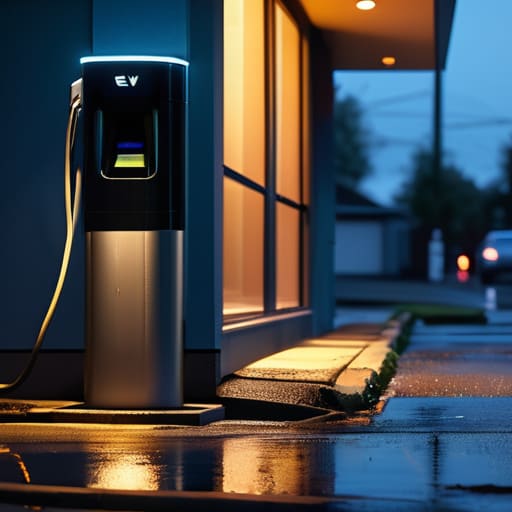
The real headache isn’t just finding a plug; it’s the massive disparity between public and private charging infrastructure. If you’re lucky enough to live in a house with a dedicated garage, you’re basically living in the future—you plug in overnight, and your car is ready to go. But for the millions of people living in apartment complexes or urban centers, the math changes completely. They are forced to rely on a fragmented patchwork of public stations that often feel like a gamble. We see this gap everywhere, and it’s creating a two-tier system for EV ownership that we need to fix if we’re actually serious about mass adoption.
Even when you do find a public spot, the lack of interoperability in EV charging makes the experience incredibly clunky. You shouldn’t need fifteen different apps and ten different RFID cards just to get a decent charge on a road trip. While companies are starting to lean into smart charging technology to manage load, the current reality is a chaotic mix of proprietary software and hardware that doesn’t always play nice together. We need a unified standard, not just more scattered plugs.
Survival Guide: How to Actually Navigate the Charging Landscape Without Losing Your Mind
- Stop trusting the “available” status on apps blindly. I’ve seen too many people pull up to a charger only to find the cooling system is shot or the connector is physically broken. Always cross-reference two different platforms—like PlugShare and the network’s native app—to get a more realistic picture of what’s actually happening on the ground.
- Learn the difference between kW and charging speed limits. Just because a station is rated for 350kW doesn’t mean your car is going to pull that. If your battery is at 80% or it’s a freezing morning, you’re going to see that curve drop off hard. Manage your expectations based on your car’s thermal management, not just the sign on the pedestal.
- Prioritize networks with high-uptime reputations over sheer quantity. A massive network of broken, slow Level 2 chargers is basically useless for long-distance travel. I’d rather have three reliable, high-output DC fast chargers on my route than twenty “available” plugs that end up being glorified paperweights.
- Get comfortable with the “Plug & Charge” tech if your vehicle supports it. Fiddling with five different RFID cards or buggy payment apps is a massive time sink. If the hardware supports ISO 15118, use it; it makes the handshake between the car and the grid seamless and saves you from that awkward dance at the terminal when the credit card reader fails.
- Plan your stops around grid-heavy areas, not just convenience. If you’re heading into a rural zone, look for chargers located near commercial hubs that have better transformer capacity. Charging a massive battery pack requires a serious amount of current, and a station tucked away in a low-voltage corner of the grid is more likely to throttle your speed when the local demand spikes.
The Bottom Line on Charging Infrastructure
Stop counting plugs and start measuring uptime; a charger that’s “available” on an app but dead in reality is just a useless piece of hardware that kills consumer confidence.
We have to bridge the gap between private convenience and public necessity, because if charging isn’t as reliable as a gas pump, the mass transition to EVs will stall regardless of how many subsidies we throw at it.
Real progress isn’t just about more stations, it’s about smarter integration—we need to ensure our grid stability and battery chemistry are actually ready for the massive load these networks are going to pull.
## The Hardware Reality Check
“We can keep installing more pedestals and calling it progress, but if those chargers aren’t integrated with a smart grid and backed by stable battery chemistry, we aren’t building a network—we’re just building a collection of expensive, glorified paperweights.”
Desmond Achebe
The Road Ahead: Moving Beyond the Hype
Look, we’ve covered a lot of ground, from the frustrating reality of broken chargers to the massive divide between private luxury setups and the public infrastructure most of us actually rely on. If there’s one thing I want you to take away, it’s that a charging network is only as good as its weakest link—whether that’s a faulty connector or a local transformer that can’t handle the load. We can’t just keep slapping plugs into the ground and calling it progress; we need integrated systems that prioritize high uptime and grid intelligence. Until we bridge the gap between hardware reliability and energy density, we’re just building a house of cards.
Ultimately, the shift to electric mobility isn’t just about swapping a gas tank for a battery; it’s about redesigning how our entire society interacts with energy. I know the current growing pains feel heavy, and the corporate promises can feel hollow, but the physics don’t lie—the transition is happening. We just need to demand that the foundation is built on real engineering rather than marketing fluff. If we get the chemistry and the infrastructure right, we aren’t just changing how we drive; we’re securing a way to move that actually respects the planet. Let’s build something that actually lasts.
Frequently Asked Questions
If we're scaling up fast-charging networks, how are we going to prevent local transformers from blowing out when a dozen EVs plug in at once?
That’s the million-dollar question. If we just slap high-kilowatt chargers onto an aging distribution grid without thinking, we’re asking for localized blackouts. It’s like trying to run a high-end gaming rig off a cheap extension cord—eventually, something’s going to pop. We can’t just rely on beefing up transformers; we need onsite buffer storage. Integrating stationary battery systems at the charging site can shave those massive peak loads, feeding the cars while protecting the grid from the surge.
Are we actually building out a sustainable supply chain for the hardware, or are we just creating a massive e-waste problem with these charging stations in ten years?
Right now? We’re mostly just building a massive e-waste time bomb. Most of these current charging stations are built with a “deploy fast, replace faster” mentality, using consumer-grade electronics that aren’t designed for a decade of thermal cycling and heavy-duty use. Unless we shift toward modular hardware—where we can swap out a failed power module instead of scrapping the entire cabinet—we’re just trading tailpipe emissions for a mountain of specialized silicon and copper junk.
How much of the "charging speed" promised by networks is actually achievable given current battery chemistry and thermal management limits?
Look, the “0 to 80% in 15 minutes” marketing is a massive stretch for most drivers. Sure, the charger might be capable of 350kW, but your battery is the bottleneck. If your thermal management isn’t aggressive enough to keep those cells in the sweet spot, the BMS will throttle your intake to prevent degradation. It’s like trying to pour a gallon of water through a needle; the hardware is there, but the chemistry and heat just won’t allow it.
