
I still remember the smell of scorched lithium in my college lab when a prototype cell decided it had seen enough of this world. It wasn’t some dramatic explosion, just a quiet, sickening hiss that signaled I’d pushed the thermal limits too far. Most people treat their EVs or even their phones like they’re invincible, rushing to every high-speed station they see, but the debate of fast charging vs trickle charging isn’t just about convenience—it’s about the physical degradation happening at a molecular level. We’ve been sold this lie that more speed is always better, but if we keep ignoring the electrochemical toll, we’re just building a future of expensive, dead hardware.
I’m not here to give you a marketing pitch or a lecture on theoretical voltage curves that won’t matter in the real world. My goal is to strip away the corporate greenwashing and look at the actual chemistry and infrastructure required to keep your gear running for a decade, not just a few years. I’m going to break down exactly when you can afford to sprint and when you need to slow down, so you can stop treating your battery like a magic box and start managing it like the precision instrument it actually is.
Table of Contents
- Voltage and Amperage Explained the Real Physics of Power
- Managing Heat Generation During Charging to Save Your Cells
- How to Actually Protect Your Cells: My Rules for Charging
- The Bottom Line: How to Balance Speed and Cell Health
- The Trade-Off We Can't Ignore
- The Bottom Line on Battery Longevity
- Frequently Asked Questions
Voltage and Amperage Explained the Real Physics of Power

To understand why your battery behaves the way it does, you have to stop thinking about “power” as a single, monolithic number. In my lab days at Georgia Tech, we always went back to the basics: voltage is the pressure, and amperage is the actual flow of electrons. Think of it like a water pipe; voltage is how hard the water is being pushed through, while amperage is the volume of water moving per second. When we talk about high-speed charging, we aren’t just increasing the pressure; we are shoving a massive amount of current through the cell all at once.
This is where the physics gets messy. When you crank up the amperage to shave minutes off a charge, you aren’t just moving ions; you’re fighting thermodynamics. High current levels lead to significant heat generation during charging, which is the silent killer of any cell. If the internal resistance of the battery can’t handle that surge, you start seeing uneven ion distribution. This isn’t just a theoretical concern—it’s the primary driver behind accelerated lithium-ion battery degradation. If we don’t manage that flow, we aren’t just charging a car; we’re essentially cooking the chemistry from the inside out.
Managing Heat Generation During Charging to Save Your Cells
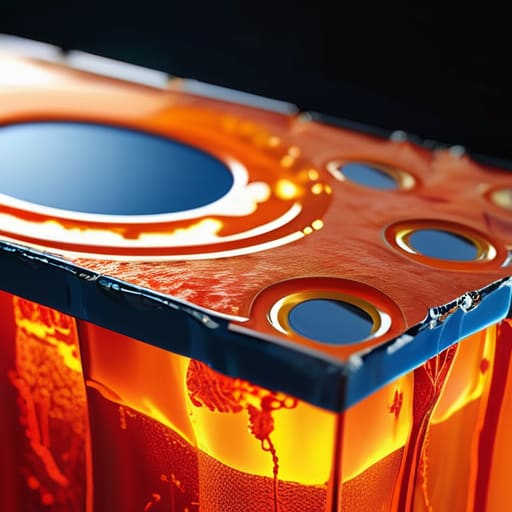
Here’s the deal: heat is the absolute enemy of your battery’s lifespan. When you’re pushing massive amounts of current through a cell during a rapid charge, you aren’t just moving electrons; you’re essentially creating a miniature space heater inside the pack. This heat generation during charging isn’t just a side effect; it’s a chemical catalyst that accelerates the breakdown of the electrolyte. If those internal temperatures spike too high, you’re looking at permanent lithium-ion battery degradation that no software update can ever fix.
This is why I’m such a nerd about thermal management systems. High-end EVs use sophisticated liquid cooling loops to keep everything stable, but even then, physics eventually wins. If you’re charging in a scorching garage or pushing a fast-charge cycle when the ambient temp is already high, you’re forcing the cells to work in a sub-optimal environment. To actually protect your hardware, you need to aim for the optimal charging temperature—usually somewhere in that sweet spot between 15°C and 35°C. Think of it like an athlete: you can sprint, but if you do it in a heatwave without hydration, you’re going to crash hard.
How to Actually Protect Your Cells: My Rules for Charging
- Stop the “always full” habit. If you’re using a fast charger for a quick boost, that’s fine, but try to avoid leaving your battery sitting at 100% for hours. High voltage stress is basically a slow-motion killer for lithium-ion cells.
- Treat the 20-80 rule as your new baseline. If you want your battery to actually survive the decade, aim to keep your state of charge between 20% and 80%. It’s much easier on the chemistry than constantly slamming it with high-amperage fast charging or forcing it to sit at the top of its voltage curve.
- Use trickle charging for your overnight sessions, not your “I’m running late” sessions. Slow, low-current charging is like a gentle steady stream that lets ions settle into place without causing the mechanical stress that fast charging triggers.
- Watch the heat, not just the percentage. If you’re fast charging and notice the casing getting uncomfortably warm, your battery is fighting a losing battle against thermal degradation. If you can, pause the charge or move to a slower rate until the temperature stabilizes.
- Don’t fear the fast charger, just use it strategically. Fast charging is a tool for convenience, not a lifestyle. Use it when you’re on a road trip or in a pinch, but rely on slower, more controlled charging for your daily routine to keep the degradation curves in your favor.
The Bottom Line: How to Balance Speed and Cell Health
Think of fast charging like sprinting; it’s great when you’re in a rush, but if you do it every single day, you’re going to burn out. Use DC fast charging for road trips or emergencies, but lean on slower AC charging whenever you’re parked for the long haul to minimize lithium plating.
Heat is the ultimate enemy of energy density. Every time you push high amperage into a cell, you’re fighting an uphill battle against thermal degradation, so if your car’s thermal management system is struggling, back off the charging speed to protect your long-term capacity.
Stop treating your battery like an infinite resource. To actually make this tech sustainable and keep your resale value from tanking, you need to prioritize the chemistry’s “rest periods” by avoiding the extremes of a constant 100% charge or letting the cells sit at near-zero voltage.
The Trade-Off We Can't Ignore
“We need to stop looking at fast charging as a free pass to convenience and start seeing it for what it actually is: a high-stress sprint for your battery cells. If you keep redlining your chemistry every single day just to save twenty minutes, you aren’t just charging a car—you’re actively accelerating its trip to the scrapyard.”
Desmond Achebe
The Bottom Line on Battery Longevity

At the end of the day, choosing between fast charging and trickle charging isn’t about picking a “winner”—it’s about managing a trade-off between convenience and chemistry. We’ve seen how high-amperage bursts can push thermal limits and accelerate electrolyte breakdown, while slow, steady trickle charging acts like a gentle massage for your lithium ions, helping them settle into their lattice structure without the stress. If you’re staring down a long road trip, hit the fast charger and don’t sweat it; but if you’re plugging in overnight, prioritizing a lower C-rate is the smartest way to preserve your state of health. Stop treating your battery like an infinite resource and start treating it like the sophisticated electrochemical engine it actually is.
We are standing at the edge of a massive shift in how humanity moves, and that transition is going to be won or lost on the quality of our hardware. I don’t want to see a future littered with dead EV packs and wasted capacity just because we were too impatient to wait an extra hour at the plug. If we can master the balance between rapid energy intake and long-term cell stability, we can build a grid—and a lifestyle—that actually lasts. The tech is getting better every day, but true sustainability starts with how we respect the physics of the cells we already have.
Frequently Asked Questions
If I'm constantly using a Level 3 DC fast charger on my commute, is there a specific threshold where the degradation becomes irreversible?
Look, there’s no magic “red line” where your battery suddenly dies, but you’re essentially playing a game of chicken with your lithium-ion cells. If you’re living on Level 3 chargers, you’re accelerating SEI layer growth and lithium plating. Once that capacity drops below roughly 80% of the original SOH (State of Health), the degradation is functionally irreversible. You aren’t just losing range; you’re fundamentally altering the internal chemistry. Use DC fast charging for emergencies, not as your primary lifestyle.
Does the "trickle charge" phase at the end of a cycle actually do anything for cell balancing, or is it just a way to top off the voltage?
It’s a bit of both, but mostly it’s about precision. Think of it like filling a glass of water; once it’s nearly full, you don’t keep the tap wide open or you’ll splash everywhere. That “trickle” phase allows the Battery Management System (BMS) to bleed off excess energy from individual cells that hit the ceiling early. It’s not just “topping off”—it’s the critical window where the cells actually level out so one doesn’t hog the voltage.
Can I mitigate the chemistry damage from fast charging by using an active cooling system, or is the physical stress on the anode unavoidable?
Look, active cooling is a massive help, but it’s not a magic wand. You can keep the temperature in check to prevent thermal runaway or massive degradation, but you can’t cheat the physics. Even with a perfect cooling system, fast charging forces lithium ions to move at high velocities. This creates mechanical stress on the anode, often leading to lithium plating. You’re managing the symptoms, but the physical strain on the architecture is still happening.
