
I remember sitting in my junior year lab at Georgia Tech, staring at a lithium-ion cell that had been pushed way too hard. The casing was slightly swollen, and there was this faint, acrid smell of electrolyte decomposition that just stuck with me. It was a visceral reminder that while everyone is obsessed with the convenience of adding 200 miles in fifteen minutes, they’re completely ignoring the fast charging impact on the internal microstructure. We’ve been sold this dream of instant gratification, but we’re essentially treating these high-density cells like they’re invincible, when in reality, we’re just stress-testing the chemistry to its breaking point every time we plug in.
I’m not here to give you the polished, PR-friendly version of how charging works. I want to get into the actual hardware and the electrochemical reality of what happens when you force ions through an anode at high speeds. My goal is to strip away the corporate greenwashing and give you a data-driven look at how to balance convenience with longevity. We’re going to talk about how to actually protect your investment without feeling like you’re stuck at a charger for three hours.
Table of Contents
- Lithium Ion Battery Degradation the Cost of Speed
- Voltage Regulation Efficiency and the Hardware Reality
- How to Not Cook Your Cells: My Survival Guide for the Fast-Charging Era
- The Bottom Line: Speed vs. Longevity
- The Real Cost of the "Full Tank" Illusion
- The Bottom Line on Speed vs. Longevity
- Frequently Asked Questions
Lithium Ion Battery Degradation the Cost of Speed
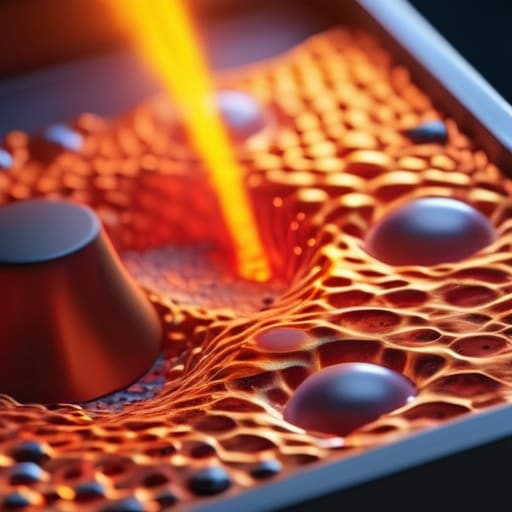
To understand why we can’t just blast 350kW into a pack indefinitely, you have to look at what’s happening at the molecular level. When you push massive amounts of current through a cell, you aren’t just moving ions; you’re creating a massive amount of heat. This is where lithium-ion battery degradation really kicks into gear. If the internal temperature spikes too fast, it triggers side reactions that grow the Solid Electrolyte Interphase (SEI) layer. Think of it like trying to force too much water through a narrow pipe—eventually, the pressure causes leaks and buildup that permanently chokes the system.
This isn’t just a theoretical problem; it’s a direct hit to your charging cycle longevity. Every time we prioritize speed over stability, we risk “plating” lithium onto the anode, which can lead to permanent capacity loss or, in worst-case scenarios, internal shorts. While modern thermal management systems are getting incredibly good at mitigating these spikes, they’re essentially fighting a losing battle against physics if the charging curve is too aggressive. We have to stop treating batteries like magic black boxes and start respecting the chemical limits of the hardware.
Voltage Regulation Efficiency and the Hardware Reality
Here is the reality that most marketing brochures gloss over: it isn’t just about how much juice you’re shoving into the cells; it’s about how the hardware handles the pressure. When you’re pushing high currents to hit those “0 to 80%” targets, the voltage regulation efficiency becomes the thin line between a healthy pack and a bricked one. If the onboard converters can’t maintain a steady, precise voltage stream, you start seeing micro-fluctuations. These aren’t just minor glitches; they create internal stress that forces the chemistry to work harder than it was ever designed to.
This is where the hardware reality gets messy. To compensate for these spikes, your car’s thermal management systems have to go into overdrive, pulling massive amounts of energy just to keep the cells from cooking themselves. It’s a vicious cycle. We talk about fast charging vs slow charging like it’s a simple choice of convenience, but from an engineering standpoint, we’re essentially asking the hardware to run a sprint while holding its breath. If the regulation isn’t tight, you’re trading long-term charging cycle longevity for a few extra minutes at a roadside plug.
How to Not Cook Your Cells: My Survival Guide for the Fast-Charging Era
- Stop treating DC fast chargers like your daily driver. If you’re just running errands, stick to Level 2 AC charging. Think of fast charging like a sprint—it’s fine for a quick burst, but if you try to sprint a marathon every single day, your legs (or in this case, your lithium ions) are going to give out way sooner than expected.
- Watch the state of charge (SoC) like a hawk. The most brutal degradation happens when you’re pushing high amperage into a battery that’s already sitting at 80% or 90%. If you want to preserve your cycle life, try to keep your daily range needs met with slower charging and save the high-speed juice for long-distance trips only.
- Temperature is the silent killer. If you’re in a climate that’s either freezing or blistering, be extra mindful of your battery’s thermal management. I always check my car’s pre-conditioning settings before a charge session; forcing high current through cold chemistry is basically a recipe for lithium plating, which is a one-way ticket to permanent capacity loss.
- Don’t fall for the “10% to 80%” marketing trap without understanding the curve. The speed drop-off after 80% isn’t just a suggestion; it’s physics. Trying to force that last bit of energy in via high voltage is incredibly inefficient and puts massive stress on the cell’s internal resistance. Just unplug and go once you hit that sweet spot.
- Demand transparency from the hardware. As we move toward more advanced BMS (Battery Management Systems), we need to stop settling for vague “battery health” percentages in our apps. We need real data on SOH (State of Health) and internal resistance so we actually know how much of our chemistry is being sacrificed for the sake of convenience.
The Bottom Line: Speed vs. Longevity
We have to stop treating fast charging like a free lunch; every time you shove massive amounts of current into a cell, you’re physically stressing the SEI layer and trading long-term capacity for short-term convenience.
The future isn’t just about better software algorithms; it’s about hardware—specifically better thermal management and solid-state chemistry that can actually handle the heat without cooking the electrolyte.
If we want a truly sustainable EV ecosystem, we need to shift the conversation from “how fast can we charge?” to “how efficiently can we manage the energy density without destroying the battery’s lifecycle?”
The Real Cost of the "Full Tank" Illusion
“We’re treating lithium-ion cells like they’re gas tanks, but you can’t just shove more energy into a system faster without paying a tax in heat and structural decay. If we keep prioritizing five-minute charge times over chemical stability, we aren’t building a sustainable future—we’re just building batteries that are designed to die prematurely.”
Desmond Achebe
The Bottom Line on Speed vs. Longevity

At the end of the day, we can’t treat battery chemistry like a magic trick that ignores the laws of thermodynamics. We’ve looked at how aggressive fast charging forces ions into a frenzy, causing the physical degradation and voltage instability that ultimately shortens a cell’s lifespan. It’s a massive trade-off: we’re gaining convenience at the expense of the structural integrity of the hardware. If we keep pushing these high-C rates without addressing the heat and the mechanical stress on the electrodes, we’re just creating a cycle of premature replacements that undermines the whole point of going electric in the first place.
I’m not saying we should go back to charging our cars overnight like it’s 2010, but we need to stop pretending that “faster is always better” is a sustainable metric. The real win won’t come from just cranking up the amperage; it will come from the next breakthrough in solid-state electrolytes or smarter, more granular BMS software that knows when to pull back. We need to build an infrastructure that respects the chemistry of the cell. If we get the hardware right, we won’t just have a faster transition—we’ll have one that actually lasts long enough to change the world.
Frequently Asked Questions
If fast charging is physically cooking the cells, can software-based thermal management actually mitigate the long-term damage?
Look, software is a band-aid, not a cure. Don’t get me wrong—smart thermal management is huge. It uses predictive algorithms to ramp up cooling before the heat spike even hits. But at the end of the day, you’re still forcing ions through a lattice at high velocity. Software can manage the symptoms by throttling the current, but it can’t rewrite the laws of thermodynamics. You can’t code your way out of physical degradation.
Are we looking at a future where we have to choose between "range anxiety" and "battery longevity," or is there a middle ground in the hardware?
Honestly, we don’t have to pick a side, but we do have to stop treating batteries like magic boxes. Right now, it feels like a zero-sum game because our current hardware is playing catch-up. But the middle ground is already being built in the lab—think silicon anodes and smarter BMS algorithms that throttle current before the chemistry actually starts cooking. We’re moving toward a world where the software manages the stress so the hardware doesn’t have to.
How much does the actual chemistry—like LFP versus NCM—change the math on how much abuse a battery can take from a DC fast charger?
It really comes down to how much “stress” the crystal structure can handle. NCM (Nickel Cobalt Manganese) is like a high-performance sprinter; it packs huge energy density, but that aggressive lithium-ion movement during fast charging can physically crack the cathode over time. LFP (Lithium Iron Phosphate) is more like a marathon runner. It’s chemically much more robust and can take way more “abuse” from DC fast chargers without the same level of structural degradation.
