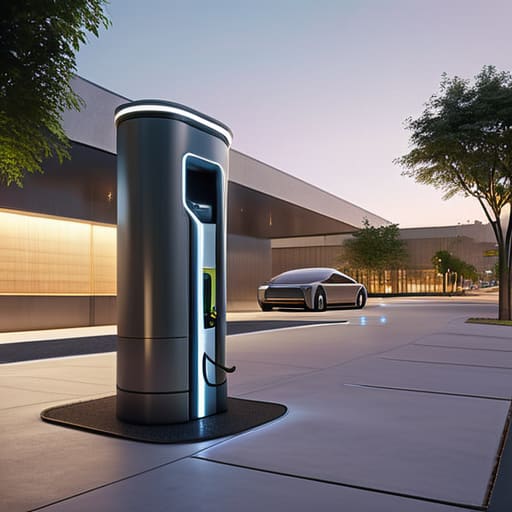
I still remember sitting in my senior design lab at Georgia Tech, staring at a simulation of a localized grid failure, realizing that all the high-density lithium-ion cells in the world won’t save us if our infrastructure is fundamentally broken. Most people think the “EV revolution” is just about building more plugs, but they’re missing the point entirely. It’s not enough to just scatter hardware around like we’re playing a game of connect-the-dots; if we don’t get charging station placement right from a load-management perspective, we’re just building a massive, expensive headache for the utility companies. We need to stop treating this like a real estate problem and start treating it like a power systems challenge.
I’m not here to sell you on the glossy, corporate brochures that claim every parking lot is a potential hub. Instead, I’m going to break down the actual math and the technical constraints that dictate where these units need to live. We’re going to look past the hype and dive into the real-world hardware requirements and grid stability issues that determine whether a station is a lifeline or a liability.
Table of Contents
- Optimal Site Selection for Evse Moving Beyond Vague Promises
- Reducing Range Anxiety Through Placement and Real World Utility
- Stop Guessing and Start Mapping: 5 Real-World Rules for Placement
- The Bottom Line: Building for Reality, Not Just Hype
- ## The Infrastructure Reality Check
- The Bottom Line on Infrastructure
- Frequently Asked Questions
Optimal Site Selection for Evse Moving Beyond Vague Promises

Look, we can keep putting chargers in the corner of dark parking lots next to dumpster bins, but that isn’t a strategy—it’s a band-aid. If we want to actually solve the problem, optimal site selection for EVSE has to move away from “where do we have an open plug?” and toward “where does the load actually make sense?” We need to stop treating these installations like an afterthought and start viewing them as critical nodes in a larger ecosystem.
This means we have to stop the tug-of-war between public vs private charging locations and start looking at how they overlap. A charger in a grocery store parking lot is great for a quick top-off, but it doesn’t solve the deep-cycle needs of someone commuting from the suburbs. Real progress happens when we prioritize smart city grid integration, placing high-output DC fast chargers where the local transformer can actually handle the spike without blowing a fuse or forcing a brownout. We need to build for the way people actually live, not just where it’s easiest to pull a permit.
Reducing Range Anxiety Through Placement and Real World Utility
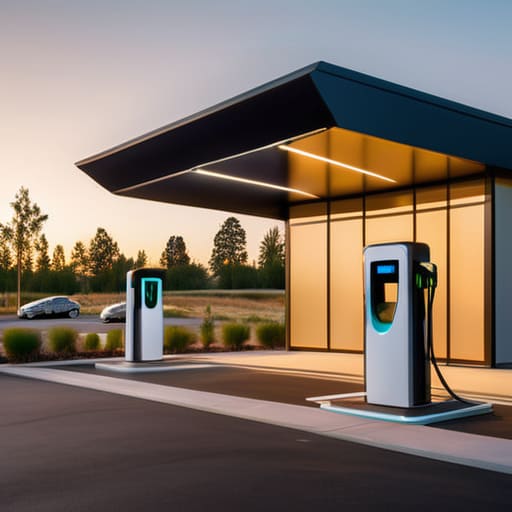
Let’s be real: range anxiety isn’t actually a battery capacity problem; it’s a psychological byproduct of bad planning. People don’t panic because their lithium-ion cells are failing; they panic because they don’t know if the next plug is actually going to work or if it’s tucked away in a dark corner of a parking garage. If we want to actually succeed at reducing range anxiety through placement, we have to stop treating chargers like an afterthought and start treating them like essential utility nodes. It’s about building confidence in the hardware and the location simultaneously.
This means we need to prioritize smart city grid integration so that charging isn’t just a localized event, but a seamless part of the urban fabric. We should be looking at high-traffic corridors and multi-use hubs where a person can actually live their life while the electrons move. When we focus on EV charging network optimization, we aren’t just placing plugs; we are mapping out a reliability layer that makes the transition to electric feel less like a gamble and more like a standard upgrade.
Stop Guessing and Start Mapping: 5 Real-World Rules for Placement
- Prioritize high-voltage proximity over sheer convenience; if we keep trying to jam ultra-fast chargers into residential nodes without upgrading the local transformer capacity, we’re just begging for grid instability and massive voltage drops.
- Map the “dead zones” in the actual driving corridors, not just the high-traffic shopping malls, because range anxiety doesn’t happen at the grocery store—it happens when you’re stuck on a rural highway with a 5% SoC and no DC fast charger in sight.
- Design for the battery, not just the car; we need to place stations where the ambient temperature and cooling infrastructure can actually support high-rate charging without cooking the lithium-ion cells and killing their cycle life.
- Look at the dwell time data instead of the marketing fluff; a charger in a 15-minute drive-thru is useless for a heavy-duty EV, so we need to align station placement with where people actually need to be stationary for at least 30 minutes.
- Integrate with existing renewable microgrids whenever possible; placing chargers near solar-plus-storage hubs turns a massive load problem into a manageable, decentralized energy asset rather than just another drain on a crumbling central grid.
The Bottom Line: Building for Reality, Not Just Hype
Stop treating charging stations like convenience store amenities; we need to site them based on grid capacity and battery discharge profiles if we want to avoid localized blackouts and slow-charge frustration.
Range anxiety isn’t solved by just adding more plugs, it’s solved by adding the right plugs in high-utilization corridors where the chemistry of the vehicle and the power of the station actually sync up.
Real sustainability means looking past the marketing and ensuring our infrastructure is built on a foundation of scalable, smart-grid integration rather than just slapping chargers on an outdated, fragile system.
## The Infrastructure Reality Check
“We can keep designing the most efficient solid-state cells in the world, but they’re just expensive paperweights if we keep treating charging placement like an afterthought instead of a critical component of the grid’s load management.”
Desmond Achebe
The Bottom Line on Infrastructure

At the end of the day, we can’t just keep treating EV charging like an afterthought or a luxury perk for early adopters. We’ve seen that successful placement isn’t just about sticking a pedestal in a parking lot; it’s about the synergy between grid capacity and user behavior. If we don’t align our charger locations with actual power density and real-world transit corridors, we’re just building expensive paperweights. We have to move past the hype and focus on the hard engineering reality of where the electrons actually need to flow to keep people moving without constant anxiety.
I’m optimistic about where we’re headed, but I’m staying skeptical of any roadmap that doesn’t prioritize the actual hardware and the grid’s ability to support it. The transition to electric mobility is a massive, complex puzzle, and the pieces only fit if we build with precision. We aren’t just installing plugs; we are building the circulatory system for a new era of energy. If we get the infrastructure right, we don’t just change how people drive—we fundamentally rewrite how our society interacts with power. Let’s stop making vague promises and start building the backbone that this future actually deserves.
Frequently Asked Questions
How do we balance the need for high-speed DC fast chargers with the reality of local grid capacity and the risk of transformer strain?
It’s a massive balancing act. If we just slap high-speed DC fast chargers everywhere, we’re going to cook local transformers. To do this right, we can’t just pull more juice from the grid; we have to buffer it. I’m talking about integrating onsite stationary storage—basically big, industrial-scale battery banks—to shave those peak loads. We use the batteries to handle the sudden spikes from a car pulling in, letting the grid breathe.
If we're aiming for true sustainability, how much weight should we give to the lifecycle of the hardware versus just the convenience of the location?
If we only optimize for convenience, we’re just building a graveyard of obsolete hardware. It’s easy to drop a charger in a high-traffic parking lot, but if that unit isn’t designed for modular repair or uses components that are a nightmare to recycle, we’ve just traded tailpipe emissions for manufacturing waste. True sustainability means weighing lifecycle durability just as heavily as location. We need hardware that lasts as long as the grid evolves.
Are we actually planning for the next wave of solid-state batteries, or are we just building infrastructure for the lithium-ion tech we have right now?
Right now? We’re building for today’s Li-ion reality. Most of this infrastructure is optimized for the charging curves and thermal profiles of current liquid electrolytes. If we drop solid-state tech tomorrow—with its insane energy density and much faster charge rates—our current grid-to-charger handshake might struggle to keep up. We’re laying the foundation, sure, but we aren’t fully “future-proofing” for the chemistry leap yet. We’re building the roads before we’ve even perfected the engines.
