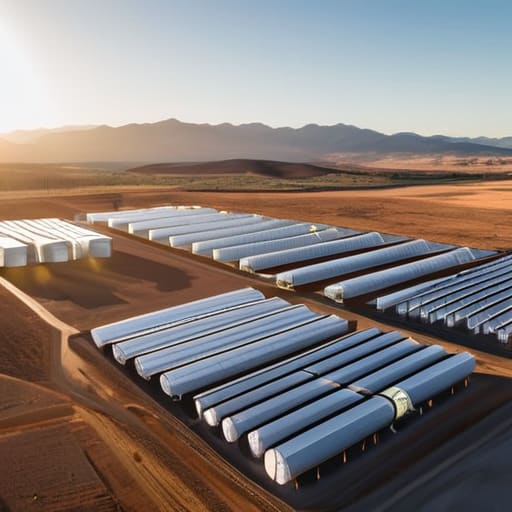
I remember sitting in a Georgia Tech lab at 2:00 AM, staring at a lithium-ion cell that had basically cooked itself because the thermal management was a joke. It’s easy to get swept up in the glossy marketing videos of massive, glowing battery farms that look like something out of a sci-fi movie, but the reality of grid scale energy storage is much grittier. Most people think the “green revolution” is just about installing more solar panels, but they’re missing the point entirely. If we don’t solve the hardware-level problem of how to store massive amounts of energy without the system becoming a ticking chemical time bomb, all those renewables are just expensive decorations on an unstable grid.
I’m not here to sell you on the corporate “net-zero” fairy tales or the vague promises of tech giants. Instead, I want to pull back the curtain on the actual chemistry and the heavy-duty infrastructure that makes this work. We’re going to look past the hype and dive into the real engineering hurdles—from degradation cycles to supply chain bottlenecks—that determine whether these systems actually last or just fail when we need them most.
Table of Contents
- Lithium Ion vs Flow Batteries the Chemistry of Survival
- Long Duration Energy Storage Technologies That Actually Work
- The Real-World Playbook: What Actually Matters for Grid-Scale Storage
- The Bottom Line on Hardening the Grid
- The Hardware Reality Check
- The Bottom Line on the Big Battery Transition
- Frequently Asked Questions
Lithium Ion vs Flow Batteries the Chemistry of Survival
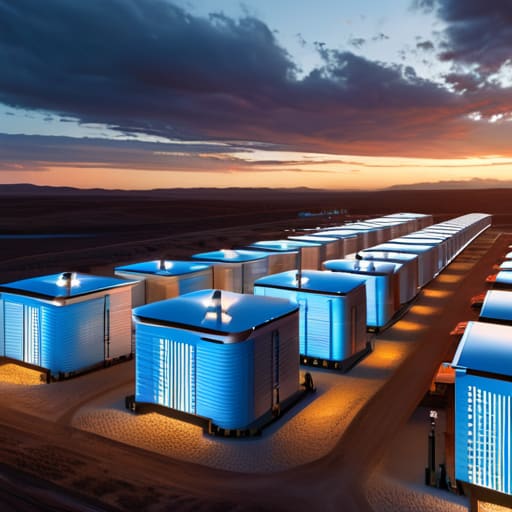
When you look at the current landscape, it’s easy to assume lithium-ion is the only player in the game because that’s what’s in your phone and your Tesla. And don’t get me wrong, Li-ion is a beast for high power density and quick responses, which makes it the gold standard for grid stability and frequency regulation. If the frequency dips, Li-ion can inject power almost instantly. But there’s a massive catch: lithium is essentially a sprint runner. It’s great for short bursts, but once you try to push it to discharge for ten or twelve hours straight, the degradation math starts looking pretty grim.
That’s where the conversation shifts toward long-duration energy storage technologies, specifically flow batteries. Think of a lithium battery like a pressurized soda can—it’s compact, but if you use it too hard, it loses its fizz. A flow battery is more like a massive industrial reservoir; you’re storing energy in liquid electrolytes held in external tanks. Because the power (the stack) is separate from the energy (the tanks), you can scale capacity just by building bigger vats. It’s not as “sexy” or space-efficient as lithium, but for decarbonizing the power grid on a massive, multi-hour scale, it’s the heavy-duty hardware we actually need.
Long Duration Energy Storage Technologies That Actually Work
When we talk about long-duration energy storage technologies, we have to move past the idea that everything can be solved with a massive lithium-ion pack. While lithium is king for your phone or a Tesla, it’s not the silver bullet for keeping the lights on during a three-day wind lull. If we’re serious about decarbonizing the power grid, we need systems that can discharge energy over ten, twenty, or even fifty hours. This is where mechanical and thermal solutions step in to fill the gaps that electrochemical cells just can’t reach without breaking the bank.
Take pumped hydro storage capacity, for instance. It’s the old guard—basically using gravity and massive reservoirs to act as a giant, natural battery. It’s not “sexy” tech, but it’s incredibly reliable for massive shifts in load. Then you have emerging players like compressed air or even liquid air energy storage. These aren’t just niche experiments; they are the heavy-duty infrastructure required to stabilize a grid that relies on intermittent renewables. We need this diversity of hardware to ensure that when the sun sets, the system doesn’t just stumble.
The Real-World Playbook: What Actually Matters for Grid-Scale Storage
- Stop chasing the highest energy density and start looking at cycle life. A battery that can hold a massive charge but dies after 500 cycles is just expensive landfill fodder; for the grid, we need hardware that can breathe through thousands of deep discharge cycles without the chemistry falling apart.
- Prioritize supply chain transparency over corporate PR. If a storage solution relies on minerals sourced through unethical or ecologically destructive mining, it’s not a “green” solution—it’s just shifting the environmental debt from carbon to soil.
- Think in terms of “duration,” not just “capacity.” A massive lithium-ion array is great for smoothing out a quick cloud passing over a solar farm, but if we want to survive a week of low wind, we need to be investing in technologies that can discharge energy for 10+ hours, not just two.
- Demand modularity in hardware design. The grid is evolving too fast for monolithic, “one-size-fits-all” installations; we need systems that allow us to swap out aging cells or upgrade chemistries without tearing out the entire infrastructure.
- Look past the software hype and focus on thermal management. You can have the smartest AI-driven grid management software in the world, but if your physical battery enclosures can’t handle the heat during a massive discharge event, the whole system is a fire hazard waiting to happen.
The Bottom Line on Hardening the Grid
We need to stop treating “energy storage” like a monolith; lithium-ion is great for quick bursts, but if we’re actually going to survive a week of low sun or wind, we need the heavy-duty, long-duration tech like flow batteries or thermal storage.
Sustainability isn’t just a buzzword—if we don’t solve the supply chain issues for raw minerals and figure out how to recycle these massive battery arrays, we’re just trading one environmental crisis for another.
The real bottleneck isn’t just the chemistry in the cells; it’s the physical infrastructure and the grid’s ability to actually integrate these massive hardware shifts without breaking under the load.
The Hardware Reality Check
“Everyone loves talking about the ‘smart grid’ and AI-driven optimization, but let’s be real: you can’t optimize your way out of a physics problem. If we don’t solve the actual chemistry of long-duration storage, all the fancy software in the world won’t stop a blackout when the wind stops blowing.”
Desmond Achebe
The Bottom Line on the Big Battery Transition
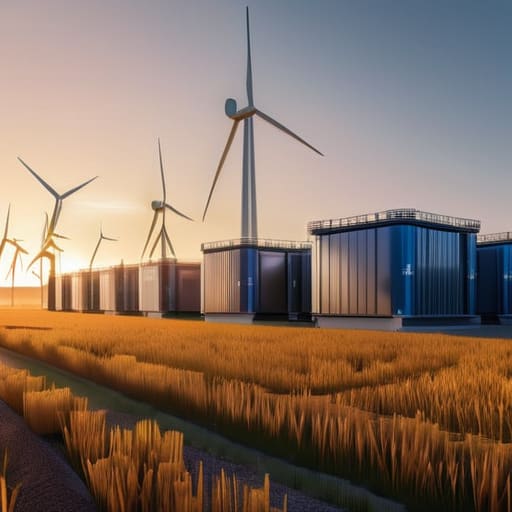
Look, we’ve gone over the weeds of lithium-ion’s dominance and why flow batteries are the heavy lifters we actually need for long-duration stability. The takeaway is pretty simple: there is no silver bullet. We can’t just plug a single type of cell into the grid and call it a day. To move away from the gas-guzzling legacy of my childhood, we have to deploy a diversified hardware stack that matches the specific needs of the load. Whether it’s the high power density of lithium or the massive, scalable capacity of redox flow systems, the goal is the same—creating a buffer that makes renewables reliable rather than intermittent. We need to stop treating energy storage like a monolith and start treating it like the complex, multi-layered engineering challenge it actually is.
At the end of the day, I’m not interested in the shiny PR slides from companies promising “limitless” green energy. I care about the chemistry, the cycle life, and the actual physical infrastructure that’s going to be sitting in a field ten years from now. The transition to electric mobility and a decarbonized grid isn’t just a dream; it’s a massive, tangible construction project. If we get the hardware right—if we prioritize sustainable, scalable chemistry over quick corporate wins—we actually stand a chance. It’s going to be hard, and it’s going to be expensive, but building the foundation for a truly electric future is the only work worth doing.
Frequently Asked Questions
If we scale up flow batteries or long-duration storage, how do we actually handle the massive supply chain bottleneck for the raw materials without just creating a new environmental disaster?
Look, we can’t just swap a carbon crisis for a cobalt crisis. If we scale flow batteries, we have to pivot toward earth-abundant stuff like iron or vanadium, rather than chasing rare minerals that require destructive mining. It’s about designing for circularity from day one—meaning we build these systems to be modular and easily recyclable. If the chemistry isn’t recoverable at end-of-life, it’s not a solution; it’s just a different kind of mess.
Can our current aging grid infrastructure even handle the bidirectional load of massive storage arrays, or are we going to need a total hardware overhaul first?
Look, if we’re being real, the short answer is no. Our current grid was built as a one-way street—power flows from a massive plant down to your toaster. Trying to shove massive bidirectional loads from storage arrays into that aging copper is like trying to run a modern gaming rig on a 1970s circuit breaker. We don’t just need more batteries; we need a massive hardware overhaul of transformers and substations to handle the backflow.
How do we stop companies from using "green" marketing to hide the fact that their storage solutions have terrible lifecycle degradation rates?
We have to stop treating “green” as a synonym for “durable.” Most companies push capacity metrics to mask the fact that their cells are dying after a few thousand cycles. To fight the greenwashing, we need to demand transparency on SOH (State of Health) data and standardized degradation curves. If they can’t show us the chemistry’s lifecycle performance under real-world thermal stress, it isn’t a solution—it’s just a ticking waste problem.
