
I spent most of my junior year at Georgia Tech buried in lab reports, watching lithium-ion cells struggle under heavy cycling loads, and if there is one thing I’ve learned, it’s that the corporate hype surrounding energy arbitrage is getting out of hand. Most analysts treat it like some magical, infinite money printer—a perfect way to buy low and sell high to balance the grid—but they conveniently forget to talk about the physical cost of that movement. You can’t just move electrons around like numbers on a spreadsheet without considering the thermal stress and the inevitable degradation of the hardware doing the heavy lifting.
I’m not here to sell you on a polished investor deck or a vague promise of a “green revolution.” Instead, I want to pull back the curtain on the actual mechanics of how we use storage to stabilize the grid. I’m going to break down the real-world math of energy arbitrage, focusing on the hardware limitations and the chemical reality that determines whether these systems actually survive the cycle. We’re going to look past the market spreadsheets and talk about the engineering that actually makes a sustainable grid possible.
Table of Contents
- Mastering Bess and Load Shifting Strategies
- Beyond Vague Promises Real Grid Stability and Frequency Regulation
- Stop Playing Games with the Grid: 5 Real-World Rules for Energy Arbitrage
- The Bottom Line: Moving Past the Hype
- The Real Cost of Playing the Market
- Cutting Through the Noise
- Frequently Asked Questions
Mastering Bess and Load Shifting Strategies

To actually pull this off, we have to move past the high-level theory and look at the hardware doing the heavy lifting: battery energy storage systems (BESS). It’s one thing to see a spike in a price chart, but it’s another thing entirely to manage the physical stress of discharging a massive lithium-ion array during peak demand. Effective load shifting strategies aren’t just about timing the market; they are about managing the thermal limits and depth of discharge to ensure we aren’t killing the cells just to chase a few extra cents of margin.
I see a lot of people treating this like a simple “buy low, sell high” game, but the real complexity lies in the interplay between day-ahead market pricing and the physical constraints of the local grid. If you’re aggressive with your cycling to maximize arbitrage profit margins, you risk accelerating degradation, which nukes your long-term ROI. We need to find that sweet spot where we’re smoothing out the load without turning a multi-million dollar asset into a paperweight in five years.
Beyond Vague Promises Real Grid Stability and Frequency Regulation
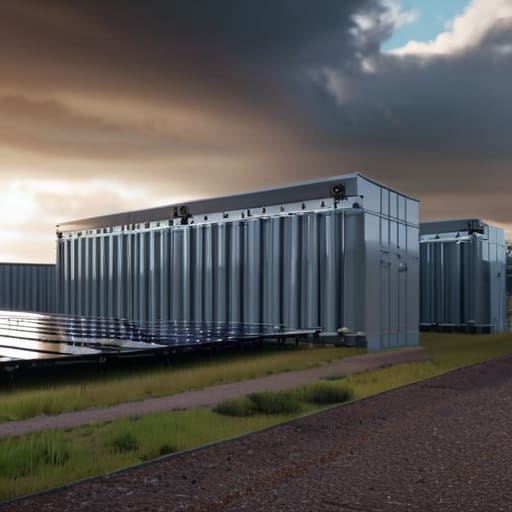
Everyone loves to talk about the massive profit margins you can grab by playing the day-ahead market, but if we only focus on the money, we’re missing the actual engineering necessity. The real value of battery energy storage systems (BESS) isn’t just in buying low and selling high; it’s in their ability to act as a shock absorber for a grid that’s increasingly volatile. When a cloud bank rolls over a massive solar farm, the frequency doesn’t just dip—it crashes. That’s where we move past simple trading and into the heavy lifting of grid stability and frequency regulation.
We need hardware that can respond in milliseconds, not minutes. Traditional spinning reserves—like massive gas turbines—take time to ramp up, which is a huge liability when you’re trying to manage high levels of renewable energy integration. I’ve seen enough lab data to know that the chemistry has to be robust enough to handle these rapid, high-intensity bursts without killing the cycle life. If we want a resilient system, we have to stop treating these batteries like mere financial tools and start treating them like the critical infrastructure they actually are.
Stop Playing Games with the Grid: 5 Real-World Rules for Energy Arbitrage
- Don’t fall for the “perfect cycle” myth. On paper, charging when prices are low and discharging when they’re high looks like easy money, but you have to account for round-trip efficiency losses. If your battery chemistry is losing 15% of its energy just through heat and conversion, your profit margins are going to vanish before you even hit the market.
- Watch the degradation, not just the spread. Every time you cycle a BESS for arbitrage, you’re essentially trading a piece of the battery’s lifespan for immediate cash. If the price delta between peak and off-peak isn’t wide enough to cover the cost of the lithium-ion degradation you’re causing, you’re just burning hardware for nothing.
- Prioritize depth of discharge (DoD) carefully. It’s tempting to drain the cells to zero to maximize your discharge volume during a price spike, but that’s a fast track to premature capacity fade. You need to find that sweet spot where you’re capturing enough value without turning your expensive storage asset into a paperweight in five years.
- Integrate real-time telemetry, not just historical data. If you’re relying on last week’s pricing trends to decide when to hit the grid, you’re already too late. You need high-fidelity, low-latency data that connects your inverter’s state of charge directly to the current market volatility.
- Think beyond the single-asset mindset. True arbitrage efficiency comes from looking at the whole ecosystem—integrating local solar generation or EV fleet charging into your strategy. If you can time your storage to soak up local excess instead of just waiting for the utility to drop the price, you’re actually building a resilient system rather than just chasing a ticker symbol.
The Bottom Line: Moving Past the Hype
Energy arbitrage isn’t just a clever way to play the market; it’s the literal heartbeat of a decarbonized grid that needs to balance intermittent renewables with constant demand.
We can’t scale this tech if we ignore the hardware—true grid stability depends on choosing battery chemistries that can actually survive thousands of cycles without turning into expensive, degraded paperweights.
The transition only works if we stop looking at storage as a luxury and start treating it as the fundamental infrastructure required to make the entire electric mobility ecosystem viable.
The Real Cost of Playing the Market
“Everyone loves the idea of buying low and selling high, but if we’re going to rely on energy arbitrage to balance the grid, we can’t just treat batteries like infinite digital bank accounts. We have to account for the physical reality: every time we cycle a cell to chase a price spread, we’re trading a bit of that battery’s lifespan. If our arbitrage math doesn’t factor in chemical degradation, we aren’t building a sustainable grid—we’re just burning through hardware to balance a spreadsheet.”
Desmond Achebe
Cutting Through the Noise

At the end of the day, energy arbitrage isn’t just some clever way for utility companies to play with market spreadsheets; it’s the functional bridge between a volatile renewable supply and a reliable grid. We’ve looked at how BESS and smart load shifting can smooth out those massive generation spikes, and how frequency regulation keeps the whole system from tripping when the wind stops blowing. But let’s be real: none of this math matters if we don’t solve the hardware side. We can have the most sophisticated arbitrage algorithms in the world, but if our battery chemistry can’t handle the high-cycle stress of constant charging and discharging, we’re just building a house of cards. We need to stay focused on the actual physical limits of our storage infrastructure rather than just chasing short-term profit margins.
I’m genuinely optimistic about where we’re heading, but I’m not going to fall for the corporate fluff that says we’re “green” just because we’ve plugged in a few more solar farms. The transition to a truly sustainable grid is a massive engineering challenge that requires us to get our hands dirty with the real science of energy density and lifecycle management. If we can bridge the gap between economic incentives and robust, sustainable hardware, we won’t just be managing a grid—we’ll be building a foundation for a future that actually lasts. It’s time to stop talking about the “potential” of electric mobility and start engineering the reality.
Frequently Asked Questions
How much of the profit from energy arbitrage actually gets eaten up by the cycle degradation of the battery cells?
That’s the million-dollar question. If you’re just chasing peak prices without a model for degradation, you’re basically burning your hardware to stay warm. In a typical setup, cycle degradation can eat anywhere from 20% to 40% of your theoretical arbitrage margins. It’s not just about the cost of the cells; it’s the math of “depth of discharge” versus “revenue per cycle.” If you push the chemistry too hard to catch a quick spike, you’re just accelerating the trip to the scrapyard.
Can small-scale residential storage actually compete with utility-scale BESS in the arbitrage market, or is the margin too thin for homeowners?
Look, if you’re trying to play the same arbitrage game as a utility-scale BESS, you’re going to lose. Those big players have massive economies of scale and dedicated software to catch every micro-cent of price spread. For a homeowner, the margins are razor-thin after you factor in hardware degradation and cycle wear. Don’t chase pure arbitrage; instead, focus on “behind-the-meter” savings—using your battery to dodge peak demand charges and shave your own load. That’s where the real math works.
If we scale up arbitrage to stabilize the grid, how do we prevent the massive demand spikes from crashing the local transformers?
That’s the million-dollar question. If we just turn on a thousand massive BESS units at the exact same millisecond to catch a price dip, we’re basically turning every local transformer into a ticking time bomb. We can’t just treat these batteries like giant light switches. We need intelligent, decentralized orchestration—think staggered ramping and localized “soft starts”—so the hardware actually breathes with the grid instead of choking it.
