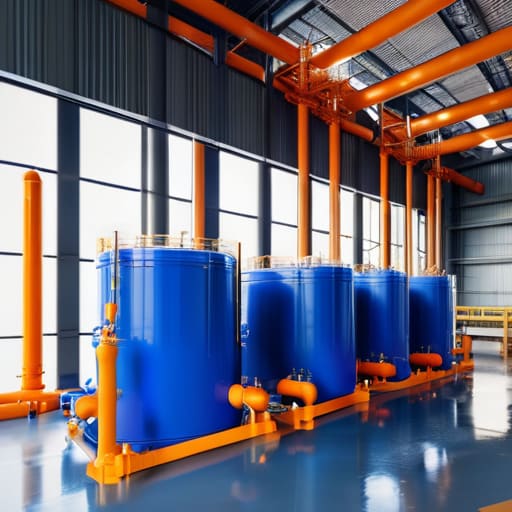
I remember sitting in a windowless lab at Georgia Tech, staring at a lithium-ion cell that had just hit its cycle limit, feeling that familiar sting of frustration. Everyone in the industry acts like lithium is the only way forward, but if we’re actually serious about decarbonizing the grid, we need to stop treating every storage problem like it’s a smartphone battery. We keep trying to force high-density, short-duration tech into roles it wasn’t built for, while completely ignoring the massive potential of flow battery technology. It’s not just another buzzword to throw around in a corporate ESG report; it’s a fundamental shift in how we handle long-duration energy storage without burning through rare earth metals like they’re infinite.
I’m not here to sell you on some utopian, “green” fantasy or repeat the polished talking points you’ll hear from venture capital firms. I want to dig into the actual hardware and the chemical realities of why this tech is a game-changer for a stable grid. We’re going to break down the mechanics of how these systems actually work, the real-world scalability challenges they face, and whether they can truly deliver on the promise of a sustainable energy future. No hype, just the data.
Table of Contents
Why Decoupled Power and Energy Changes Everything
Here’s the thing about lithium-ion: it’s a closed loop. If you want more capacity, you have to buy a bigger, heavier, and more expensive battery pack. It’s an all-in-one package where the power and the energy are physically stuck together. But with decoupled power and energy, the math changes completely. In a flow system, the power is determined by the size of the cell stack, while the actual energy is just a matter of how much liquid you keep in the tanks.
Think of it like a garden hose versus a swimming pool. If you want more water (energy), you don’t need a bigger nozzle (power); you just need a bigger tank. This makes them absolute beasts for stationary energy storage systems where space isn’t as tight as it is in a Tesla, but longevity is everything. By simply scaling up the electrolyte storage capacity, we can provide hours or even days of backup without the massive cost curve spike we see in traditional chemistries. It’s a modular way of thinking that actually matches how a growing grid needs to function.
Mastering Renewable Energy Integration Without the Crash
The real headache with solar and wind isn’t just that they’re intermittent; it’s that our current grid infrastructure is basically a rigid pipe trying to handle a tidal wave. When the sun dips or the wind dies, we usually see a massive spike in demand that traditional lithium-ion setups struggle to smooth out without massive, expensive over-provisioning. This is where renewable energy integration gets messy. If we want to actually stabilize the grid without relying on gas peaker plants, we need systems that can soak up excess production for hours, not just minutes.
This is why I’m so bullish on stationary energy storage systems that don’t play by the same rules as your phone battery. In a lithium setup, if you want more runtime, you have to buy more entire battery modules—which is a massive waste of capital. With flow chemistry, you just scale up the electrolyte storage capacity by adding bigger tanks. It’s a much more logical, modular way to build a buffer for the grid, ensuring that when the weather turns, the lights stay on without the whole system crashing under the load.
How to Actually Evaluate Flow Battery Potential (Without the Hype)
- Stop comparing them to your phone battery. You can’t judge a flow battery by its energy density; you have to look at its cycle life. If a system isn’t rated for thousands of deep discharge cycles without a massive capacity drop, it’s just a glorified, expensive paperweight for the grid.
- Watch the electrolyte chemistry, not just the brand name. I’m looking for vanadium-based systems right now because the chemistry is proven, but keep an eye on organic redox flow tech. If they can solve the stability issues with organic molecules, we might finally move past the supply chain headaches of heavy metals.
- Check the “Balance of Plant” (BoP) complexity. A flow battery isn’t just a tank of liquid; it’s a system of pumps, sensors, and thermal management. If the BoP is too complex, the maintenance costs will eat your ROI before the decade is out. Simple is almost always better in grid-scale hardware.
- Look for modularity in the tank design. The whole point of decoupling power from energy is that you should be able to scale capacity just by adding more electrolyte tanks. If a company tells you that you have to buy a whole new stack just to get more runtime, they’re missing the entire point of the tech.
- Demand transparency on the end-of-life plan. We talk a lot about “green” tech, but if we’re just creating a new mountain of chemical waste in twenty years, we haven’t actually won. A real flow battery solution needs a closed-loop system where that electrolyte can be recovered and reused indefinitely.
The Bottom Line on Flow Tech
We have to stop treating all batteries like they’re the same; while lithium is great for your phone or an EV, flow batteries are the actual heavy lifters we need for long-duration grid stability.
The real magic is in the decoupling—being able to scale capacity just by adding more electrolyte tanks instead of buying entirely new, expensive battery stacks is a massive win for infrastructure costs.
If we want a grid that doesn’t collapse when the sun goes down or the wind stops blowing, we need to pivot our focus toward these scalable, long-cycle chemistries rather than just chasing the next lithium-ion breakthrough.
The Lithium Ceiling
“We keep trying to solve a marathon-length problem with sprint-speed technology. Lithium-ion is incredible for your phone or a Tesla, but if we’re actually going to stabilize a grid powered by wind and solar, we need the long-duration stamina that only flow batteries can provide—without the constant fear of thermal runaway.”
Desmond Achebe
The Long Game for the Grid
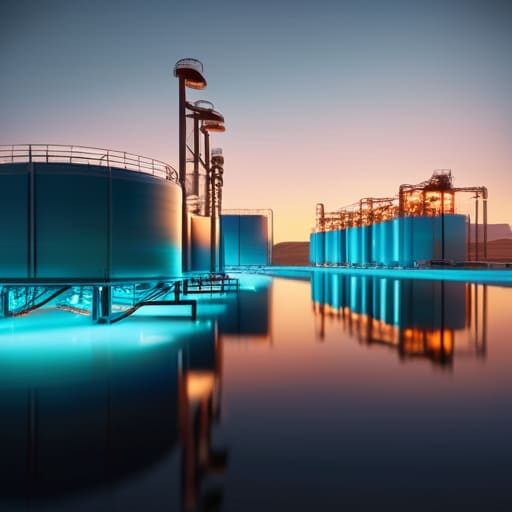
Look, we can’t keep pretending that lithium-ion is the silver bullet for everything. As we’ve walked through, the ability to decouple power from energy is the massive structural advantage that flow batteries bring to the table. They aren’t just another way to store juice; they are a fundamental shift in how we manage the volatility of wind and solar. By scaling the electrolyte tanks rather than just adding more expensive cells, we finally get a path toward long-duration storage that actually makes sense for a heavy-duty grid. If we want to stop the constant cycle of “charge, peak, and crash,” we have to embrace the chemistry that allows for this kind of scalable, modular stability.
I’m tired of seeing companies chase the same high-density metrics for consumer electronics while ignoring the massive infrastructure gaps in our energy sector. The transition to electric mobility and a green grid isn’t just about making better cars; it’s about building the backbone that can actually support them without collapsing under the weight of intermittent supply. We need to move past the hype and start investing in the hard engineering that makes sustainability possible. The tech is there, the chemistry is ready, and if we play our cards right, the hardware for a truly resilient future is already within our reach.
Frequently Asked Questions
If flow batteries are so much better for the grid, why aren't we seeing them replace lithium-ion in consumer EVs right now?
Look, I get the confusion. If flow batteries are the grid’s holy grail, why aren’t they in your Tesla? It comes down to energy density. Flow batteries are basically giant tanks of liquid electrolyte; they’re amazing for storing massive amounts of power over long periods, but they’re also huge and heavy. You wouldn’t want a liquid-tank system sitting in your trunk. For EVs, we need the high energy-to-weight ratio that lithium-ion provides, even if it isn’t perfect for the grid.
How do we actually solve the scaling issue—is the electrolyte chemistry going to get prohibitively expensive as we try to build massive utility-scale arrays?
That’s the million-dollar question. If we were stuck with lithium, scaling would be a nightmare of supply chain bottlenecks and skyrocketing costs. But flow batteries play a different game. Since we’re basically just scaling up tanks of liquid, the “fuel” is often abundant stuff like vanadium or even organic molecules we can synthesize. The real trick isn’t finding more rare minerals; it’s perfecting the chemistry so we can use cheaper, earth-abundant elements without losing efficiency.
What's the real-world lifespan of these systems compared to the degradation cycles we see in standard solid-state or lithium-ion setups?
Look, if you’re used to lithium-ion, you’re used to watching your capacity tank after a few thousand cycles. It’s the “death by degradation” we see in EVs and phones. But flow batteries play by different rules. Since the energy is stored in liquid electrolytes rather than solid electrodes, you aren’t dealing with the same mechanical stress or dendrite growth. We’re talking 20,000+ cycles and a 20-year lifespan. It’s not just an incremental upgrade; it’s a different league.
