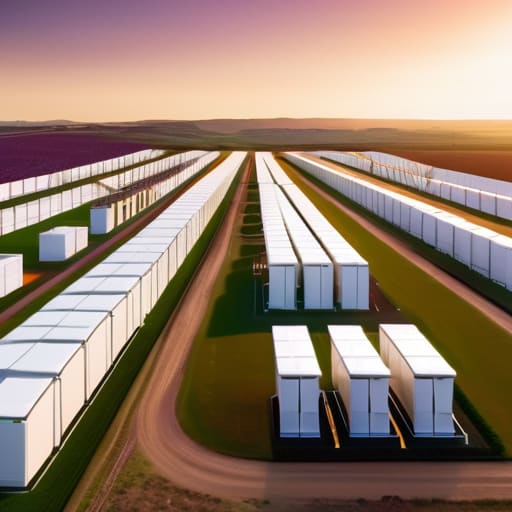
I still remember sitting in a windowless lab at Georgia Tech, surrounded by the faint, metallic tang of electrolyte leakage and the hum of a dozen charging cycles, realizing that everyone was looking at the wrong thing. We spent all our time obsessing over how to make electric cars go faster or further, but we were completely ignoring the elephant in the room: the grid is a mess. If we want to actually transition away from fossil fuels, we have to stop treating stationary energy storage like some secondary, niche add-on for solar farms. It’s not just a “nice-to-have” feature; it is the fundamental backbone that determines whether a renewable-heavy grid actually stays online when the sun goes down or the wind dies.
I’m not here to sell you on the glossy, corporate-approved vision of a “green utopia” that relies on vague promises and unproven tech. Instead, I want to get into the actual weeds of the hardware. We’re going to look past the marketing fluff and dive into the real chemistry and infrastructure requirements that make large-scale storage viable. I’ll give you the data-driven truth about what’s actually working in the field right now and what’s just expensive science fiction.
Table of Contents
- The Raw Truth About Lithium Ion Battery Technology
- Decarbonizing the Power Grid Through Real Hardware
- Stop Treating Storage Like a Black Box: 5 Realities for the Next Decade
- The Bottom Line: What Actually Matters for the Transition
- The Grid's Missing Link
- The Bottom Line on Grid Stability
- Frequently Asked Questions
The Raw Truth About Lithium Ion Battery Technology
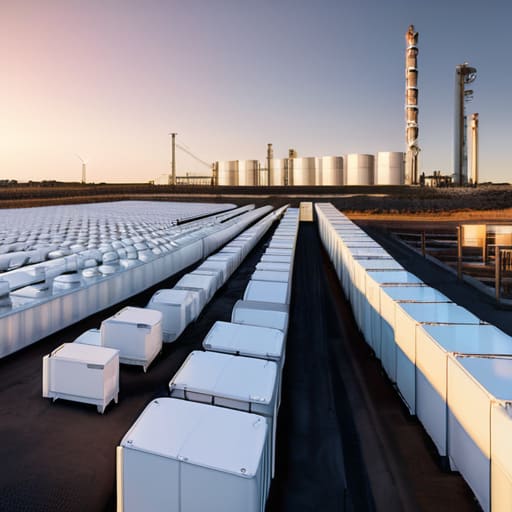
Let’s get one thing straight: lithium-ion is the current king, but it’s not a magic wand. When we talk about lithium-ion battery technology in a grid context, we aren’t just talking about the same cells in your phone, only bigger. We’re talking about massive, complex systems that have to survive thousands of cycles without losing their soul—or their capacity. The chemistry is incredible, but it’s also finicky. If you don’t manage the thermal profiles perfectly, you aren’t just looking at a dead battery; you’re looking at a massive safety liability.
The real headache, though, is the energy storage system lifecycle. It’s easy to get swept up in the hype of how these units can facilitate peak shaving technology to lower costs during high demand, but we rarely talk about what happens when the degradation kicks in. As an engineer, I look at the curves. Once the internal resistance climbs and the capacity drops, that “revolutionary” asset becomes a heavy, expensive problem. We need to be honest about these trade-offs if we’re actually going to scale.
Decarbonizing the Power Grid Through Real Hardware
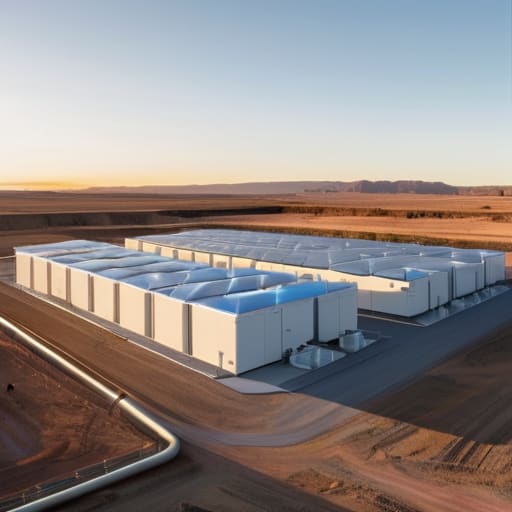
If we’re actually going to succeed at decarbonizing the power grid, we have to move past the idea that batteries are just giant versions of what’s in your phone. In the utility space, we’re looking at massive BESS applications designed to handle the heavy lifting that solar and wind simply can’t do on their own. It’s not just about holding onto power; it’s about the intelligence behind the hardware. We need systems that can respond in milliseconds to provide frequency regulation services, smoothing out those tiny, violent oscillations in the grid that happen when a cloud passes over a massive solar farm or the wind suddenly dies down.
But the real money—and the real stability—comes from how we manage the timing of energy flow. We’re seeing a massive shift toward using these arrays for peak shaving technology, essentially clipping the tops off those expensive, carbon-heavy demand spikes that usually force utilities to fire up old gas peaker plants. When you combine that with aggressive energy arbitrage strategies, where we soak up cheap excess renewables at noon and dump them back into the system during the evening rush, you start to see a grid that actually functions like a modern, synchronized machine rather than a patchwork of aging infrastructure.
Stop Treating Storage Like a Black Box: 5 Realities for the Next Decade
- Look past the lithium hype. While Li-ion is the current king for mobile tech, we can’t solve grid-scale stability using only the same chemistry we put in our phones. We need to be pushing for Flow Batteries and Iron-Air tech for long-duration storage—they aren’t as “flashy,” but they don’t degrade nearly as fast when you’re cycling them every single day.
- Demand transparency in the supply chain, not just marketing fluff. If a company claims they’re “green” but they can’t tell you where their cobalt or nickel is coming from, they’re greenwashing. Sustainable storage means a circular lifecycle where we actually reclaim the minerals instead of just digging more holes in the ground.
- Focus on “behind-the-meter” integration. The biggest wins aren’t always these massive, centralized utility plants; it’s the decentralized hardware in homes and businesses. If we can optimize how local storage interacts with the local grid, we reduce the massive transmission losses that make our current system so inefficient.
- Don’t ignore the thermal management aspect. Anyone who’s messed with a custom skateboard build knows that heat is the ultimate battery killer. In stationary storage, if the cooling system isn’t as robust as the cell chemistry itself, you’re just building a very expensive fire hazard rather than a reliable asset.
- Prioritize software that actually talks to the hardware. A massive battery array is useless if the grid controller can’t predict when to discharge it. We need smarter, more responsive power electronics that can handle the millisecond-level fluctuations of wind and solar without breaking a sweat.
The Bottom Line: What Actually Matters for the Transition
We have to stop treating stationary storage like a side project for EVs; if we don’t scale massive, grid-level battery arrays, the intermittent nature of renewables will keep us tethered to gas plants forever.
Chemistry matters more than marketing. We need to move past the hype of “green” labels and start demanding transparency in how we handle lithium-ion degradation and the actual lifecycle of the hardware.
Real decarbonization isn’t just about swapping a tailpipe for a plug; it’s about building a resilient, high-density storage infrastructure that can actually handle the load when the sun goes down and the wind stops blowing.
The Grid's Missing Link
“We keep acting like the energy transition is just about swapping a gas tank for a battery in your driveway, but if we don’t scale massive, stationary storage to catch those solar and wind peaks, we’re just building a high-tech house on a foundation of sand.”
Desmond Achebe
The Bottom Line on Grid Stability
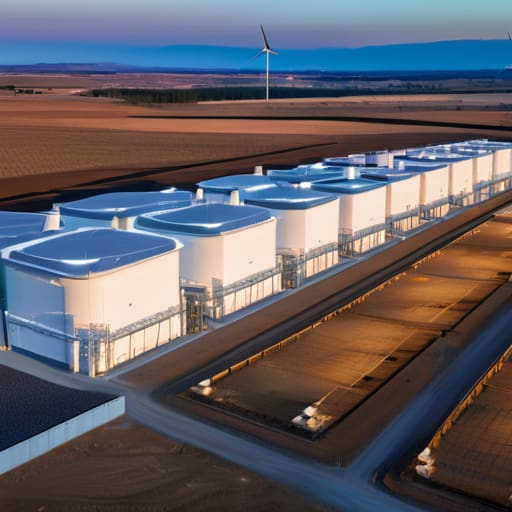
Look, we can keep debating the nuances of energy density or the politics of mineral supply chains, but the fundamental reality remains: we aren’t going to reach net-zero with just solar panels and wind turbines sitting idle when the sun goes down. We’ve seen the data. Without massive, scalable stationary storage to act as the grid’s shock absorber, our renewable transition is just a house of cards waiting for a cloudy day. It’s not just about having “green” energy; it’s about having reliable, dispatchable hardware that can handle the heavy lifting when the demand spikes. If we don’t get the chemistry and the infrastructure right, we’re just trading one type of energy dependency for another.
I know it’s easy to get cynical when you see every car company promising a revolution that feels decades away. But when I look at the progress in long-duration storage and the actual engineering happening in the labs right now, I see a path forward that isn’t just a marketing slogan. The transition to a truly electrified world is going to be messy, and it’s definitely going to be hard, but it is absolutely inevitable. We just need to stop chasing the hype and start building the actual backbone of the future. Let’s get to work on the hardware that actually matters.
Frequently Asked Questions
If we're scaling up these massive battery arrays, how do we actually handle the recycling nightmare once they hit their end-of-life?
Honestly, it’s a massive bottleneck right now. We can’t just call this a “green revolution” if we’re essentially creating a mountain of toxic e-waste. The current play is shifting from crude shredding to advanced hydrometallurgy—using chemical baths to recover high-purity lithium, cobalt, and nickel. It’s more precise and less energy-intensive than smelting. If we don’t nail the closed-loop supply chain now, we’re just trading one resource crisis for another.
Can solid-state tech actually make it to the grid level anytime soon, or is that just more corporate hype for the next decade?
Honestly? It’s mostly hype for the immediate future. Look, I spent my college years obsessing over solid-state breakthroughs, and the chemistry is beautiful on paper. But scaling that from a lab bench to a massive grid-scale array is a different beast entirely. We’re talking about massive manufacturing hurdles and cost-per-kWh issues that aren’t going away overnight. Don’t expect it to stabilize your local substation next year; for now, we need to make current tech work.
How much of a bottleneck is the current supply chain for critical minerals like lithium and cobalt when we're trying to build this much storage?
It’s a massive bottleneck, and honestly, it’s the elephant in the room. We can design the most efficient solid-state cells in a lab, but if we can’t source the lithium or cobalt without massive geopolitical friction or ecological damage, the math just doesn’t work. We’re essentially trying to build a skyscraper while fighting over the supply of every single nail. Until we scale recycling and diversify mineral sourcing, our storage ambitions are stuck in neutral.
