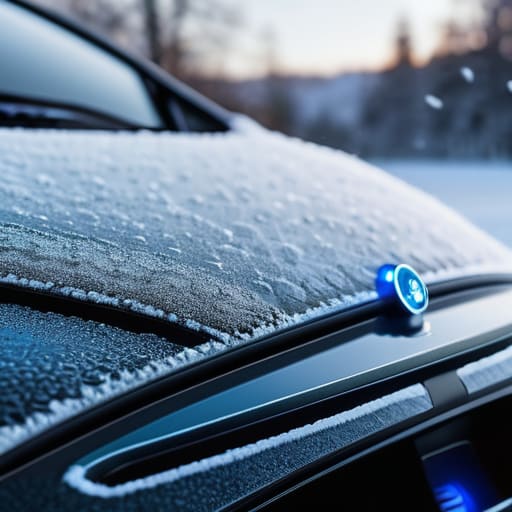
I remember sitting in my apartment last January, staring at my dashboard as the projected range plummeted faster than my GPA during finals week. It wasn’t a software bug or a “user error”—it was the cold, hard physics of lithium-ion cells struggling to move ions through a thickening electrolyte. Most people will tell you that winter ev driving is just about driving slower or turning off your heater, but that’s a massive oversimplification that ignores the actual hardware reality. If we’re going to make the switch to electric, we have to stop treating the battery like a magic box and start respecting the chemical limitations that freezing temperatures impose on our mobility.
I’m not here to give you generic lifestyle tips or tell you to “embrace the journey.” I’m going to break down the actual mechanics of why your range is tanking and how you can manage your thermal state without sacrificing your sanity. We’re going to look at the real-world data on pre-conditioning, heat pump efficiency, and charging curves so you can actually navigate the frost without constant range anxiety.
Table of Contents
- Lithium Ion Battery Cold Weather Chemistry and the Range Gap
- Electric Vehicle Range Anxiety Winter It Is a Hardware Problem
- Stop Fighting Physics: 5 Ways to Manage Your Battery When the Temp Drops
- The Bottom Line: Surviving the Freeze
- ## The Hard Truth About Cold Starts
- The Road Ahead is Cold, but the Tech is Getting Warmer
- Frequently Asked Questions
Lithium Ion Battery Cold Weather Chemistry and the Range Gap

Here’s the reality: when the temperature drops, you aren’t just fighting the wind; you’re fighting physics. At the molecular level, lithium-ion battery cold weather chemistry gets incredibly sluggish. Think of the electrolyte inside your cells like maple syrup—when it’s warm, it flows easily, allowing ions to zip between the anode and cathode. But when it hits freezing, that “syrup” thickens. This increased internal resistance means the battery has to work much harder just to move energy around, which is why you see that sudden, frustrating dip in your estimated mileage.
This isn’t just a software bug that a patch can fix; it’s a hardware bottleneck. As the ions struggle to move, the voltage drops, and the car’s management system starts playing defense to protect the cells from permanent damage. This is a huge driver of electric vehicle range anxiety in winter, especially when you realize that your heater is pulling massive amounts of current from a battery that is already struggling to stay efficient. If we want to bridge this gap, we have to stop treating the battery like a magic box and start respecting the thermal limits of the chemistry itself.
Electric Vehicle Range Anxiety Winter It Is a Hardware Problem
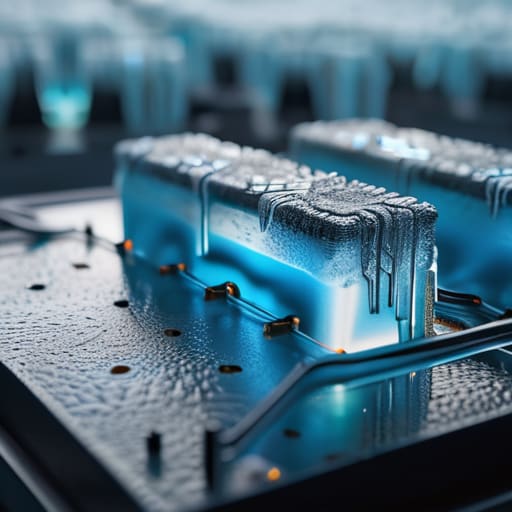
Here’s the reality: most people treat range loss like it’s some software bug that a future OTA update will magically patch. It isn’t. When we talk about electric vehicle range anxiety in winter, we aren’t talking about a glitchy UI; we are talking about the laws of thermodynamics. In my labs back at Georgia Tech, we saw it constantly—as the ambient temperature drops, the internal resistance of the cells climbs. This means the battery has to work harder just to move electrons around, effectively fighting itself before you even hit the accelerator.
This isn’t just about how much juice you have left; it’s about how efficiently the hardware can actually deploy it. For example, you might notice that regenerative braking in cold temperatures feels sluggish or behaves differently than it does in July. That’s because the battery can’t accept a high-current charge spike when the ions are sluggish and the chemistry is “frozen.” We can try to mitigate this with better thermal management, but until we move toward more robust solid-state architectures, we are essentially fighting a physical uphill battle against the environment every single time the mercury drops.
Stop Fighting Physics: 5 Ways to Manage Your Battery When the Temp Drops
- Use your preconditioning settings religiously. Don’t just sit in a freezing car and wait for the heater to kick in; plug into a charger and let the software warm the battery pack while it’s still drawing power from the grid, not your cells.
- Prioritize cabin heat through seat and steering wheel heaters instead of cranking the HVAC fan. Heating the air is an energy hog, but using resistive heating in your seat is way more efficient for keeping your body warm without draining your range.
- Watch your discharge rates on the highway. Cold electrolytes are already sluggish, so if you’re flooring it to maintain high speeds in freezing wind, you’re forcing the battery to work twice as hard to overcome internal resistance. Smooth is sustainable.
- Don’t let your State of Charge (SoC) bottom out. In extreme cold, a deeply discharged battery is a recipe for permanent capacity loss. Try to keep your buffer between 20% and 80% to give the chemistry some breathing room.
- Plan for “charging lag.” If you’re stopping at a DC fast charger, realize that the charger might throttle your intake if the battery hasn’t reached its optimal operating temperature. If you can, pre-condition the battery via the nav system before you arrive at the station.
The Bottom Line: Surviving the Freeze
Stop blaming the software; the range drop you see in January is a fundamental chemical reality of how lithium ions move through a cold electrolyte.
Range anxiety in winter isn’t a mental hurdle to overcome—it’s a hardware limitation that requires smarter pre-conditioning and better thermal management systems.
If we want EVs to be viable for everyone, the industry needs to move past “good enough” battery insulation and start engineering for extreme temperature stability.
## The Hard Truth About Cold Starts
“We need to stop treating winter range loss like it’s some software bug that a patch can fix; it’s a fundamental battle against thermodynamics. If we aren’t designing for the thermal reality of a lithium-ion cell in sub-zero temperatures, we aren’t building a viable transportation system, we’re just building a fair-weather luxury.”
Desmond Achebe
The Road Ahead is Cold, but the Tech is Getting Warmer
At the end of the day, we have to stop treating winter range loss like some mysterious ghost in the machine. It’s not a software bug you can just patch out with an over-the-air update; it is a fundamental byproduct of ion mobility and electrolyte viscosity slowing down when the mercury drops. We’ve looked at how the chemistry fights itself in the cold and why our current infrastructure is still catching up to the thermal management needs of a true electric fleet. If we want to move past the era of “range anxiety” and into an era of reliable electric mobility, we have to stop pretending that one-size-fits-all battery packs work in every climate.
I know the skeptics love to point at a frozen battery as proof that the electric transition is a pipe dream, but they’re looking at the wrong thing. They see a limitation, while I see a massive engineering opportunity. Every time we solve a thermal management hurdle or stabilize a solid-state cell for sub-zero performance, we move the needle closer to a world where energy is truly decentralized and resilient. The hardware is getting better, the data is getting clearer, and the transition is happening whether the skeptics like it or not. We just need to build for the reality of the elements, not just the perfection of a sunny lab test.
Frequently Asked Questions
Can pre-conditioning a battery while plugged in actually offset the energy drain from cabin heating?
Short answer: Yes, absolutely. Think of it like pre-heating your house before you get home instead of cranking the furnace the second you walk in. By using grid power to bring those cells up to their optimal operating temperature while you’re still plugged in, you’re essentially “banking” that thermal energy. It saves your onboard battery from the massive drain of fighting ambient cold, keeping your discharge curve much more predictable once you actually hit the road.
How much of this range loss is due to the chemical slowdown versus the sheer energy demand of running a heat pump?
It’s a double whammy, but the math leans heavily toward the energy demand. While the chemical slowdown increases internal resistance—basically making the battery “sluggish” and less efficient at discharging—that’s usually a secondary thief. The real killer is the thermal load. Running a heat pump to keep you from freezing is a massive parasitic draw. You aren’t just fighting chemistry; you’re essentially running a space heater off your main fuel tank.
Are we looking at a future where solid-state batteries finally solve this thermal management headache, or are we just stuck with liquid electrolytes for a while?
Look, solid-state is the holy grail, but let’s not get ahead of ourselves with the hype. Replacing liquid electrolytes with a solid medium would drastically improve thermal stability and energy density, potentially killing the “winter range” issue for good. But scaling that manufacturing without it being prohibitively expensive is a massive hurdle. For now, we’re stuck optimizing liquid-based systems. We’ll be refining thermal management hardware for a few more years before solid-state actually hits the streets.
