
I remember sitting in my dorm at Georgia Tech, surrounded by half-disassembled lithium cells and a mountain of textbooks, staring at a data sheet that promised a future no one actually seemed to believe in. Everyone was talking about the “death of the gas engine,” but all I could hear was the constant, nagging fear of ev range anxiety bubbling up in every conversation. It’s not just a buzzword; it’s a legitimate psychological barrier that gets thrown around by people who don’t understand the difference between a bad cell chemistry and a bad charging network. Honestly, the industry spends way too much time trying to sell you on the dream of infinite mileage instead of just fixing the actual hardware and infrastructure issues that make people nervous in the first place.
I’m not here to give you a marketing pitch or tell you that your charger is a magic wand. In this post, I’m stripping away the corporate greenwashing to look at the real chemistry and the grid realities that actually dictate how far you can go. We’re going to dive into the technical stuff—degradation rates, energy density, and why your dashboard percentage isn’t always telling you the whole truth. If you want the unvarnished data on how to actually manage your energy without the hype, you’re in the right place.
Table of Contents
Why Real World Electric Vehicle Range Defies Marketing Promises
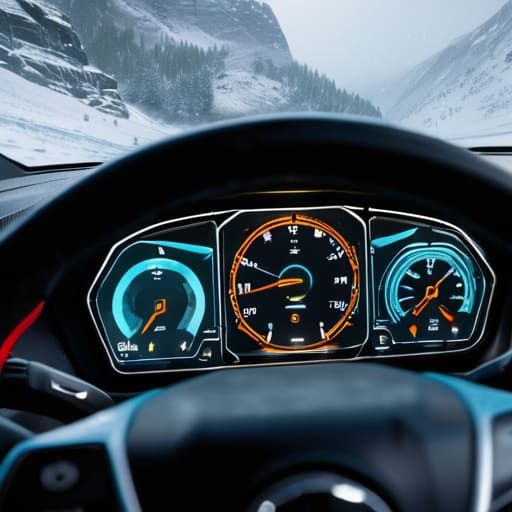
Here’s the deal: when you see a spec sheet claiming a 400-mile range, you’re looking at a laboratory ideal, not a Tuesday morning commute. Manufacturers love to run these tests in controlled environments with perfect temperatures and zero wind resistance, but the real world is a lot messier. If you’re driving through a mountain pass or dealing with a sudden cold snap, you’re going to see a massive hit to your cold weather battery performance. Lithium-ion cells aren’t magic; they rely on chemical reactions that slow down significantly when the mercury drops, causing that estimated range to evaporate right before your eyes.
It’s not just about the weather, though. How you actually drive plays a massive role in optimizing electric car efficiency. If you’re lead-footing it on the highway, you’re fighting massive aerodynamic drag that the marketing brochures conveniently gloss over. On the flip side, if you’re navigating stop-and-go city traffic, you can actually lean into the regenerative braking benefits to claw back some energy. The gap between a glossy brochure and your actual dashboard readout exists because physics doesn’t care about a company’s quarterly sales targets.
Cold Weather Battery Performance the Physics We Cant Ignore

Look, I hate to be the one to kill the vibe, but physics doesn’t care about your marketing brochure. When the temperature drops, you aren’t just dealing with a “cold car”—you’re dealing with a fundamental slowdown in ion mobility. Inside that battery pack, the lithium ions have to move through a liquid electrolyte to create a current. When it gets freezing outside, that electrolyte gets viscous, almost like trying to swim through molasses instead of water. This increased internal resistance is why cold weather battery performance takes such a massive hit; the chemistry literally struggles to keep up with the demand.
It’s not just about the chemistry, though; it’s about how the car manages that struggle. To keep the battery in a functional temperature window, the thermal management system has to kick in, pulling energy away from your drivetrain to generate heat. This creates a double whammy: you’re losing range because the chemistry is sluggish, and you’re losing even more because the car is using its own juice just to stay warm. If we want to talk about optimizing electric car efficiency in northern climates, we have to stop pretending that a summer range estimate is a universal truth.
How to Actually Manage Your Range Without Losing Your Mind
- Stop obsessing over the “100% charge” myth; most modern lithium-ion packs prefer staying between 20% and 80% to minimize degradation, so learn to live in that sweet spot rather than chasing a full tank every single time.
- Get real about your climate; if you’re heading into a freeze, pre-condition your battery while it’s still plugged into the wall so you aren’t wasting precious cell energy just trying to get the chemistry up to operating temperature.
- Treat high-speed highway driving like a massive drain on your energy budget, because fighting aerodynamic drag at 80 mph is basically the electrical equivalent of trying to run a marathon while breathing through a straw.
- Stop relying on the car’s “estimated” range as gospel and start looking at your actual Wh/mi (Watt-hours per mile) data; the math doesn’t lie, even when the dashboard software is being overly optimistic.
- Map your route based on charger reliability and power output, not just proximity; there is nothing worse than pulling up to a “fast charger” only to find out it’s a crippled 7kW unit that’ll take all night to top you off.
The Bottom Line: Moving Past the Hype
Stop measuring range by the number on the window sticker; real-world mileage is a moving target dictated by your driving habits, the ambient temperature, and how much you’re abusing the battery’s discharge cycle.
Range anxiety isn’t a psychological flaw—it’s a rational response to a massive gap between manufacturer claims and the actual density of our current charging infrastructure.
The real solution isn’t just “bigger batteries,” which just adds more weight and cost, but rather a shift toward better solid-state chemistry and smarter thermal management systems that actually respect the physics of energy storage.
The Infrastructure Gap
“Range anxiety isn’t some psychological glitch we need to ‘solve’ with better marketing; it’s a rational response to a massive gap between the lithium-ion promises being sold in showrooms and the actual density of our charging grid. We don’t need more ‘range-extender’ gimmicks—we need better cell chemistry and a grid that actually shows up when you need it.”
Desmond Achebe
The Bottom Line on Range

At the end of the day, range anxiety isn’t some psychological glitch we need to “fix” with better marketing; it’s a rational response to the gap between lab data and real-world physics. We’ve looked at how marketing numbers often ignore the heavy toll of high-speed driving, how extreme cold can turn your battery capacity into a moving target, and why the current charging infrastructure still feels like a gamble in many zip codes. We can’t just wish these variables away. To actually solve this, we have to move past the hype and focus on the hard engineering—improving energy density, refining thermal management systems, and building a grid that doesn’t buckle under the load.
I’m not a cynic, I’m just a realist. I genuinely believe the shift to electric is the only way forward, but that transition won’t be built on vague promises of “infinite range.” It’s going to be built on solid-state breakthroughs, smarter software, and a massive overhaul of how we move energy. We are currently in the messy, awkward adolescence of electric mobility, but if we stop chasing the shiny sales pitch and start obsessing over the actual hardware, we’ll get to a point where “range” isn’t even a conversation anymore. We’re building the future one cell at a time, and that’s something worth getting right.
Frequently Asked Questions
If solid-state batteries are the "holy grail," how much closer are we actually to seeing them in consumer EVs versus just seeing more lab prototypes?
Look, I’m tired of seeing “solid-state” used as a buzzword to distract from current lithium-ion limitations. In the lab? We’re killing it. But scaling that from a controlled environment to a mass-production line that doesn’t cost a fortune is a different beast entirely. We’re moving past the “it works in a vacuum” phase, but we aren’t at “it’s in your driveway” yet. Expect more pilot programs and high-end niche builds before they actually hit the consumer market.
Is the issue really the battery capacity itself, or is our current charging infrastructure just too poorly distributed to handle long-distance trips?
Honestly, it’s both, but we’re focusing on the wrong one. We keep obsessing over adding more kWh to the pack like it’s a magic fix, but that just adds weight and kills efficiency. The real bottleneck? It’s the infrastructure. You can have a massive battery, but if the chargers are broken or spaced out like desert mirages, you’re still stranded. We don’t just need bigger tanks; we need a reliable, high-speed refueling network.
How much of my range loss is actually due to battery degradation over time versus just the way I'm driving or the ambient temperature?
Look, it’s a mix, but don’t panic yet. If you’re seeing a massive drop in a single afternoon, that’s just the ambient temperature messing with your ion mobility—it’s physics, not a broken battery. If your range feels “off” during heavy acceleration, that’s your driving style. Real degradation—the permanent loss of capacity—is a slow, chemical crawl. Unless you’re fast-charging in 100-degree heat every single day, your driving and the weather are likely the main culprits.
