Category: Power

  • Evolving Chemistries in Battery Cathodes

    Evolving Chemistries in Battery Cathodes

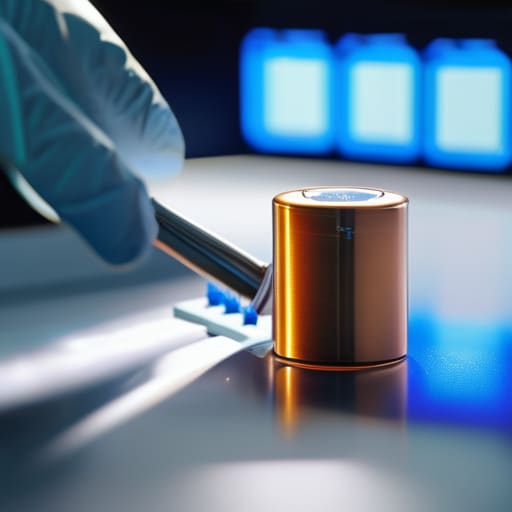
    I still remember sitting in a cramped lab at Georgia Tech, staring at a single lithium-ion cell that had basically turned into a paperweight after just a few dozen cycles. It was frustrating because every tech blog at the time was screaming about “revolutionary” breakthroughs, yet the actual hardware was failing right in front of me. We keep getting sold these glossy, high-level promises about the future of EVs, but the reality is that most of the hype around cathode material innovations is just marketing fluff designed to pump stock prices. If we don’t address the actual stability of the crystal structure at the atomic level, we aren’t building a revolution; we’re just building expensive, short-lived toys.

    I’m not here to give you a press release or a watered-down summary of a corporate white paper. I want to pull back the curtain on the actual chemistry that determines whether a battery lasts ten years or two. In this post, I’m breaking down the real cathode material innovations—from high-nickel compositions to sulfur-based alternatives—based on the data that actually matters. We’re going to look past the greenwashing and focus on the hard engineering required to make high-density energy storage something that actually works for everyone.

    Table of Contents

    Moving Beyond Hype to Next Generation Battery Chemistries

    Moving Beyond Hype to Next Generation Battery Chemistries

    Look, most of the headlines you see about “revolutionary breakthroughs” are just marketing fluff designed to pump stock prices. If you actually dig into the data, the real battle isn’t happening in a boardroom; it’s happening at the molecular level. Right now, we’re hitting a wall with standard lithium-ion battery performance because we’ve squeezed almost everything we can out of current configurations. To actually move the needle, we have to pivot our focus toward next-generation battery chemistries that don’t rely on the same tired, expensive material stacks.

    The biggest hurdle I see in my day-to-day work is the trade-off between energy density and longevity. We talk a lot about pushing the limits, but if you increase the voltage to get more range, you often sacrifice high-voltage cathode stability, leading to faster degradation. That’s why I’m watching the industry’s shift toward cobalt-free cathode development so closely. It’s not just about ethics or supply chain security—though those are massive—it’s about creating a chemistry that is fundamentally more stable and scalable for the long haul. We need hardware that survives more than a few hundred cycles if we’re serious about replacing gas.

    Solving the Crisis of High Voltage Cathode Stability

    Solving the Crisis of High Voltage Cathode Stability

    Here’s the reality: pushing for higher energy density is a double-edged sword. When we try to crank up the voltage to squeeze more range out of a pack, we’re essentially putting the entire system under extreme stress. The biggest headache I see in the lab—and in the data—is the breakdown of the electrolyte at those high potentials. If we can’t maintain high-voltage cathode stability, we aren’t building a long-term solution; we’re just building a ticking time bomb of degradation. Once that interface starts to fail, you get side reactions that eat away at your capacity, leaving you with a battery that loses its punch way faster than it should.

    To fix this, we have to move past just “trying harder” and actually re-engineer the surface of the particles. We’re looking at things like atomic layer deposition to create protective coatings that act like a shield for the active material. It’s not just about the raw power; it’s about mastering the electrochemical properties of cathode materials so they can survive the constant, violent movement of ions during rapid charge cycles. If we want EVs that last a decade rather than five years, this is where the real work happens.

    How to Spot Real Progress vs. Corporate Greenwashing

    • Look past the “energy density” buzzwords. If a company claims a massive leap in capacity but can’t explain how they’re handling the thermal stability of that new cathode, they’re likely hiding a massive safety or lifespan trade-off.
    • Keep a close eye on cobalt-free transitions. We can’t build a sustainable future on ethically questionable supply chains; the real winners in this space are the ones mastering high-nickel or manganese-rich chemistries that don’t rely on the same old problematic minerals.
    • Watch for surface coatings and doping. The real “magic” isn’t always a brand-new element; it’s often the tiny, microscopic layers of alumina or other oxides applied to the cathode particles to stop the electrolyte from eating them alive during fast charging.
    • Don’t ignore the “cycle life” metric. A battery that can go 0 to 60 in three seconds is cool, but if the cathode structure collapses after 500 cycles, it’s just expensive e-waste. I care more about how many years that chemistry can actually survive in a real-world grid or vehicle.
    • Demand data on manufacturing scalability. It’s easy to make a high-performance cathode in a controlled university lab using expensive precursors, but if that chemistry can’t be produced in a massive roll-to-roll process without breaking the bank, it’s just a science project, not a solution.

    The Bottom Line: What Actually Matters for the Future of EVs

    We have to move past the “magic pill” mentality; there is no single silver bullet, but rather a necessary trade-off between energy density, cost, and the physical stability of the cathode structure.

    Sustainable mobility isn’t just about tailpipe emissions—it’s about engineering cathodes that don’t degrade after a few hundred cycles, making high-density storage something that lasts for a decade, not just a few years.

    To make EVs accessible to everyone, the industry needs to stop chasing theoretical lab wins and start focusing on chemistries that can actually be scaled within our existing manufacturing infrastructure without relying on volatile supply chains.

    ## The Hard Truth About the Cathode

    “We can keep talking about ‘range anxiety’ all day, but until we solve the actual structural decay happening at the atomic level in our cathode materials, we’re just putting a shiny new coat of paint on a fundamentally unstable system.”

    Desmond Achebe

    The Road Ahead: From Lab Bench to Grid Scale
    The Road Ahead: From Lab Bench to Grid Scale

    Look, we’ve covered a lot of ground, from the high-voltage stability issues that keep engineers up at night to the potential of next-gen chemistries that could finally move us past the current lithium-ion plateau. The takeaway is simple: we can’t just keep tweaking the same old recipes and expect a revolution. If we want to solve the energy density problem without sacrificing cycle life, the answer lies in mastering the interface between the cathode and the electrolyte. We have to move past the “good enough” era of battery manufacturing and start prioritizing the fundamental material science that makes long-range, sustainable electric mobility a reality rather than a luxury for the few.

    I know the corporate press releases make it sound like we’re just one breakthrough away from a utopia, but as someone who spends my days staring at degradation curves, I know the work is far from over. However, I’m genuinely optimistic. Every time we solve a stability issue or find a way to reduce cobalt dependency, we get one step closer to a world where electric tech isn’t just a trend, but the backbone of our entire infrastructure. The transition is coming—it’s inevitable—but let’s make sure we build it on solid chemistry, not just empty promises.

    Frequently Asked Questions

    If we move toward cobalt-free chemistries to fix the sustainability issue, are we going to see a massive hit to the energy density we need for long-range driving?

    That’s the million-dollar question, and honestly, it’s where the engineering gets messy. If we just swap cobalt for something cheaper without re-engineering the whole lattice, yeah, we’re going to see a massive hit to energy density. It’s a balancing act. We can’t just strip out the “stabilizer” and expect the cell to hold up under high voltage. The real win isn’t just removing cobalt; it’s mastering high-nickel chemistries that don’t crumble under pressure.

    How close are we actually to seeing solid-state cathodes move from a lab setting into a mass-produced vehicle on a real assembly line?

    Look, if you’re looking for a mass-market solid-state vehicle in your driveway next year, you’re going to be disappointed. We’re currently stuck in the “valley of death” between lab breakthroughs and factory scalability. We’ve proven the chemistry works in controlled environments, but translating that to a high-speed assembly line without compromising electrolyte integrity is a massive engineering hurdle. I’d say we’re looking at a 5-to-10-year horizon before this hits real-world scale.

    With the push for cheaper LFP batteries, is there a point where we sacrifice too much performance just to keep the upfront cost of EVs down?

    It’s a massive balancing act. LFP is the MVP for making EVs affordable and durable—it’s way safer and lasts longer than NCM—but the energy density hit is real. If you’re driving a commuter car, LFP is a no-brainer. But if we rely solely on it for long-range towing or performance rigs, we’re essentially capping the tech’s potential. We shouldn’t view it as a sacrifice, but as a specialized tool for a specific job.

  • Comparing Hydrogen Fuel Cells to Battery Electric Vehicles

    Comparing Hydrogen Fuel Cells to Battery Electric Vehicles

    I remember sitting in a Georgia Tech lab at 2:00 AM, surrounded by half-disassembled lithium packs and enough electrolyte residue to make my eyes water, when a professor tried to sell me on the idea that hydrogen was the “silver bullet” for everything. It felt like every corporate press release I read back then was just a polished way of avoiding the hard math. Everyone wants to talk about the magic of hydrogen fuel cells as if they’re a plug-and-play solution for the climate crisis, but they conveniently skip over the nightmare of energy density and the massive infrastructure gap. We’re being sold a dream of clean mobility while ignoring the brutal thermodynamics of how we actually produce and move that gas.

    I’m not here to give you a glossy brochure or a lecture on theoretical physics. My goal is to strip away the greenwashing and look at the actual hardware. I’m going to break down the real-world chemistry, the storage hurdles, and whether hydrogen fuel cells can actually compete with the scaling lithium-ion tech we already have. We’re going to look at the data, not the hype, to see if this tech is a legitimate pillar of the grid or just another expensive distraction.

    Table of Contents

    The Real Math of Fuel Cell Efficiency vs Battery

    The Real Math of Fuel Cell Efficiency vs Battery

    Look, if we’re going to have a real conversation about zero-emission transportation, we have to stop treating “energy” as a monolithic concept. In my lab days at Georgia Tech, we spent a lot of time looking at the round-trip efficiency of different systems, and the numbers don’t lie. When you compare fuel cell efficiency vs battery performance, you’re essentially looking at two different ways of fighting entropy. A lithium-ion battery is a closed loop; you charge it, you discharge it, and you lose a predictable percentage to heat. It’s straightforward, almost elegant in its simplicity.

    A fuel cell, however, is a different beast entirely. You aren’t just moving electrons around a pre-charged medium; you’re facilitating a continuous electrochemical conversion process. While the stack itself is impressively efficient at turning chemical energy into electricity, the “math” gets messy once you factor in the energy cost of green hydrogen production and the massive pressure required for onboard storage. If we’re losing 30% of our energy just to crack water molecules and compress the gas, we have to ask if that’s a trade-off we can actually afford.

    Proton Exchange Membrane Technology Hard Truths and Hardware

    Proton Exchange Membrane Technology Hard Truths and Hardware

    When we peel back the marketing layers, the heart of the matter is the proton exchange membrane technology itself. Think of the PEM as the gatekeeper in a high-stakes chemical negotiation. Its job is to facilitate the electrochemical conversion process by allowing protons to pass through while blocking electrons, forcing those electrons to travel through an external circuit to create current. It sounds simple on a whiteboard in a Georgia Tech lab, but in the real world, these membranes are incredibly finicky. They require precise thermal management and absolute purity in the hydrogen feed; even a tiny trace of carbon monoxide can “poison” the catalyst, effectively killing the reaction.

    The hardware reality is that we are still chasing a gold standard that is both durable and cheap. Right now, most high-performance stacks rely heavily on platinum—which is a massive bottleneck for scaling zero-emission transportation to a global level. If we want to move past the niche applications and actually see these systems in heavy-duty trucking or shipping, we have to solve the degradation issue. It’s not just about making them work; it’s about making them survive a decade of vibration, temperature swings, and varying loads without the chemistry falling apart.

    Cutting Through the Hype: 5 Reality Checks for the Hydrogen Transition

    • Stop looking at the tailpipe and start looking at the source. If you’re fueling a cell with hydrogen made from steam methane reforming, you’re basically just moving the carbon problem from a car to a factory. We need green hydrogen—electrolysis powered by renewables—or we’re just greenwashing the status quo.
    • Don’t get blinded by the “fast refueling” argument alone. While it’s true you can fill a tank in minutes, the energy loss during the compression, transport, and storage phases is massive. If you aren’t accounting for the round-trip efficiency losses, your math is going to be way off.
    • Watch the precious metal dependency. Most PEM fuel cells rely heavily on platinum group metals to act as catalysts. As an engineer, that makes me nervous; scaling this tech globally means we need to solve the supply chain bottleneck or find a way to make catalysts out of something way more abundant and cheap.
    • Infrastructure is the ultimate gatekeeper. You can build the most efficient fuel cell stack in the world, but if there isn’t a high-pressure hydrogen pipeline or a specialized refueling station within fifty miles of your route, that tech is just a paperweight. We need a hardware-first approach to the grid.
    • Think about thermal management, not just energy density. Fuel cells generate a lot of heat that needs to be managed differently than a standard Li-ion battery pack. If we don’t get the cooling systems and the stack integration right, we’re going to run into massive durability issues long before the vehicle hits its mileage targets.

    The Bottom Line: Hydrogen vs. Battery Reality

    We can’t ignore the energy density advantage of hydrogen for heavy-duty hauling, but the round-trip efficiency loss during electrolysis and compression makes it a tough sell for anything smaller than a semi-truck.

    PEM technology is brilliant on paper, but the reliance on platinum-group metals means we’re just trading one supply chain crisis for another if we don’t find a way to scale more sustainable catalysts.

    Hydrogen isn’t a “silver bullet” that replaces batteries; it’s a specialized tool that only makes sense if we solve the massive infrastructure gap and the thermodynamic tax of moving the gas around.

    The Infrastructure Gap

    “Everyone loves the idea of hydrogen because it sounds like a magic bullet for long-haul transport, but we need to stop treating it like a plug-and-play solution. Until we solve the massive energy losses during electrolysis and actually build a way to move this stuff without leaking half of it into the atmosphere, it’s just a high-tech dream looking for a reality check.”

    Desmond Achebe

    The Bottom Line on Hydrogen

    The Bottom Line on Hydrogen analysis.

    At the end of the day, we can’t just pick a side in the “battery vs. hydrogen” war like it’s a sports rivalry. We’ve looked at the math, and the reality is that while PEM technology is a feat of engineering, it’s still fighting an uphill battle against the sheer efficiency of lithium-ion. If we’re going to integrate hydrogen into the grid or heavy transport, we have to stop treating it like a magic bullet and start treating it like the specialized tool it actually is. We need to focus on the hard engineering—fixing the storage density issues and building out a real, decarbonized supply chain—rather than just chasing the high of a “zero-emissions” headline that ignores the underlying chemistry.

    I’m still an optimist, but it’s a grounded one. My goal isn’t to see one technology win; it’s to see a diversified energy architecture that actually works when you plug it in. Whether it’s a solid-state battery in your commuter car or a hydrogen stack powering a long-haul freight truck, the hardware has to be sustainable from the ground up. We’re moving toward a world where energy is mobile and abundant, but we only get there if we prioritize real-world scalability over corporate marketing fluff. Let’s build the infrastructure that actually deserves the future we’re promised.

    Frequently Asked Questions

    If the round-trip efficiency of hydrogen is so much lower than lithium-ion, is there any actual use case where the scale of a heavy-duty truck makes the energy loss worth it?

    Look, the math is brutal. If you’re moving a small sedan, hydrogen is a joke because you’re losing so much energy just moving the gas around. But for long-haul, heavy-duty trucking? That’s where the conversation shifts. Batteries are heavy. If a semi-truck is carrying 40 tons of cargo but 10 tons of that is just battery weight, you’ve already lost the economic battle. In that specific niche, the energy loss is a trade-off for payload capacity.

    How do we solve the "green hydrogen" problem—are we actually making fuel from renewables, or is this just more corporate greenwashing using natural gas?

    Look, if we’re being real, most “hydrogen” right now is just glorified natural gas. We’re taking methane, stripping the hydrogen, and dumping the carbon—that’s just Steam Methane Reforming, and it’s anything but green. To actually solve this, we need massive scaling of PEM electrolyzers powered by dedicated wind or solar. If the electricity isn’t surplus renewable energy, we’re just running a shell game. We need real electrolysis, not just clever accounting.

    What's the realistic timeline for seeing a hydrogen refueling infrastructure that doesn't look like a total science fiction pipe dream?

    Look, if you’re expecting a hydrogen station on every corner by 2030, you’re dreaming. We aren’t there. Realistically, we’re looking at a “hub and spoke” rollout over the next decade. Think heavy-duty trucking corridors and industrial maritime ports first—places where the energy density actually justifies the massive CapEx of building high-pressure storage. For passenger cars? Don’t hold your breath. Until we solve the midstream distribution headache, it’s staying in the niche lanes.

  • Implementing Energy Storage Systems for Residential Use

    Implementing Energy Storage Systems for Residential Use

    I still remember sitting in my dorm at Georgia Tech, surrounded by half-disassembled lithium cells and the faint, metallic scent of electrolyte leakage, realizing that the “green revolution” everyone was tweeting about was mostly just marketing fluff. Most people look at home energy storage systems and see a sleek, futuristic gadget that’s going to save the planet, but when you strip away the glossy marketing, you’re often left with overpriced hardware and unrealistic discharge claims. I’m tired of seeing companies sell “energy independence” while hiding the actual degradation curves and cycle life realities behind a curtain of proprietary software.

    I’m not here to sell you on a lifestyle brand or some vague promise of a carbon-neutral utopia. My goal is to pull back the hood and look at the raw chemistry and infrastructure that actually dictates whether a battery is a smart investment or just a very expensive paperweight for your garage. We’re going to cut through the corporate greenwashing and talk about what actually matters: energy density, thermal management, and the long-term viability of the hardware sitting in your home.

    Table of Contents

    Evaluating Lithium Ion Battery Technology and True Sustainability

    Evaluating Lithium Ion Battery Technology and True Sustainability

    When we talk about lithium-ion battery technology, the marketing departments love to focus on how much “freedom” you’ll have. But as someone who’s spent way too many hours staring at degradation curves in a lab, I care more about the cycle life and the actual chemical stability of the cells. It’s easy to promise grid independence solutions, but if the cathode chemistry can’t handle the thermal stress of daily deep discharges, you aren’t building a long-term asset—you’re just buying an expensive paperweight that’s destined for a recycling center in five years.

    We also need to get real about how these units actually interact with your house. A battery sitting idle is just a glorified brick; the real magic happens when it integrates with sophisticated energy management systems. This is where we see the actual utility, like leveraging peak shaving benefits to avoid those predatory utility rates during high-demand windows. If the hardware isn’t smart enough to communicate with your local grid or your appliances, it’s not a solution—it’s just a very heavy backup plan.

    Smart Home Energy Optimization vs Vague Green Promises

    Smart Home Energy Optimization vs Vague Green Promises

    Every time I scroll through LinkedIn, I see another startup promising “seamless energy freedom” through some magical, AI-driven black box. Let’s be real: a flashy interface doesn’t mean anything if the underlying energy management systems aren’t actually communicating with your local utility or your appliances in a meaningful way. Most of these marketing campaigns lean heavily on the idea of “going green,” but they rarely explain how the hardware handles real-world volatility. True smart home energy optimization isn’t about having a pretty dashboard on your phone; it’s about the granular control of when your house draws from the grid versus when it taps into its own stored reserves.

    If we want to actually move the needle, we need to focus on the math of peak shaving benefits. It’s not enough to just store power; you have to be able to strategically discharge it during those high-tariff windows to actually lower your footprint and your bill. We need to stop chasing the dream of total, unmanaged off-grid power capabilities as a marketing gimmick and start building robust infrastructure that treats every kilowatt-hour like the precious resource it actually is.

    Hard Truths: 5 Things to Look for Before You Drop Cash on a Home Battery

    • Stop looking at the “app interface” and start looking at the cycle life. A flashy UI won’t save you if the cells are degrading after only 500 cycles. You need to know the actual depth of discharge (DoD) limits to understand how much usable energy you’re actually buying.
    • Demand transparency on the chemistry. If a manufacturer won’t tell you whether they’re using Lithium Iron Phosphate (LFP) or Nickel Manganese Cobalt (NMC), that’s a massive red flag. LFP is generally the move for home storage because it’s more stable and lasts significantly longer, even if the energy density is lower.
    • Size your system for reality, not for the marketing brochure. Don’t just calculate your peak load; calculate your “autonomy time”—how many hours you actually need to run your essentials when the grid goes dark. Overbuilding is expensive, but undersizing makes the whole system a glorified paperweight during a real outage.
    • Check the round-trip efficiency. Every time you move energy from the grid into your battery and back out again, you lose some to heat. If the round-trip efficiency is low, you’re basically paying a “tax” on every kilowatt-hour you store. Look for systems that minimize that thermal loss.
    • Think about the end-of-life plan. A battery isn’t “green” if it ends up in a landfill in ten years. Ask the provider about their recycling infrastructure and whether the modules are designed for easy disassembly. If they can’t answer that, they’re just selling you future e-waste.

    The Bottom Line on Residential Storage

    The Bottom Line on Residential Storage analysis.

    Stop falling for the marketing gloss; true sustainability isn’t about a “green” label on a box, it’s about the lifecycle of the cells and whether the supply chain actually holds up under scrutiny.

    Real energy independence requires more than just a battery sitting idle; you need a system that actually talks to your local grid and manages your load intelligently to make the hardware worth the investment.

    We have to move past the era of “vague promises” and start prioritizing high-density, reliable chemistry that can handle the heavy lifting of a modern home without degrading after just a few hundred cycles.

    ## The Reality Check

    “We need to stop treating home batteries like glorified consumer gadgets or aesthetic additions to a smart home; if we aren’t talking about cycle life, depth of discharge, and the actual supply chain of the cells, then we’re just buying expensive paperweights that pretend to be a solution.”

    Desmond Achebe

    The Bottom Line on Residential Storage

    Look, we’ve moved past the point where we can just buy a shiny box and call it “green.” After digging into the chemistry and the software, the reality is clear: a home energy storage system is only as good as its lifecycle and its integration with the local grid. If we aren’t looking at the actual degradation rates of the lithium cells or the efficiency of the inverter, we’re just buying expensive paperweights. We have to demand hardware that survives more than a few years of cycling and software that actually optimizes load rather than just looking pretty on a smartphone screen.

    The transition to a decentralized, electric-first lifestyle isn’t going to happen through corporate marketing or vague sustainability pledges. It’s going to happen through rigorous engineering and smarter infrastructure. We are standing at the edge of a massive shift in how humanity handles electrons, and while I’m skeptical of the current hype cycles, I’m incredibly optimistic about the potential. If we get the chemistry right and build for longevity, we aren’t just storing power for a rainy day—we are building the foundation of a resilient energy future that actually lasts.

    Frequently Asked Questions

    How much of a difference does cycle life actually make when I'm calculating the long-term ROI of a residential battery?

    Look, if you’re just looking at the upfront sticker price, you’re missing the entire point. A battery with a low cycle life is basically a ticking clock. If a cheap unit dies after 2,000 cycles while a solid-state or high-end LFP setup hits 6,000, your “savings” vanish when you’re forced to buy a replacement halfway through your decade-long plan. ROI isn’t about the initial cost; it’s about the cost per kilowatt-hour delivered over the system’s actual lifespan.

    If I'm looking at solid-state tech in a few years, is it worth investing in current LFP systems now, or am I just buying yesterday's hardware?

    Look, I get the FOMO. Solid-state sounds like the holy grail, but let’s be real: we’re still years away from seeing it scale in a way that actually matters for home storage. If you wait for the “perfect” battery, you’re just sitting in the dark. LFP is proven, stable, and—most importantly—the chemistry is actually getting more efficient every day. Buy the LFP now; it’s reliable hardware, not a relic.

    Beyond the capacity rating, how much does the actual thermal management system impact the degradation rate in real-world home environments?

    Honestly, capacity ratings are just marketing fluff if you ignore the thermal management. Think of it like running a marathon in a sauna versus a breezy afternoon; the heat is what kills your performance. In a real home, where temperatures fluctuate wildly, a cheap system without active cooling is basically a slow-motion suicide mission for your cells. If the thermal management can’t keep those ions moving through a stable temperature window, you’re looking at accelerated degradation and a much shorter lifespan.

  • Causes and Prevention of Battery Capacity Loss

    Causes and Prevention of Battery Capacity Loss

    I remember sitting in a Georgia Tech lab at 2:00 AM, staring at a cycling tester that was basically gutting a lithium-ion cell right in front of me. The data didn’t lie, even if the marketing departments did. Everyone loves to talk about the “future of mobility,” but they rarely want to talk about the messy, physical reality of why your range is shrinking. We get sold this dream of seamless electric life, yet we’re constantly blindsided by the actual battery degradation factors that turn a high-performance EV into a glorified paperweight after a few years of hard use. It’s not just “old age”—it’s a brutal, microscopic war happening inside the cell.

    I’m not here to give you the polished, corporate version of how to care for your tech. I’ve spent enough time looking at electrolyte breakdown and SEI layer growth to know that the chemistry doesn’t care about your feelings. In this post, I’m stripping away the greenwashing to give you the grounded, data-driven truth about what is actually killing your capacity. We’re going to look at the real-world variables—from thermal management failures to charging habits—that dictate whether your battery lasts a decade or just a few seasons.

    Table of Contents

    Decoding the Lithium Ion Battery Aging Mechanisms

    Decoding the Lithium Ion Battery Aging Mechanisms.

    To understand why your EV range starts to dip after a few years, you have to look past the software dashboard and dive into the actual cell chemistry. We aren’t just talking about a “wearing out” process; we’re looking at specific lithium-ion battery aging mechanisms that happen at a molecular level. The biggest culprit is often the formation of the Solid Electrolyte Interphase (SEI) layer. Think of it like a layer of “gunk” building up on the anode during every charge cycle. While a thin layer is necessary for stability, excessive electrolyte decomposition causes this layer to thicken uncontrollably, essentially trapping lithium ions so they can’t move back and forth effectively.

    As this layer grows, you’ll see a direct internal resistance increase within the cell. It’s like trying to run water through a pipe that’s slowly being choked by mineral buildup; the flow becomes harder, the battery gets hotter, and the efficiency tanks. This isn’t just theoretical—it’s why your car might feel sluggish during hard acceleration as the battery struggles to deliver current through that mounting resistance.

    The Invisible Toll of Electrolyte Decomposition

    The Invisible Toll of Electrolyte Decomposition.

    Think of the electrolyte as the bloodstream of your battery. It’s the medium that allows lithium ions to move back and forth between the anode and cathode, and when that fluid starts to break down, everything goes sideways. Electrolyte decomposition isn’t just a minor glitch; it’s a fundamental breakdown of the battery’s internal environment. As the liquid reacts with the electrodes—often due to high voltage or thermal stress—it creates these messy, resistive layers that act like sludge in your pipes.

    This isn’t just theoretical junk science; you can actually feel the consequences in how your device or EV performs. As these byproducts build up, you see a massive internal resistance increase, which is basically the battery fighting itself just to move energy. It’s like trying to run a marathon while breathing through a straw. This is one of the most aggressive lithium-ion battery aging mechanisms because once that chemical stability is lost, you’re on a one-way street toward permanent capacity loss. We can’t just “software update” our way out of bad chemistry.

    Stop Treating Your Battery Like an Infinite Resource: 5 Ways to Fight the Decay

    • Watch your thermal spikes. I’ve seen too many people fast-charge in the middle of a heatwave, and honestly, it’s a death sentence for your cell chemistry. High heat accelerates those parasitic reactions we just talked about; keep your cooling systems optimized and avoid letting your pack sit in a roasting car.
    • Respect the “Golden Zone” of State of Charge. If you’re constantly redlining your battery at 0% or forcing it to stay at 100% while plugged in, you’re basically putting the lithium under constant mechanical stress. Aim to keep your daily usage between 20% and 80% to minimize voltage strain.
    • Don’t abuse the DC fast chargers. I get it, it’s convenient, but slamming high amperage into a battery repeatedly is like trying to fill a balloon with a fire hose—it creates localized hot spots and uneven lithium plating. Use Level 2 AC charging for your overnight routine whenever you can.
    • Manage your C-rates like a pro. High-current draws—like floor-it acceleration or heavy towing—force the ions to move through the electrolyte faster than they’d like. This creates a bottleneck at the anode, which is a one-way ticket to capacity loss. Drive smooth if you want the hardware to last.
    • Monitor your cycle count, not just your mileage. It’s easy to get obsessed with how many miles you’ve put on the odometer, but the real metric of health is the total number of full charge/discharge cycles. Every cycle is a chemical trade-off; treat them like a finite budget.

    The Bottom Line: Protecting Your Energy Density

    Battery life isn’t a mystery; it’s a chemical reality. If you want to slow down the inevitable decay, you have to respect the temperature and voltage limits that keep the electrolyte from turning into a mess.

    Stop falling for the “infinite range” marketing hype. Real-world hardware is always a compromise between energy density and longevity, and understanding that trade-off is the only way to make an informed purchase.

    Sustainability isn’t just about tailpipe emissions; it’s about how many cycles we can squeeze out of a cell before it becomes e-waste. Better chemistry and smarter charging habits are our only real paths to a circular battery economy.

    ## The Real Cost of Convenience

    “We can keep pretending that battery life is just a number on a spec sheet, but the reality is that every fast charge and every deep discharge is a chemical negotiation. If we don’t respect the actual physics of the cell, we’re just building a future that’s destined for a landfill.”

    Desmond Achebe

    The Road Ahead

    Battery chemistry and The Road Ahead.

    At the end of the day, battery decay isn’t some mysterious force field; it’s just the inevitable consequence of moving ions back and forth through a chemical soup. We’ve looked at how SEI layer growth acts like a slow-moving sludge, how electrolyte decomposition eats away at the system from the inside, and how thermal spikes can turn a stable cell into a ticking clock of degradation. If we want to move past the era of gas guzzlers, we can’t just treat batteries like black boxes that magically work until they don’t. We have to respect the fundamental chemistry and realize that managing heat and charge cycles is the only way to prevent premature capacity loss.

    I know it’s easy to get cynical when you see the specs on a two-year-old EV battery, but the engineering reality is actually pretty exciting. We are currently sitting on the edge of a massive breakthrough period, moving from standard liquid electrolytes toward the promise of solid-state stability. The transition to electric mobility is going to be messy, and the hardware isn’t perfect yet, but that’s exactly why we need to keep pushing the limits of material science. We aren’t just building better gadgets; we are building the infrastructure of survival. Let’s stop settling for “good enough” and start demanding the sustainable high-density storage that our future actually requires.

    Frequently Asked Questions

    If electrolyte decomposition is such a massive issue, can we actually fix it with better thermal management, or is it just an inevitable chemical death sentence?

    Look, thermal management isn’t a magic wand, but it’s our best line of defense. If we can keep the cell within that narrow “Goldilocks zone,” we can significantly slow down the decomposition rate. It’s not a death sentence, but it’s a battle of attrition. We can’t stop the chemistry from happening entirely, but through smarter liquid cooling and better heat sinks, we can stop it from accelerating into a total meltdown.

    How much of this degradation is actually caused by my driving habits versus the fundamental limitations of the cell chemistry itself?

    It’s a bit of both, but don’t let the “limitations” excuse bad habits. Think of it like a marathon runner: the biology of the human body has hard physical limits, but how you train and fuel determines how fast you hit those walls. The cell chemistry provides the ceiling, but your driving habits—like constant DC fast charging or letting the state of charge bottom out—are what actually accelerate the decay toward that ceiling.

    Are solid-state batteries actually going to solve these stability problems, or is that just more corporate hype to keep us from looking at the current infrastructure gaps?

    Look, I’m torn. On one hand, the chemistry is legitimate—swapping liquid electrolytes for solid ones could theoretically kill off the dendrite growth and thermal runaway issues we’re fighting right now. It’s the holy grail for energy density. But on the other hand, the manufacturing scale is a massive question mark. Don’t let the press releases fool you; solid-state is a massive engineering hurdle, not a magic wand that fixes our current grid gaps overnight.

  • Understanding Lithium Ion Battery Technology

    Understanding Lithium Ion Battery Technology

    I still remember the smell of scorched electrolyte in my Georgia Tech lab during my junior year—that sharp, metallic tang that tells you a cell is about to go sideways. It was a brutal wake-up call that the sleek, polished marketing for lithium ion batteries doesn’t match the messy, volatile reality of the hardware. Everyone wants to talk about how these cells will save the planet, but nobody wants to talk about the thermal runaway risks or the brutal reality of capacity fade after just a few hundred cycles. We’ve been sold this idea that battery tech is a solved problem, but if you’ve ever tried to squeeze more life out of a degrading pack, you know that’s a total myth.

    I’m not here to give you a glossy corporate brochure or some vague “green” manifesto. My goal is to strip away the hype and look at the actual chemical architecture that makes this tech work—and where it fails. I’m going to break down the real-world mechanics of how these cells degrade, why current supply chains are a mess, and what actual breakthroughs in solid-state tech will look like when they finally hit the grid. We’re going beyond the buzzwords to understand the hardware that will actually power our future.

    Table of Contents

    Decoding Electrolyte Composition and the Real Chemistry

    Decoding Electrolyte Composition and the Real Chemistry.

    To understand why your phone dies or why an EV loses range in the cold, you have to look past the casing and into the liquid soup inside. Most people think of a battery as a single unit, but the electrolyte composition is really the unsung hero—or the potential villain—of the entire system. Think of the electrolyte as the medium that allows ions to swim between the anode and the cathode. If that liquid is too viscous, the ions struggle to move; if it’s unstable, you’re looking at thermal runaway. It’s essentially a high-stakes chemical highway that has to remain perfectly stable through thousands of charge cycles.

    When we talk about the lithium ion cycle life, we aren’t just talking about how many times you can plug it in. We’re talking about how much the electrolyte degrades every single time those ions force their way through the medium. As the chemistry breaks down, side reactions start forming a film on the electrodes, which is basically like trying to swim through molasses. If we want to build energy storage systems that actually last a decade instead of a few years, we have to solve this degradation problem at the molecular level.

    Why Lithium Ion Cycle Life Defines Our Future Hardware

    Why Lithium Ion Cycle Life Defines Our Future Hardware

    Look, everyone obsesses over how many miles an EV can go on a single charge, but that’s honestly the wrong metric. If we want to move away from internal combustion, we have to talk about how many times we can actually use that energy before the hardware becomes e-waste. This is where lithium ion cycle life becomes the real gatekeeper of the transition. Every time you run a full battery discharge process, you’re essentially inducing a tiny bit of structural trauma to the electrodes. It’s like running a marathon every single day; eventually, your knees are going to give out, and the chemistry follows a similar path of degradation.

    If we can’t stabilize these cells to last for thousands of cycles, then the “green revolution” is just a fast track to a massive landfill problem. We aren’t just building gadgets anymore; we are building the foundation for massive energy storage systems that need to sit on the grid for decades. If the hardware fails prematurely, the whole economic argument for electrification falls apart. We need cells that don’t just perform well in a lab, but actually survive the brutal reality of daily, heavy-duty use.

    Stop Treating Your Battery Like an Infinite Resource: 5 Real-World Survival Tips

    • Avoid the “Zero Percent” Trap. If you’re constantly draining your cells to absolute zero, you’re essentially forcing the chemistry into a state of high stress that accelerates degradation. Try to keep your state of charge between 20% and 80%—it’s the sweet spot for minimizing mechanical strain on the electrodes.
    • Heat is the Silent Killer. I see this all the time in the lab: high temperatures act like an accelerant for side reactions in the electrolyte. If you’re charging an EV or even just your phone in a scorching car, you’re basically cooking the battery’s internal structure. Keep it cool, or pay for it in cycle life later.
    • Fast Charging is a Necessary Evil, Not a Habit. We all want that 10-minute charge, but high C-rates cause lithium plating, where lithium ions stop moving into the anode and start forming metallic whiskers instead. It’s dangerous and kills capacity. Use fast charging when you’re actually in a pinch, not every single time you plug in.
    • Don’t Let Them Sit at 100% Unattended. If you’re storing an e-bike or an old skateboard for the season, don’t leave it fully charged. Holding a cell at high voltage for weeks on end keeps the chemistry in a high-energy, high-stress state. Aim for about 50% charge for long-term storage to keep the cells stable.
    • Respect the BMS (Battery Management System). Don’t try to “hack” your way around the safety protocols of a decent power system. The BMS is the only thing preventing thermal runaway by balancing the cells and monitoring voltage. It might feel restrictive, but it’s the difference between a functional device and a fire hazard.

    The Bottom Line on Battery Longevity and Sustainability

    We need to stop treating battery life as a secondary spec; the actual chemistry of the electrolyte and the stability of the cycle life are what determine if an EV is a long-term asset or just high-tech e-waste.

    Real progress isn’t found in marketing slogans about “infinite range,” but in the engineering breakthroughs that reduce lithium degradation and make high-density storage more stable over thousands of cycles.

    The transition to electric mobility only works if we prioritize hardware that is actually sustainable, moving past the hype to focus on the tangible chemistry and infrastructure required to power a grid-scale future.

    The Sustainability Gap

    “We can keep marketing ‘infinite range’ all we want, but if we don’t solve the cycle-life problem and the raw material bottleneck, we aren’t building a revolution—we’re just trading one finite resource crisis for another.”

    Desmond Achebe

    The Real Road Ahead

    The Real Road Ahead: sustainable battery science.

    At the end of the day, we can’t treat lithium-ion technology like a magic box that just works. We’ve looked at how the electrolyte chemistry dictates the stability of the entire cell and why cycle life is the only metric that actually matters if we want to avoid a mountain of dead, unrecyclable hardware. If the chemistry isn’t robust enough to handle thousands of cycles without massive degradation, then we aren’t actually building a sustainable future—we’re just swapping one resource crisis for another. We have to move past the surface-level marketing and focus on the fundamental material science that makes these systems reliable.

    I’m genuinely optimistic about where we’re headed, but that optimism is grounded in the work being done in labs right now, not in corporate press releases. The transition to electric mobility is going to be won or lost in the details of energy density and supply chain transparency. We need hardware that is built to last, not just hardware that’s built to sell. If we get the chemistry right and the infrastructure to match, we aren’t just changing how we drive; we are rewriting the entire energy blueprint for the next century. Let’s make sure we build it to stay.

    Frequently Asked Questions

    If we're pushing for higher energy density, how do we stop the electrolyte from becoming a massive fire hazard during rapid charging?

    That’s the million-dollar question. When you crank up the energy density, you’re basically packing more volatile potential into a smaller space. During rapid charging, you get lithium plating and heat spikes that turn an electrolyte into a liability. To stop the thermal runaway, we have to move toward solid-state electrolytes or highly stabilized additives. We need to stop treating the electrolyte like an afterthought and start engineering it to be thermally robust under stress.

    Are solid-state batteries actually going to fix the degradation issues we're seeing in current liquid-electrolyte cells, or is it just more lab-scale hype?

    Look, I’ve spent way too many late nights in Georgia Tech labs staring at dendrite growth to give you a simple “yes.” Theoretically? Solid-state is the holy grail because replacing that volatile liquid electrolyte with a solid ceramic or polymer layer should, in theory, stop those lithium needles from shorting the cell. But right now, we’re still fighting massive interfacial resistance issues. It’s not just hype, but scaling that chemistry from a coin cell to a pack that won’t crack under pressure is a whole different beast.

    How much of the "green" promise of EVs is being undercut by the actual carbon footprint of mining the raw materials for these specific chemistries?

    Look, let’s stop pretending the “green” label is a free pass. If we’re being real, the carbon debt from mining lithium, cobalt, and nickel is massive. You’re essentially front-loading a huge environmental cost before the car even hits the road. It’s a massive trade-off. To actually win, we can’t just swap a tailpipe for a mine; we have to master closed-loop recycling and chemistries that don’t rely on high-impact extraction.