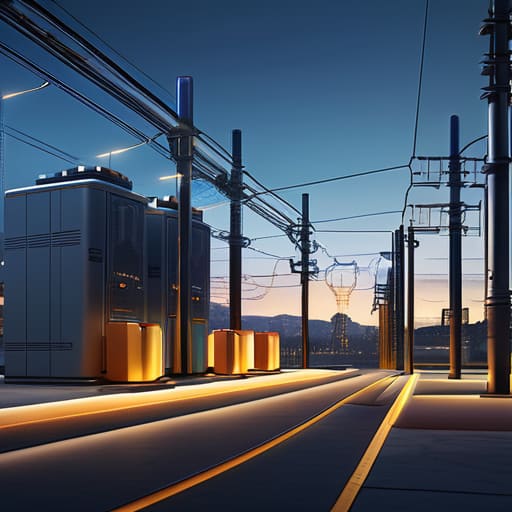
I remember sitting in a windowless lab at Georgia Tech, staring at a simulation of a localized grid collapse that looked nothing like the glossy, idealized brochures the utility companies push. Everyone talks about the “revolution” of smart grid technology as if it’s just a software update away, but the reality is much messier. We’re trying to layer sophisticated, bidirectional data streams on top of an aging, physical infrastructure that was never designed to handle the massive, erratic load of millions of EVs plugging in at 6:00 PM. It’s easy to sell the dream of a seamless energy transition, but if we don’t address the actual hardware bottlenecks, we’re just building a digital house of cards.
I’m not here to give you a corporate pep talk or repeat the same vague promises about “efficiency” that I hear in every board meeting. Instead, I’m going to break down what it actually takes to integrate high-density storage and electric mobility into a functional, resilient system. We’re going to look past the marketing fluff and dive into the real-world engineering and infrastructure requirements that will actually make a sustainable grid possible.
Table of Contents
- Grid Modernization Trends Beyond the Vague Green Promises
- Real Time Monitoring Systems for True Battery Reliability
- Cutting Through the Noise: 5 Ways to Actually Build a Resilient Grid
- The Bottom Line: Moving Past the Marketing Fluff
- ## The Infrastructure Gap
- The Bottom Line on Grid Resilience
- Frequently Asked Questions
Grid Modernization Trends Beyond the Vague Green Promises
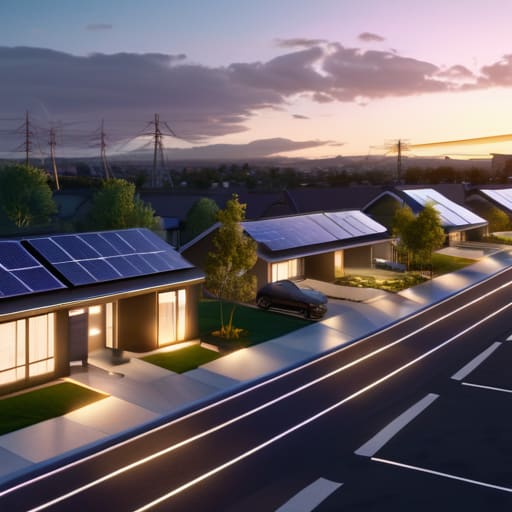
Most corporate press releases love to talk about “going green” in broad, sweeping terms, but if you look at the actual engineering requirements, the reality is much more granular. We aren’t just talking about adding solar panels to a roof; we’re talking about the massive shift toward distributed energy resources (DERs). Instead of a one-way street where power flows from a massive plant to your house, we’re building a web. This requires moving away from centralized control and toward decentralized power networks that can actually handle the volatility of wind and solar without tripping a breaker every time a cloud passes over.
The real heavy lifting happens in the data layer. I’m seeing a massive push toward real-time monitoring systems that allow the grid to “feel” load changes as they happen. It’s not enough to just have a meter that tells you how much juice you used last month; we need granular, millisecond-level visibility to prevent cascading failures. If we want to support a world where every driveway has a high-capacity EV charger, we have to stop treating the grid like a static piece of iron and start treating it like a dynamic, living software platform.
Real Time Monitoring Systems for True Battery Reliability

Look, we can talk about massive battery arrays all day, but if we can’t see what’s happening inside the cells in real-time, we’re basically flying blind. In my lab days at Georgia Tech, we saw how a single thermal runaway event could wreck an entire system because the sensors weren’t granular enough. To actually achieve reliable renewable energy integration, we need more than just a dashboard that shows “on” or “off.” We need high-fidelity, real-time monitoring systems that track voltage sag and temperature fluctuations at a granular level across the entire network.
This isn’t just about preventing fires; it’s about managing the chaos of distributed energy resources. When you have thousands of EVs plugging in or residential solar feeding back into the line, the load isn’t a smooth wave—it’s a jagged mess. If our monitoring isn’t fast enough to catch those spikes, the hardware takes a beating, and that’s how you end up with premature degradation. We need sensors that act like a nervous system for the grid, providing the data necessary to make split-second adjustments before the chemistry even has a chance to destabilize.
Cutting Through the Noise: 5 Ways to Actually Build a Resilient Grid
- Stop treating EVs like massive, unpredictable loads. We need to push for bidirectional charging (V2G) so your car isn’t just a consumer, but a mobile battery unit that stabilizes the grid during peak demand.
- Demand more than just “digital” upgrades; we need edge computing at the substation level. If the data has to travel all the way back to a centralized server before a breaker reacts to a voltage spike, the hardware is already too late.
- Prioritize hardware-agnostic software. I’ve seen too many proprietary systems that lock you into one vendor; a real smart grid needs to talk to different battery chemistries and inverter brands seamlessly.
- Focus on localized microgrids for critical infrastructure. Relying on a single, massive transmission line is a recipe for disaster; we need decentralized nodes that can island themselves when the main line goes down.
- Demand granular data on transformer health. Most utilities wait until a transformer literally starts smoking to replace it, but smart sensors could tell us exactly when the thermal stress from EV charging is hitting the danger zone.
The Bottom Line: Moving Past the Marketing Fluff
We have to stop treating smart grids like a futuristic luxury and start treating them like the essential hardware they are; without real-time load management, we’re just building a house on a foundation of sand.
True sustainability isn’t just about how many EVs are on the road, but how effectively our infrastructure can manage the massive, unpredictable spikes in demand through intelligent, decentralized storage.
If we want to avoid a massive bottleneck in the energy transition, the industry needs to prioritize data-driven grid stability over the flashy, low-substance “green” PR campaigns that do nothing to solve actual voltage regulation issues.
## The Infrastructure Gap
“We can keep designing the most efficient lithium-ion cells on the planet, but if we try to plug them into a grid that’s still running on 20th-century logic, we’re just building a high-performance engine for a broken chassis. Smart grids aren’t a luxury upgrade; they’re the only way we prevent the entire EV transition from choking the system.”
Desmond Achebe
The Bottom Line on Grid Resilience
Look, we can talk about fancy EV specs and high-density cells all day, but none of it matters if the backbone is crumbling. We’ve seen that without real-time monitoring and actual grid modernization, we’re just building a high-tech house on a sand foundation. Integrating massive battery arrays and millions of EVs requires more than just “smart” labels; it requires a fundamental shift in how we manage load and stabilize frequency. If we don’t prioritize the hardware and the data-driven infrastructure that supports it, we’re just setting ourselves up for a massive, systemic bottleneck that no amount of lithium can fix.
I’m not interested in the polished PR slides from companies promising a carbon-neutral future by 2050. I want to see the actual deployment of decentralized, responsive systems that can handle the chaotic, real-world energy demands of the next decade. The transition to electric mobility is inevitable, but it has to be built on hard engineering and reliable infrastructure, not just optimistic projections. We have the chemistry, and we have the drive; now we just need to build a grid that is actually worthy of the technology we’re trying to plug into it.
Frequently Asked Questions
If we're integrating millions of EVs into the grid, how do we stop them from causing massive voltage drops during peak charging hours?
That’s the billion-dollar question. If everyone plugs in at 6 PM, the local transformer is going to scream. We can’t just brute-force more capacity; we need bidirectional communication. We’re looking at V2G (Vehicle-to-Grid) and smart charging protocols that treat EVs as mobile storage units rather than just massive loads. Basically, instead of the grid struggling to feed the cars, the cars can actually help stabilize the voltage by discharging back when the demand spikes.
How much of this "smart" infrastructure is actually going to be interoperable, or are we just building a bunch of proprietary silos that can't talk to each other?
That is the million-dollar question, and honestly? Right now, it’s looking pretty messy. We’re seeing a lot of “walled gardens” where a manufacturer’s home storage system won’t play nice with a different brand’s EV charger. If we end up with proprietary silos, we’ve basically just rebuilt the old gas station model with digital locks. We need open-source protocols and standardized communication layers—think IEEE 2030.5—otherwise, we aren’t building a grid; we’re just building a collection of expensive, lonely islands.
Can our current distribution transformers actually handle the bidirectional flow from residential solar and V2G (Vehicle-to-Grid) without frying?
Short answer: Most of them? No. Most residential transformers were designed as one-way streets—power flows from the substation to your house, period. When you start pushing power back through V2G or heavy solar loads, you’re introducing reactive power and voltage fluctuations these old iron cores weren’t built to manage. Without smart tap changers or upgraded protection, you’re essentially asking a legacy system to run a high-speed data protocol. It’s a recipe for overheating and premature failure.
