I still remember the smell of scorched flux and ozone in the Georgia Tech labs, staring at a cell that had just undergone a catastrophic thermal runaway because someone ignored the voltage curves. It was a brutal lesson, but it taught me something the glossy marketing brochures won’t: your device isn’t just a black box, it’s a living, breathing chemical reaction. Most people treat their electronics like magic bricks, but if you actually want to maximize your lithium ion battery life, you have to stop treating the hardware like it’s invincible. We’ve been sold this lie that batteries are disposable commodities, when in reality, they are precision-engineered chemical engines that we are constantly mishandling.
I’m not here to give you some generic list of “top ten tips” that you’ll find on a tech blog written by someone who’s never even opened a multimeter. Instead, I’m going to break down the actual physics of degradation—the stuff that happens at the molecular level when you fast-charge in a hot car or let your cells sit at zero percent. I promise to give you the hard data and practical reality of how to keep your hardware running longer, moving past the corporate greenwashing and into the actual chemistry that matters.
Table of Contents
Cracking the Code of the Capacity Fade Mechanism
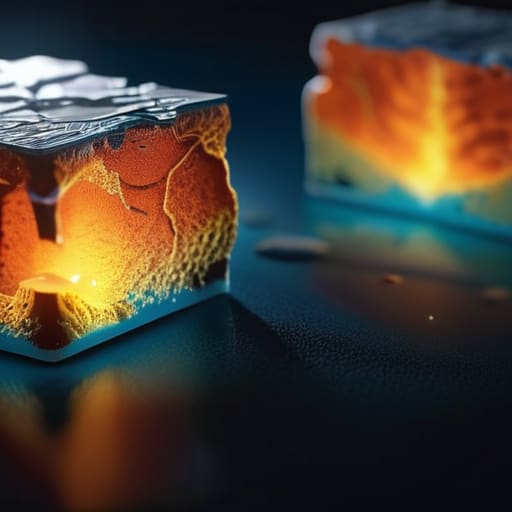
To understand why your phone or EV loses juice over time, you have to look past the software and into the actual lithium ion battery chemistry. It isn’t just “getting old”; it’s a physical breakdown happening at the microscopic level. Think of the battery like a sponge: every time you charge and discharge, you’re forcing ions to move through a medium that is slowly being structurally compromised. The primary culprit is the growth of the Solid Electrolyte Interphase (SEI) layer. This layer acts like a crust forming inside the cell, consuming active lithium in the process and making it harder for ions to move freely.
This capacity fade mechanism is essentially a slow-motion chemical war. Every time you hit a deep discharge effect—letting your battery drop to zero—you’re putting massive mechanical stress on the anode and cathode materials. It’s like stretching a rubber band too far; eventually, it loses its snap. If we don’t respect these chemical limits, we aren’t just losing convenience; we’re accelerating the inevitable death of the hardware.
Why Lithium Ion Battery Chemistry Dictates Your Future
Look, we need to stop treating batteries like black boxes that just “work” until they don’t. The reality is that the specific lithium ion battery chemistry inside your device or EV is the ultimate architect of its destiny. If you’re rocking an LFP (Lithium Iron Phosphate) pack, you’ve got a much more forgiving beast on your hands compared to the NMC (Nickel Manganese Cobalt) cells found in high-performance models. It’s like the difference between a diesel engine and a high-strung racing motor; one is built for the long haul, while the other is optimized for raw energy density at the expense of sheer endurance.
Understanding this distinction is the only way to move past the “greenwashing” phase of the energy transition. If we don’t respect how these chemical compositions react to stress, we’re just creating a massive future waste problem. For instance, ignoring the temperature impact on battery stability isn’t just bad for your phone; it’s a fundamental misunderstanding of how ions move through an electrolyte. We have to design our infrastructure around these chemical realities, not just chase bigger numbers on a spec sheet.
Stop Treating Your Battery Like an Infinite Resource
- Ditch the 0% to 100% habit. If you want to avoid the stress of high voltage, try keeping your cells in the 20-80% “sweet spot.” Charging to a full 100% is like stretching a rubber band to its absolute limit; eventually, the material just loses its snap.
- Heat is the silent killer. If you’re leaving your gear in a hot car or charging it under a pillow, you’re basically fast-tracking chemical degradation. Think of it like cooking your electrolyte—once that thermal damage starts, you can’t un-fry an egg.
- Fast charging is a convenience, not a lifestyle. Those high-amperage DC chargers are great when you’re in a rush, but the intense ion flux can cause lithium plating. It’s essentially building microscopic metal spikes inside your battery that eat away at the anode.
- Stop letting your devices die completely. Deep discharges are brutal on the internal chemistry. When a cell hits zero, the voltage can drop so low that the Battery Management System (BMS) might not even be able to “wake” it up again without a specialized jumpstart.
- Manage your “state of charge” during storage. If you’re putting an e-bike or a laptop away for a few months, don’t leave it at 100% or 0%. Aim for around 50%. It’s the most stable chemical state for the ions to just sit there without reacting aggressively.
The Bottom Line on Battery Longevity
Stop treating your battery like an infinite resource; capacity fade is a chemical reality, not a software glitch, and managing thermal stress is the only way to slow it down.
We need to move past the marketing hype of “unlimited range” and start demanding hardware transparency regarding the actual cycle life and material sustainability of the cells being used.
True energy independence won’t come from just adding more lithium, but from mastering the chemistry of degradation to ensure our electric infrastructure doesn’t become a mountain of premature e-waste.
## The Real Cost of Cheap Cells
“We need to stop treating battery life like a vague countdown timer on a smartphone and start seeing it for what it actually is: a high-stakes chemical balancing act. If we keep prioritizing cheap, short-cycle cells just to hit a price point, we aren’t building a sustainable future—we’re just building a faster way to fill up landfills.”
Desmond Achebe
The Road Ahead: Beyond the Cycle Count
At the end of the day, understanding lithium-ion battery life isn’t just about knowing when your phone is going to die or how many miles your EV can squeeze out of a single charge. It’s about recognizing that every cycle we run is a trade-off between immediate convenience and the long-term degradation of the cell’s internal architecture. We’ve looked at how SEI layer growth and lithium plating act as the silent killers of capacity, and how the specific chemistry—whether it’s LFP or NMC—determines the ceiling of what’s possible. If we don’t respect the fundamental thermodynamics at play, we’re just running on borrowed time.
I truly believe we are standing at the edge of a massive shift, but we have to move past the era of “disposable” tech. The transition to a truly electric future depends on our ability to build hardware that doesn’t just work, but lasts long enough to actually make a dent in carbon emissions. We need to demand better stability from manufacturers and more transparency regarding the true lifecycle of these energy systems. The tech is getting better every single day, and if we focus on the real science instead of the marketing fluff, we can build a grid—and a world—that is genuinely sustainable.
Frequently Asked Questions
If solid-state batteries actually hit the market, does that mean our current lithium-ion infrastructure becomes obsolete overnight?
Look, I get the hype, but “overnight” is a word that makes engineers cringe. Even if a solid-state breakthrough lands tomorrow, we aren’t just flipping a switch. We have trillions of dollars tied up in existing liquid-electrolyte manufacturing and massive Li-ion recycling streams. Solid-state will likely start in high-end EVs and niche tech before scaling. It’ll be a slow, messy integration—not a sudden extinction event for the hardware we’re building right now.
How much of the "battery degradation" we see in EVs is actually just bad thermal management versus the chemistry itself failing?
Honestly? It’s a tug-of-war between the two, but thermal management is usually the culprit behind the scenes. Think of it like this: bad chemistry is a faulty engine, but poor thermal management is like redlining that engine in a desert. If the cooling system can’t keep up during a fast charge or a heavy sprint, you’re forcing the ions into a chaotic dance that accelerates SEI layer growth. You can have the best chemistry in the world, but if you cook it, you’re killing it.
Can we actually build a circular economy for these cells, or are we just trading a carbon problem for a massive mineral waste problem?
Look, if we just swap tailpipe emissions for a mountain of toxic sludge in a landfill, we haven’t actually won. Right now, the industry is playing a dangerous game of musical chairs with minerals. To build a real circular economy, we have to move past “recycling” as a buzzword and actually design cells for disassembly. We need closed-loop hydrometallurgy that recovers high-purity cobalt and lithium, not just crushing everything into low-grade scrap.
