I still remember sitting in my senior design lab at Georgia Tech, surrounded by half-disassembled lithium cells and the faint, metallic tang of electrolyte, staring at a degradation curve that looked like a cliff face. Everyone in the media was busy shouting about “range anxiety” and how many miles you could get on a single charge, but they were completely missing the point. If we’re actually going to transition away from gas guzzlers, we need to stop obsessing over those flashy marketing numbers and start talking about the real chemistry that dictates ev battery life. It’s not about how far you can go today; it’s about how much capacity you lose by year five.
I’m not here to sell you on some corporate greenwashed fantasy or tell you that your battery will last forever if you just drive “smoothly.” I want to get into the weeds of what actually kills a cell—from thermal management failures to the brutal reality of fast-charging cycles. My goal is to strip away the hype and give you a data-driven look at how to actually manage your hardware so it stays viable for the long haul.
Table of Contents
- Why Lithium Ion Battery Lifespan Years Matter More Than Marketing
- Battery Capacity Fade Explained the Physics of Degradation
- How to Actually Protect Your Battery (Without Living in a Lab)
- The Bottom Line: What Actually Determines Your Battery’s Future
- ## The Real Metric of Success
- The Bottom Line on Battery Longevity
- Frequently Asked Questions
Why Lithium Ion Battery Lifespan Years Matter More Than Marketing

Every time I see a car commercial, it’s all about that massive 400-mile range. They make it sound like you’ll never have to plug in again, but that’s just surface-level fluff. As someone who spends my day looking at grid stability and cell degradation, I care way more about how that battery holds up in year eight than how far it goes in year one. Marketing teams love to sell you on the peak performance, but they rarely dive into the actual battery capacity fade explained through real-world usage cycles.
The truth is, a high range is useless if the chemistry is falling apart because of poor design. We need to stop looking at the odometer and start looking at the internal health of the cells. This is where things like thermal management systems in EVs actually become the MVP. If a manufacturer skimps on cooling to save a few bucks, they aren’t just cutting costs—they are actively shortening the lifespan of the entire vehicle. We shouldn’t be buying cars based on a single number; we should be buying them based on how well the hardware is engineered to survive the decade.
Battery Capacity Fade Explained the Physics of Degradation
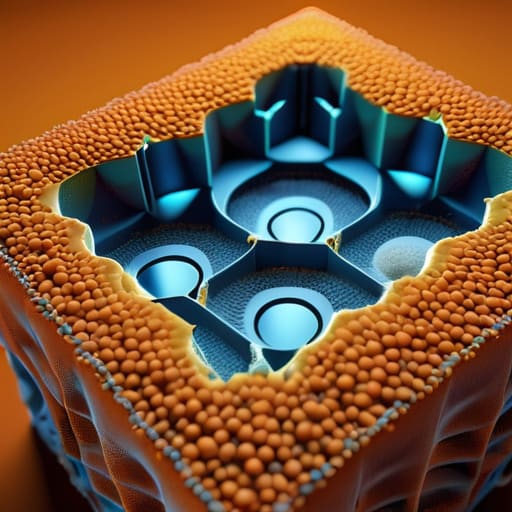
To understand why your range drops over time, you have to look past the software dashboard and into the actual physical degradation of the cells. Think of a lithium-ion battery like a sponge; every time you charge it, you’re forcing ions into the anode, but it’s not a perfectly reversible process. Over hundreds of cycles, some of those ions get “trapped” due to side reactions, creating a layer called the Solid Electrolyte Interphase (SEI). This essentially acts like a layer of gunk that prevents the ions from moving freely, leading to what we call battery capacity fade explained through the lens of lost active material.
It isn’t just about age, though; it’s about how you treat the chemistry. One of the biggest culprits is the fast charging impact on battery longevity. When you slam a massive amount of current into a cell, it creates localized heat spikes that can physically crack the electrode particles. This is why robust thermal management systems in EVs are so critical—they aren’t just for keeping you comfortable; they are fighting a constant battle to prevent the internal heat from accelerating this chemical breakdown.
How to Actually Protect Your Battery (Without Living in a Lab)
- Stop the “Full Tank” Obsession: Try to keep your state of charge between 20% and 80%. Charging to 100% every single night is like redlining your engine constantly; it puts unnecessary voltage stress on the lithium ions and speeds up that capacity fade we talked about.
- Respect the Thermal Limits: Heat is the ultimate enemy of cell stability. If you’re heading out on a road trip, don’t just smash the fast charger every time you stop. DC fast charging generates massive amounts of heat, and while it’s convenient, frequent high-speed charging is a shortcut to degrading your battery’s chemistry.
- Avoid the “Deep Discharge” Trap: Don’t let your car sit at 0% for weeks. Letting a battery sit at a critically low voltage can lead to copper dissolution and permanent internal damage. If you aren’t going to drive for a while, leave it at a healthy, mid-range charge.
- Use the Pre-conditioning Feature: If your EV has a “pre-conditioning” mode, use it. Warming or cooling the battery via the grid before you start driving—or before a charging session—ensures the ions are moving through a stable temperature window, which is way better for long-term health than forcing them to work in a freezing or boiling pack.
- Don’t Overthink the “Perfect” Drive: Look, I’m an engineer, but I’m also a realist. You don’t need to drive like a robot to save your battery. Just avoid extreme, sustained high-speed driving in punishingly hot weather if you can help it, and treat the battery like a piece of high-performance hardware, not an infinite resource.
The Bottom Line: What Actually Determines Your Battery’s Future
Stop chasing the “max range” marketing trap; real-world longevity is determined by how you manage thermal stability and charge cycles, not just the size of the pack.
Degradation isn’t a mystery—it’s chemistry. Avoiding the extremes of 0% or 100% state-of-charge is the single most effective way to slow down the inevitable breakdown of the electrolyte.
We need to shift the conversation from “how far can it go today” to “how much capacity is left in five years” if we want electric mobility to be a sustainable reality rather than a luxury fad.
## The Real Metric of Success
“Stop letting car commercials sell you on a 400-mile range that only exists on a showroom floor; the real victory isn’t how far you can go on day one, it’s how much of that capacity is actually left after five years of real-world thermal cycling and fast-charging stress.”
Desmond Achebe
The Bottom Line on Battery Longevity

Look, we’ve covered a lot of ground, from the messy physics of capacity fade to the reality that marketing numbers rarely tell the full story. If there is one thing I want you to take away, it’s that battery degradation isn’t some mysterious, inevitable death sentence; it’s a manageable chemical process. Understanding how heat, charging habits, and cycle counts actually impact your cells means you can move past the anxiety of “losing range” and start focusing on smart energy management. We have to stop treating these batteries like disposable gadgets and start respecting them as the complex electrochemical systems they actually are.
The transition to electric mobility is going to be won or lost in the labs and the infrastructure, not just in flashy commercials. I’m optimistic because I see the progress being made in solid-state tech and smarter BMS software every single day, but I’m also staying skeptical of any company that won’t be transparent about their hardware’s long-term durability. We aren’t just building cars; we are building the backbone of a new energy era. If we get the chemistry right and prioritize true sustainability over quick profits, we’re going to build a future that actually lasts.
Frequently Asked Questions
If I’m constantly using Level 3 DC fast chargers to save time, how much am I actually killing my battery's long-term health?
Look, I get it—when you’re busy, you want that juice fast. But here’s the reality: DC fast charging is like sprinting a marathon. It forces a massive amount of current through the cells, which spikes the internal temperature and stresses the lithium ions. That heat is the enemy; it accelerates the formation of the SEI layer, which eats into your capacity. If you’re doing it every single day, yeah, you’re shortening your battery’s life. Use Level 2 for your daily routine and save the Level 3 for road trips.
Will my battery eventually become "unusable," or will it just reach a point where the range is too small to be practical for daily driving?
Look, it’s almost never a sudden death. You aren’t going to wake up one morning to a car that won’t even turn on. It’s more like a slow, mathematical decline. Think of it like a sponge that’s losing its ability to hold water. Eventually, your “tank” just gets smaller. You’ll hit a threshold where the range is too shallow for your commute or a road trip, making it practically useless, even if the cells are technically still functioning.
How much of the degradation is actually due to my driving habits versus the inherent chemical limitations of the cells themselves?
It’s a mix of both, but don’t let the “chemical limits” excuse bad habits. Think of it like this: the chemistry sets the ceiling, but your driving style determines how fast you hit it. You’ve got inherent degradation—that’s just thermodynamics being a jerk—but things like frequent DC fast charging and letting your state of charge sit at 0% or 100% act like sandpaper on your battery’s internal structure. You’re essentially accelerating the inevitable.
