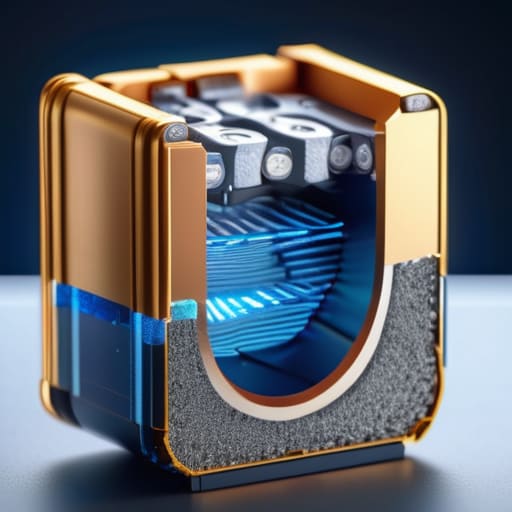
I still remember the smell of ozone and burnt flux in my junior year lab at Georgia Tech, staring at a cell that had just undergone a catastrophic thermal runaway. It wasn’t some clean, cinematic explosion; it was a messy, violent reminder that a lithium ion battery is essentially a controlled chemical reaction held together by very thin margins. Most people see these cells as magic black boxes that just “work” until they don’t, but if you’re looking at the industry’s current trajectory, you realize we’re treating the most complex part of the energy transition like a commodity we can just hope won’t fail.
I’m not here to sell you on the utopian dream of a carbon-free future without acknowledging the massive hardware hurdles standing in our way. In this breakdown, I’m stripping away the corporate greenwashing to look at the actual material science and degradation patterns that dictate whether this tech is truly sustainable. We’re going to move past the marketing fluff and get into the gritty, data-driven reality of how these cells actually live, die, and hopefully, power the next generation of mobility.
Table of Contents
- Decoding Energy Density Explained and the Limits of Hardware
- The Critical Separator Membrane Role in Sustaining the Revolution
- Real-World Tactics to Stop Your Battery from Degrading Before Its Time
- The Bottom Line: What Actually Matters for the Future of Storage
- The Real Bottleneck
- The Reality Check
- Frequently Asked Questions
Decoding Energy Density Explained and the Limits of Hardware

When people talk about “range anxiety,” they’re usually just talking about a physics problem disguised as a psychological one. At its core, it’s all about energy density explained: how much juice we can actually cram into a specific volume of hardware. Right now, we’re hitting a bit of a wall with current liquid-based cells. To get more miles out of a single charge, we need to pack more ions into the same footprint, but every time we push the limits of the anode or cathode, we’re playing a dangerous game with stability.
This is where the real engineering headaches begin. It isn’t just about the capacity; it’s about the internal architecture that keeps the whole thing from turning into a paperweight. You have to account for the separator membrane role in preventing short circuits while ensuring ions can move freely. If the chemistry gets too aggressive to chase higher density, you start seeing accelerated battery degradation factors that kill the lifespan of the pack. We can’t just build bigger batteries to solve the problem—that just adds weight and ruins efficiency. We have to build smarter ones.
The Critical Separator Membrane Role in Sustaining the Revolution
Most people focus on the cathode or the anode, but if you want to talk about why your phone doesn’t turn into a literal firecracker in your pocket, you have to look at the separator membrane role. Think of the separator as the thin, microscopic referee in a high-stakes game. Its job is to keep the positive and negative electrodes physically apart to prevent a short circuit, while simultaneously being porous enough to let ions flow through the electrolyte solution function without a hitch. If that membrane fails or even slightly deforms due to heat, the whole system collapses.
When we talk about the long-term health of a cell, the separator is often the unsung hero—or the primary victim. During a standard lithium ion battery charging cycle, the physical stress of ions moving back and forth can actually cause the membrane to degrade over time. If the pores clog or the material thins out, you’re looking at increased internal resistance and a massive hit to efficiency. To me, this isn’t just a minor hardware detail; it’s one of the most vital lithium ion battery safety mechanisms we have, and it’s where the real engineering battle for longevity is being fought.
Real-World Tactics to Stop Your Battery from Degrading Before Its Time
- Stop the “Deep Discharge” habit. If you’re constantly draining your cells to 0% before hitting a charger, you’re essentially stressing the chemical structure of the cathode. I’ve seen enough degradation data to know that keeping your state of charge between 20% and 80% is the sweet spot for longevity.
- Heat is the absolute enemy of lithium-ion chemistry. It’s not just about keeping your phone cool; if you’re charging an EV or a high-capacity power bank in a hot car, you’re accelerating the breakdown of the electrolyte. Think of it like cooking: too much heat, and you’ve ruined the recipe.
- Fast charging is a massive convenience, but it’s a trade-off. High-current charging can cause lithium plating—where lithium ions don’t make it into the anode properly and instead form metallic clumps. It’s efficient in the short term, but it’s a slow death for your cycle life.
- Don’t ignore the “Storage Soak.” If you’re putting a device or an e-skate away for the season, don’t leave it at 100% or 0%. Storing it at a partial charge (around 50%) stabilizes the internal chemistry and prevents the cells from becoming “sleepy” or permanently losing capacity.
- Watch the cycle count, not just the age. A battery that’s three years old but only saw fifty charge cycles is in much better shape than a two-year-old battery that’s been hammered daily. Treat your cycles like a budget; if you overspend them too early, you won’t have the energy left when you actually need it.
The Bottom Line: What Actually Matters for the Future of Storage
Energy density isn’t just a spec on a datasheet; it’s the physical ceiling we have to break through if we want EVs to ditch the range anxiety and actually compete with gas.
The separator membrane is the unsung hero of battery safety—if that thin layer of chemistry fails, the whole system becomes a liability rather than an asset.
We need to stop getting distracted by flashy marketing and start focusing on the hardware stability and material sustainability that will determine if this transition actually sticks.
The Real Bottleneck
“Everyone’s obsessed with the range numbers on a spec sheet, but if we don’t solve the degradation and thermal stability issues at the molecular level, we’re just building a massive pile of future e-waste instead of a sustainable grid.”
Desmond Achebe
The Reality Check

At the end of the day, we can’t just treat lithium-ion technology like some kind of magic black box that solves everything. We’ve looked at how energy density dictates everything from how far your EV can travel to how much it costs, and how that tiny, fragile separator membrane is essentially the only thing standing between a functional battery and a thermal runaway disaster. If we want to scale this tech, we have to respect the physics and the chemistry involved. It isn’t just about making batteries bigger or cheaper; it’s about mastering the granular hardware details that ensure they are stable, efficient, and—most importantly—actually scalable for a world that is moving away from fossil fuels.
I’m not here to sell you on the corporate hype or the glossy marketing brochures that pretend the transition is already finished. The transition to electric mobility is absolutely inevitable, but it’s going to be a grind of engineering breakthroughs and infrastructure hurdles. We need to stop settling for “good enough” and start demanding sustainable, high-performance hardware that can actually handle the load of a global grid. The chemistry is complex, and the stakes are high, but if we get the fundamentals right, we aren’t just building better gadgets—we’re building the foundation for a world that actually works.
Frequently Asked Questions
If we're pushing energy density to the limit, how close are we actually to the "thermal runaway" point where these cells become dangerous?
Look, we’re walking a razor’s edge here. Every time we squeeze more energy into a smaller footprint to boost range, we’re essentially packing more potential heat into a tighter space. We aren’t “close” to a universal breaking point, but we are pushing the chemical stability of the electrolyte to its absolute limit. If the internal temperature spikes even slightly beyond design specs, that’s when the chemistry turns against itself. It’s a high-stakes balancing act.
We talk a lot about the separator, but what's the real-world plan for recycling these complex chemical stacks once they hit their cycle life limit?
Look, the “recycling” conversation is usually just corporate fluff, but the real play is hydrometallurgy. We can’t just shred these cells and call it a day; that’s messy and inefficient. The goal is to use chemical leaching to recover high-purity lithium, cobalt, and nickel so they can go straight back into new cathode production. It’s about creating a closed-loop system where the “waste” becomes the raw material for the next generation of packs.
Are solid-state breakthroughs actually going to hit the mass market soon, or is that just more corporate hype to keep investors interested?
Look, I’ll be real with you: right now, it’s mostly hype. Every time a startup announces a “breakthrough,” my skepticism kicks in. We’re seeing incredible lab results with solid-state electrolytes, but scaling that from a coin cell to a mass-produced EV pack is a different beast entirely. We have to solve the dendrite issue and the manufacturing cost hurdles before this hits your driveway. Don’t expect a revolution in your garage next year.
