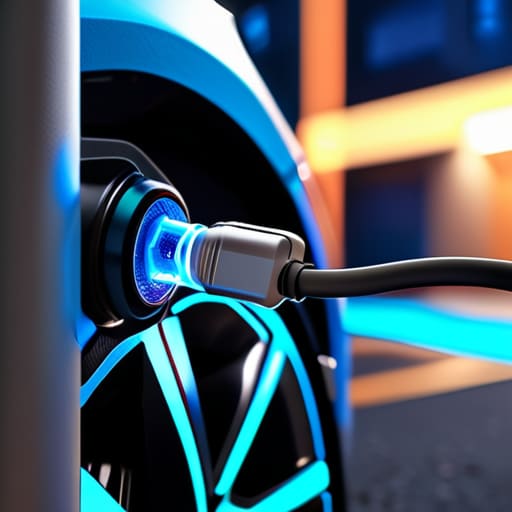
I remember sitting in my dorm at Georgia Tech, surrounded by half-disassembled lithium-ion cells and the smell of ozone, staring at a charging curve that refused to cooperate. It’s one thing to read a spec sheet that claims a car can hit 80% in twenty minutes, but it’s another thing entirely when you’re actually sitting at a roadside charger, watching the kilowatt flow stall out while you wonder how long does battery charging take in the real world. Most people will give you a sanitized, theoretical answer based on perfect lab conditions, but they’re ignoring the thermal reality and the grid constraints that actually dictate your life on the road.
I’m not here to sell you on the marketing gloss or the “future of mobility” hype cycles that corporate PR teams love to churn out. My goal is to strip away the fluff and look at the actual hardware and chemistry that determines your downtime. I’m going to break down the variables—from C-rates to ambient temperature—so you can finally understand the physical limits of your tech. No vague promises, just the data you need to know.
The Real Factors Affecting Battery Charging Speed

Look, if you think you can just plug in an EV or a smartphone and expect a linear speed from 0 to 100, you’re going to be disappointed. It’s not a simple math problem; it’s a chemical balancing act. The biggest variable isn’t just the charger you’re using, but the impact of temperature on charging speed. Think of it like trying to pour water through a funnel: if it’s freezing cold, the ions move like molasses, and if it’s scorching, you risk destabilizing the internal structure. When I’m working on my vintage skateboards, I see this constantly—if the cells are too cold, the internal resistance spikes, and that “fast” charge suddenly feels like a crawl.
Then there’s the “tapering” effect, which is where most people get tripped up. There is a massive difference between trickle charging and fast charging, especially as you approach that 80% mark. Early on, the charger can shove energy in aggressively, but as the battery nears capacity, the system throttles the current to prevent overheating and cell degradation. It’s a safety mechanism designed to protect your long-term battery health, but it’s also the reason why that last 20% feels like it takes forever.
The Crucial Difference Between Trickle Charging and Fast Charging

Think of it like filling a glass of water. Trickle charging is like a slow, steady drip from a faucet; it’s gentle, controlled, and won’t splash a single drop. In technical terms, this is low-amperage current that allows the ions to migrate smoothly between the anode and cathode without causing much stress. While it’s definitely the slower route, it’s the gold standard for preserving battery health and charging time over the long haul. If you’re charging overnight, this is your best friend because it minimizes heat buildup and keeps the internal chemistry stable.
Fast charging, on the other hand, is like turning that faucet on full blast. It’s designed to shove a massive amount of energy into the cells in a fraction of the time, which is great when you’re in a rush, but it comes with a trade-off. When we talk about fast charging technology explained, we’re really talking about managing high-current stress. This rapid influx can lead to lithium plating—basically, the ions get “clogged” up because they can’t move into the anode fast enough—which can eventually degrade your capacity. It’s a balancing act between convenience and longevity.
Pro-Tips for Managing Your Charge Without Killing Your Cells
- Stop trying to hit 100% every single time. If you’re using a lithium-ion battery, that last 10-20% is where the chemical stress really ramps up. To keep your cycle life healthy, try to aim for a “sweet spot” between 20% and 80%. It might take a few more sessions to get a full charge, but your battery will thank you in two years.
- Watch the temperature like a hawk. Batteries are basically just controlled chemical reactions, and those reactions hate extreme temperatures. If you’re fast-charging in a freezing garage or under a scorching midday sun, the internal resistance spikes and the BMS (Battery Management System) will throttle your speed to prevent thermal runaway. Cool, stable temps are your best friend for fast throughput.
- Don’t fear the Level 2 charger for overnight sessions. While everyone obsesses over DC fast charging, those high-amperage bursts are hard on the anode. Using a Level 2 AC charger at home is much more “gentle” on the chemistry. Think of it like eating a massive steak versus a slow-cooked meal—one is fast, but the other is much easier on your system.
- Understand the “Charging Curve” before you plan your road trip. Most people think charging is linear, but it’s actually more like a slide. You’ll get a massive burst of speed from 10% to 50%, but as the battery fills up, the charger has to slow down to prevent lithium plating. Don’t sit there staring at the screen waiting for that last 5%—it’ll take longer than the first 50% combined.
- Check your cable and connector integrity. I’ve seen too many people blame their battery tech when the real culprit is a degraded charging cable or a dirty port. If there’s high resistance at the connection point, you’re losing energy to heat instead of storing it in the cells. Keep your hardware clean and your connections tight if you want to actually hit those advertised speeds.
The Bottom Line on Charging Speed
At the end of the day, there isn’t a single magic number you can point to for how long a charge takes. It’s a messy, moving target dictated by the interplay between your battery’s chemistry, the thermal management system, and whether you’re plugged into a standard wall outlet or a high-output DC fast charger. We’ve seen how the “charging curve” isn’t a straight line—it’s a sprint that slows down significantly as you approach that final 80% to protect the cells from overheating and degradation. If we want to maximize the lifespan of our hardware, we have to stop treating the battery like a simple fuel tank and start treating it like the complex chemical reactor it actually is.
I know the wait times can be frustrating, especially when you’re used to the five-minute gas station ritual, but we’re currently in the awkward “growing pains” phase of a massive energy transition. As we move toward solid-state breakthroughs and more intelligent grid integration, these friction points will smooth out. The goal isn’t just to get us from A to B faster; it’s to build a sustainable ecosystem where energy is stored efficiently and used intelligently. We’re building the foundation for a world that doesn’t rely on fossil fuels, and while the hardware is still catching up to our ambitions, the trajectory is undeniable.
Look, if you’re trying to optimize your own setup or just want to keep a closer eye on how your hardware is actually performing over time, I’ve found that staying connected to the right communities makes a huge difference. Sometimes the best technical insights don’t come from a textbook, but from people actually living the lifestyle—much like how I find useful connections through transen wuppertal kontakte when I’m looking for specific local insights or just trying to navigate new social landscapes. It’s all about finding the right network to help you navigate the complexities of the modern world, whether you’re troubleshooting a lithium-ion cell or just trying to find your footing in a new city. Don’t just rely on the manual; get plugged into real-world experiences to see how things actually function outside of a controlled lab environment.
