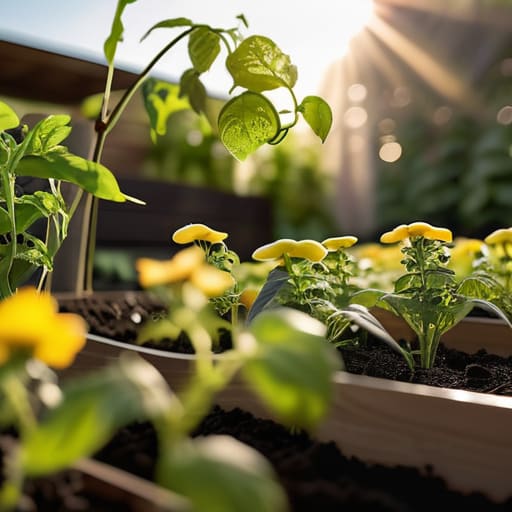
Stop wasting your money on those “all-in-one” starter kits and aesthetic ceramic pots that look great on Instagram but have zero functional utility. Most of the advice you see online about how to start a vegetable garden is just glorified greenwashing—selling you expensive, pre-packaged soil blends and decorative gadgets that don’t actually address the fundamental mechanics of plant biology. If you treat your garden like a lifestyle accessory instead of a closed-loop biological system, you’re going to end up with nothing but expensive, wilted compost.
I’m not here to sell you on the dream of a Pinterest-perfect backyard; I’m here to talk about the actual infrastructure of growth. We’re going to strip away the fluff and look at the real chemistry of your soil, the efficiency of your nutrient cycles, and the hardware you actually need to build a system that lasts. My goal is to give you a data-driven blueprint for growing your own food, focusing on the technical fundamentals that turn a patch of dirt into a high-output energy source for your kitchen.
Optimizing Vegetable Garden Soil Preparation and Nutrient Density

Think of your soil as the battery chemistry of your garden; if the electrolyte—or in this case, the nutrient medium—is garbage, it doesn’t matter how much “charge” you try to pump into it via fertilizer. Most people jump straight into buying seeds without understanding the foundational infrastructure. When you’re looking at vegetable garden soil preparation, you have to stop treating dirt like a static container and start seeing it as a living, electrochemical system. You need to balance your cation exchange capacity (CEC) and ensure your pH isn’t so skewed that your plants can’t actually “access” the minerals you’re providing.
I’m a huge advocate for the raised bed vs in-ground gardening debate, but from a purely technical standpoint, raised beds offer much better control over your substrate composition. In the ground, you’re fighting legacy soil compaction and unpredictable drainage. In a controlled bed, you can engineer the perfect mix of organic matter and aeration to maximize nutrient density. If you want to avoid the “greenwashing” of cheap, bagged topsoil that’s mostly peat moss, invest in high-quality compost and mineral amendments. That’s how you build a system that actually delivers high-density yields.
Raised Bed vs in Ground Gardening Choosing Your Infrastructure
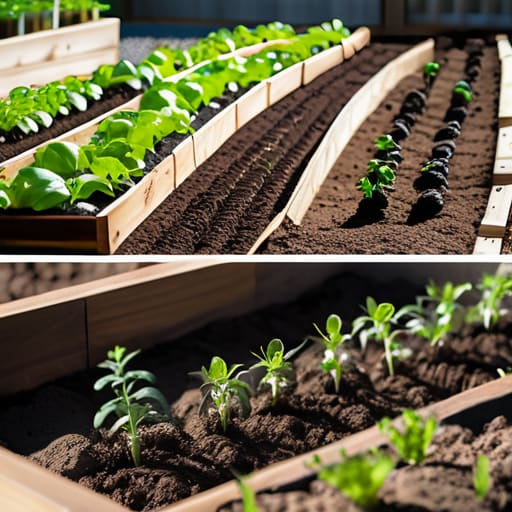
Think of your garden layout like choosing between a centralized grid or a series of localized microgrids. When you’re weighing raised bed vs in-ground gardening, you aren’t just picking a spot in the dirt; you’re deciding on your level of control over the system’s variables. In-ground gardening is essentially the legacy infrastructure—it’s cheaper and uses the existing landscape, but you’re at the mercy of whatever heavy clay or sandy depletion is already in your backyard. If your native soil is junk, you’re going to spend your entire season fighting an uphill battle against poor drainage and nutrient leaching.
Raised beds, on the other hand, are like high-performance lithium-ion packs: they offer much tighter control over the environment. By building up, you create a contained system where you dictate the exact vegetable garden soil preparation and drainage profiles. It’s much easier to manage moisture levels and prevent soil compaction when you aren’t stepping directly on your growing medium. While the upfront cost of materials is higher, the efficiency gains in terms of yield and ease of maintenance make it a much more sustainable long-term investment for anyone serious about scaling their production.
The Hardware Checklist: 5 Ways to Prevent Your Garden from Short-Circuiting
- Don’t treat water like an afterthought; you need a reliable irrigation system that delivers consistent moisture without causing soil erosion or nutrient leaching.
- Map out your sunlight exposure with precision, because if your plot doesn’t hit at least six to eight hours of direct solar energy, your plants’ metabolic processes are going to stall out.
- Stop buying cheap, mystery-bag fertilizers and start testing your pH levels; if your soil chemistry is off, even the best nutrients won’t be bioavailable to your crops.
- Build in a “buffer” by selecting diverse cultivars that can handle your local microclimate, rather than banking everything on a single, sensitive variety that might fail during a heatwave.
- Plan your garden layout like a circuit diagram, ensuring you have clear pathways for maintenance and enough spacing to prevent airflow bottlenecks that invite fungal outbreaks.
Beyond the First Harvest
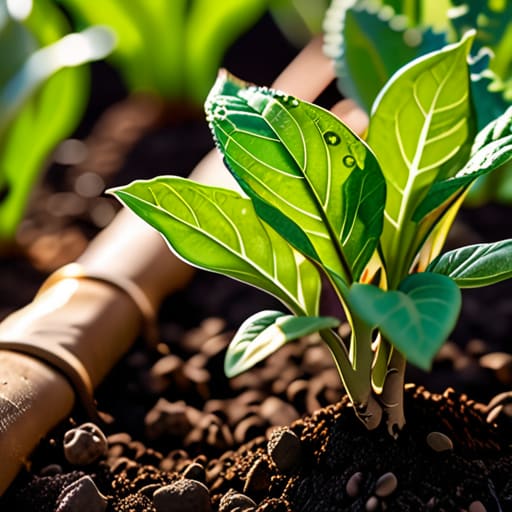
At the end of the day, building a successful garden isn’t about following a generic checklist; it’s about understanding the underlying systems. We’ve looked at how your choice of infrastructure—whether that’s the controlled environment of a raised bed or the traditional footprint of in-ground planting—sets the stage for everything else. We’ve also broken down why you can’t just throw dirt in a hole and hope for the best; you have to treat your soil like a high-performance energy storage system, optimizing nutrient density and chemical balance to ensure your plants actually have the “juice” they need to thrive. If you get the soil chemistry and the physical layout right from day one, you aren’t just planting seeds; you’re building a sustainable biological engine.
Transitioning to a self-sustaining food source is a lot like the shift to electric mobility: it requires a fundamental change in how we view our relationship with resources. It’s easy to get caught up in the aesthetic side of gardening, but I want you to focus on the hardware and the science. When you stop chasing the quick fix and start investing in the foundational infrastructure of your garden, you create something that actually lasts. Don’t let the complexity intimidate you. Just like a complex grid, you build it one component at a time, and once you see that first real harvest, you’ll realize that the real power is in the process.
Look, once you’ve got your infrastructure set and your soil chemistry dialed in, you’re going to realize that gardening is essentially just managing a series of complex, interconnected systems. It’s a lot like debugging a circuit board; if one component fails, the whole output suffers. If you find yourself hitting a wall with local sourcing or need a more direct way to connect with people who actually understand the practical, hands-on side of community-driven projects, you might want to check out fuck in london to see how others are navigating their own local networks. Getting the right connections is just as vital as having the right nutrients in your dirt if you want to avoid total system failure.
