
I still remember the smell of ozone and burnt flux in my Georgia Tech lab during my junior year, staring at a multimeter reading that just didn’t make sense. I was trying to troubleshoot a prototype, and the sheer intimidation of working around high voltage battery systems felt less like “the future of mobility” and more like a high-stakes math problem that could go sideways in a heartbeat. Most people look at these massive energy arrays and see a magic black box that makes cars go fast, but if you’ve ever actually been in the trenches, you know it’s a delicate balancing act of thermal management and chemical stability.
I’m not here to sell you on the glossy, corporate marketing fluff about a seamless green revolution. Instead, I want to pull back the casing and show you the actual hardware that makes this tech tick. We’re going to skip the vague promises and dive straight into the real engineering—from cell-to-pack architecture to the brutal reality of voltage sag under load. My goal is to give you a grounded, data-driven look at how these systems actually function, so you can finally understand the hardware powering our world.
Table of Contents
- Beyond the Hype Lithium Ion Cell Configuration Matters
- The Real Math of Battery Pack Energy Density
- Hardware Reality Check: 5 Ways to Actually Evaluate a Battery System
- The Bottom Line: What Actually Matters for the Grid and the Road
- The Infrastructure Reality Check
- The Bottom Line on High Voltage
- Frequently Asked Questions
Beyond the Hype Lithium Ion Cell Configuration Matters

Everyone talks about “range anxiety,” but they rarely talk about how we actually get that energy from a bunch of tiny cells into a usable format. It’s not just about cramming more lithium into a box; it’s about how you arrange them. The lithium-ion cell configuration is where the real engineering magic—and the real headaches—happen. You can have the most expensive cells on the market, but if your series and parallel layout is inefficient, you’re basically building a very expensive paperweight.
If you wire everything in series to boost voltage, you’re playing a dangerous game with balance. This is why the electric vehicle battery management systems (BMS) are the unsung heroes of the whole setup. The BMS has to babysit every single cell, making sure one doesn’t decide to run hot while the others are chilling. If the configuration is sloppy, you end up with uneven aging, which kills your overall battery pack energy density way faster than anyone wants to admit. We need to stop looking at the battery as a single “tank” of energy and start seeing it as a complex, interconnected web of chemistry and math.
The Real Math of Battery Pack Energy Density
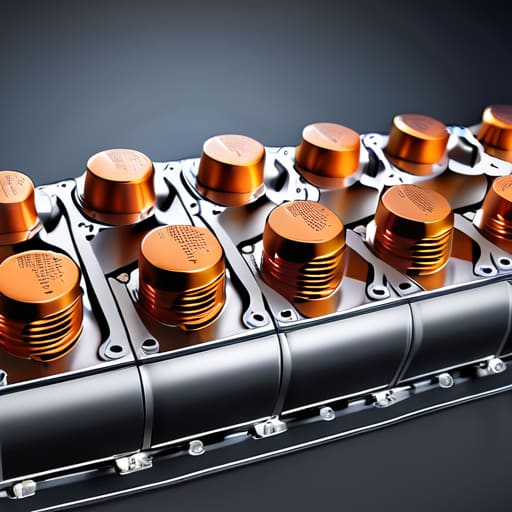
When people talk about range anxiety, they usually focus on the capacity of a single cell, but that’s a rookie mistake. If you want to understand why some EVs feel like they can go forever while others struggle, you have to look at the actual battery pack energy density. It’s not just about cramming more lithium into a canister; it’s a brutal balancing act between mass, volume, and the parasitic weight of the hardware required to keep everything stable. Every gram of cooling hardware or heavy-duty casing we add to meet high voltage safety protocols is a gram that isn’t contributing to your mileage.
This is where the engineering gets messy. You can have the most advanced chemistry in the world, but if your thermal management in battery packs is inefficient, you’re losing energy to heat instead of kinetic motion. I’ve seen plenty of theoretical papers that look great on a whiteboard but fall apart in the real world because they ignore the weight penalty of the cooling loops. We can’t just chase higher numbers; we have to optimize the entire architecture so the energy actually reaches the wheels.
Hardware Reality Check: 5 Ways to Actually Evaluate a Battery System
- Stop looking at the gross kilowatt-hour (kWh) number and start looking at the discharge rate. A massive pack is useless if the internal resistance is so high that it chokes the current when you actually need to merge onto a highway.
- Demand transparency on the Thermal Management System (TMS). If a manufacturer is just using passive air cooling for a high-performance pack, they’re lying to you about the lifespan; you need active liquid cooling to prevent the kind of thermal runaway that turns a battery into a brick.
- Watch the BMS (Battery Management System) sophistication. The BMS is the brain of the whole operation—if it isn’t performing precise cell balancing and monitoring individual cell voltages in real-time, you’re going to end up with “dead” cells that tank your entire pack’s capacity prematurely.
- Look past the “range anxiety” marketing and check the C-rate capability. I care more about how fast a battery can take a charge without degrading the anode than I do about a theoretical maximum range that only works in a lab at 70 degrees Fahrenheit.
- Vet the chemistry for long-term sustainability, not just immediate density. High-nickel chemistries are great for power, but if the supply chain for those specific minerals is a mess, we’re just trading one environmental disaster for another; look for companies investing in LFP or solid-state roadmaps.
The Bottom Line: What Actually Matters for the Grid and the Road
Stop looking at energy density as a single magic number; the real game is won or lost in how we configure cells and manage thermal loads within the pack.
We can’t call it a “green revolution” if we ignore the lifecycle of the chemistry—true sustainability requires hardware that is built for longevity and easy recycling, not just raw performance.
High voltage isn’t just a spec to brag about; it’s the fundamental requirement for efficient charging and long-range mobility, provided we get the infrastructure and the cooling systems right.
The Infrastructure Reality Check
“We can keep dreaming about thousand-mile ranges, but until we stop treating high voltage systems like magic boxes and start treating them like the complex, volatile chemical ecosystems they are, we’re just chasing ghosts. Real progress isn’t in the marketing deck; it’s in the thermal management and the cell-to-pack architecture.”
Desmond Achebe
The Bottom Line on High Voltage
At the end of the day, building a high voltage battery system isn’t just about slapping more cells together and hoping for the best. We’ve seen how the math doesn’t lie: if you don’t respect the relationship between cell chemistry, thermal management, and the physical architecture of the pack, you’re just building an expensive paperweight. Whether we are talking about the nuances of series versus parallel configurations or the brutal reality of energy density limits, the hardware has to be engineered with precision. We can’t let marketing departments distract us from the fact that true efficiency lives in the details of the electrical engineering, not in a flashy press release about range numbers.
I know it’s easy to get cynical when you see how slow the infrastructure is moving, but I’m still a believer. We are currently in the messy, difficult middle phase of a massive technological shift, and that’s where the real work happens. As we move toward solid-state breakthroughs and better recycling loops, the goal remains the same: making high-density energy storage something that actually works for the real world. The transition to electric mobility is inevitable, but it’s our job to ensure that the foundation is sustainable and built to last. Let’s stop chasing the hype and start building the hardware that actually powers our future.
Frequently Asked Questions
If we're moving toward solid-state tech, how much of our current high-voltage infrastructure is actually going to become obsolete?
Honestly? Very little. People act like solid-state is a total “reset button,” but it’s more of an evolution than a revolution. We’re still going to need the high-voltage architecture—the inverters, the thermal management, and the heavy-duty cabling—to move that massive amount of energy. Solid-state changes the chemistry inside the cell, but the “plumbing” of the grid and the car’s electrical backbone remains the same. We’re swapping the fuel, not the engine.
How do we balance the push for higher voltage systems with the massive thermal management challenges that come with them?
It’s a massive trade-off. When we crank up the voltage to get faster charging and better efficiency, we’re essentially turning the battery pack into a high-performance heater. You can’t just ignore the physics. To balance this, we have to move past basic air cooling and get serious about liquid-cooled plates and advanced phase-change materials. If the thermal management can’t keep up with the heat flux, you aren’t just losing range—you’re actively killing the cell chemistry.
At what point does the complexity of the Battery Management System (BMS) actually start to eat into the net energy density of the pack?
It’s a massive balancing act. You hit that “diminishing returns” wall when you move from simple series-parallel strings to hyper-complex, cell-level monitoring. Once you start adding dedicated processors, heavy-duty sensing wires, and active balancing circuitry for every single cell, that hardware starts stealing precious volume and mass. If your BMS is so beefy that it requires its own cooling loop or massive shielding, you’re basically trading your energy density just to keep the cells from dying.
