I still remember the smell of scorched electrolyte in my Georgia Tech lab during my junior year—a sharp, metallic tang that hits you right in the back of the throat when a cell goes sideways. I was staring at a prototype that looked perfect on a CAD model, but the moment we applied real-world thermal loads, the whole thing fell apart. It was a brutal lesson in why most people get battery module design wrong. They obsess over energy density and theoretical capacity, treating the module like a math problem rather than a piece of living, breathing hardware that has to survive vibration, heat, and massive current draws without turning into a paperweight.
I’m not here to sell you on the glossy, corporate-approved version of the electric revolution. Instead, I want to pull back the curtain on the actual engineering trade-offs that determine whether a pack lasts ten years or two. We’re going to skip the marketing fluff and get into the grit of thermal management, busbar integrity, and structural stability. My goal is to give you a grounded, data-driven look at how we build modules that don’t just work on paper, but actually power a sustainable future.
Table of Contents
- Optimizing Lithium Ion Cell Arrangement for Real World Longevity
- Why Battery Pack Architecture Dictates True Sustainability
- Cutting Through the Noise: 5 Hard Rules for Better Module Design
- The Bottom Line on Modular Design
- The Architecture of Real Sustainability
- The Bottom Line on Module Design
- Frequently Asked Questions
Optimizing Lithium Ion Cell Arrangement for Real World Longevity
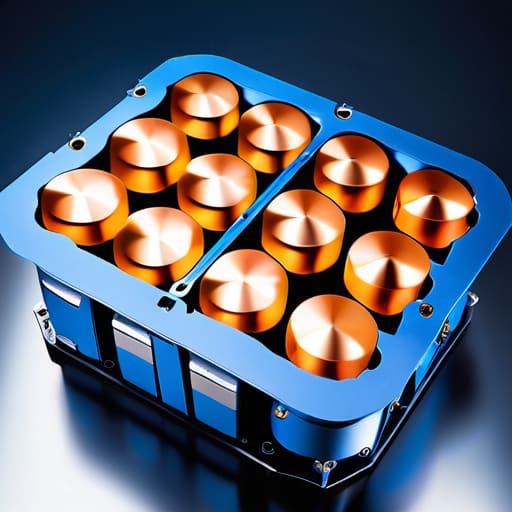
When we talk about longevity, we can’t just look at the chemistry of a single cell; we have to look at how they live together in a pack. Most people assume that if you have high-quality cells, you have a high-quality battery. That’s a massive misconception. In reality, the way you handle the lithium-ion cell arrangement dictates whether a pack lasts ten years or three. If your layout creates “hot spots” where certain cells are working harder or sitting in stagnant air, you’re essentially cooking your investment. You need to design for uniform aging, not just peak performance.
This is where the heavy lifting happens. It’s not just about cramming as much energy as possible into a chassis; it’s about how the thermal management systems interact with the physical layout. If the cooling channels aren’t optimized to reach every corner of the module, you’ll see uneven degradation across the series. I’ve seen enough lab data to know that thermal gradients are the silent killers of battery life. We need to prioritize a layout that balances energy density with the ability to actually shed heat when the driver is pushing the limits.
Why Battery Pack Architecture Dictates True Sustainability
When we talk about sustainability, most people think about where the minerals come from. But from my perspective, we need to look at how long we can actually keep those minerals in service. This is where battery pack architecture becomes the deciding factor. If you design a pack that’s impossible to service or repair, you’re essentially building a high-tech paperweight. A truly sustainable system isn’t just about the chemistry; it’s about creating a modular framework where a single failing unit doesn’t force the entire system into a landfill.
We also have to address the physical reality of heat. You can have the most advanced chemistry in the world, but if your thermal management systems are an afterthought, the pack is going to degrade faster than any spreadsheet can predict. Poorly distributed heat leads to uneven aging across cells, creating a domino effect of failure. We need to move away from “black box” designs and toward architectures that prioritize thermal stability and mechanical durability, ensuring that the hardware survives the actual rigors of daily driving rather than just looking good on a lab bench.
Cutting Through the Noise: 5 Hard Rules for Better Module Design
- Prioritize thermal management over aesthetics. If your cells are sitting in a “thermal dead zone” because the module layout is too cramped, you’re essentially baking your capacity away. I’ve seen too many designs that look great on a CAD model but fail the moment they hit a real-world heat cycle.
- Design for disassembly, not just assembly. If a single cell goes bad and you have to scrap the entire pack because it’s glued together like a brick, that’s not “green” tech—it’s just expensive waste. We need modularity that actually allows for repair and recycling.
- Watch your busbar connections like a hawk. Poorly designed busbars create uneven current distribution, which is a fast track to localized overheating and premature cell degradation. It’s the electrical equivalent of trying to force a massive river through a tiny garden hose.
- Don’t ignore the mechanical stress of vibration. Whether it’s an EV or a stationary storage unit, constant micro-vibrations can fatigue your connections and compromise the structural integrity of the module. A battery that can’t handle a bumpy road is useless.
- Standardize your components wherever possible. The industry is too obsessed with proprietary, niche hardware that makes scaling impossible. If we want high-density storage to be affordable, we need to build modules using parts that can actually be mass-produced and integrated into a global supply chain.
The Bottom Line on Modular Design
Stop obsessing over just energy density; if your cell arrangement doesn’t account for thermal management and physical stress, you’re just building a high-performance brick that’ll degrade in three years.
True sustainability isn’t a marketing buzzword—it’s found in pack architecture that prioritizes easy disassembly and component reuse rather than gluing everything together in a way that makes recycling impossible.
We need to shift our focus from “how much power can we cram in” to “how long can this hardware actually survive real-world cycles” if we ever want to make electric mobility a practical reality for everyone.
The Architecture of Real Sustainability
“If we keep designing battery modules like they’re disposable gadgets instead of long-term infrastructure, we’re just trading one environmental crisis for another. True sustainability isn’t a marketing buzzword; it’s found in the thermal management, the cell interconnects, and the actual ease of repairing the hardware when things go south.”
Desmond Achebe
The Bottom Line on Module Design
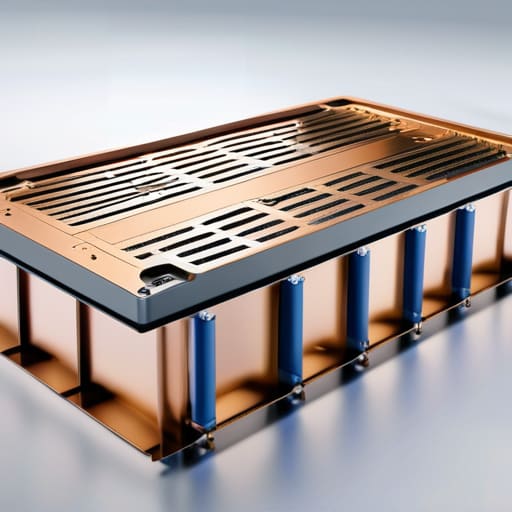
At the end of the day, designing a battery module isn’t just about cramming as many cells as possible into a chassis to chase a theoretical range number. It’s a balancing act between thermal management, mechanical integrity, and the actual chemistry of the cells themselves. We’ve seen that if you ignore how cells interact under load or how heat propagates through the pack, you aren’t building a power source—you’re building a liability. To move past the era of planned obsolescence, we have to prioritize intelligent architecture that respects the physical limits of lithium-ion tech while ensuring the hardware is actually built to last.
I’m tired of seeing companies treat battery design like a black box of proprietary secrets and marketing buzzwords. The transition to electric mobility won’t be won by the brand with the flashiest touchscreen, but by the engineers who figure out how to make high-density energy storage both incredibly efficient and truly circular. We have the math, and we have the materials; now we just need the discipline to build things that don’t end up in a landfill after five years. Let’s stop chasing the hype and start building the hardware that actually deserves our trust.
Frequently Asked Questions
How much does the thermal management system within a specific module design actually impact the long-term degradation of the cells compared to just the chemistry itself?
Look, chemistry sets the theoretical ceiling, but thermal management is what determines if you actually hit it. You can have the most stable LFP chemistry in the world, but if your module design creates hot spots, you’re basically cooking your ions. Uneven heat causes localized degradation, meaning some cells die while others are fine—which kills the whole pack. To me, a mediocre chemistry with elite thermal control beats a “super” chemistry that runs hot every single time.
When we talk about moving toward solid-state tech, are we looking at a complete overhaul of current module architectures, or can we just swap the cells into existing frames?
Honestly? It’s not a simple “drop-in” swap. While the physical footprint might look similar, the thermal management and pressure requirements for solid-state are a whole different beast. We’re talking about moving from liquid electrolytes to solid ceramics or polymers that need specific compression to stay stable. You can’t just toss them into an old Li-ion frame and call it a day; we’re likely looking at a significant architectural redesign to handle those unique mechanical stresses.
Is it actually more sustainable to design for easy repairability at the module level, or does the added complexity and weight of modular connectors negate the environmental gains?
It’s the ultimate engineering trade-off. If you go with a monolithic, glued-shut pack, you save weight and energy density, but you’re basically building a high-tech paperweight once a single cell fails. To me, that’s not sustainable—it’s wasteful. Yes, modular connectors add mass and complexity, but that “penalty” is worth it if it prevents an entire 500kg pack from hitting a landfill. We need to design for the second life, not just the first charge.
