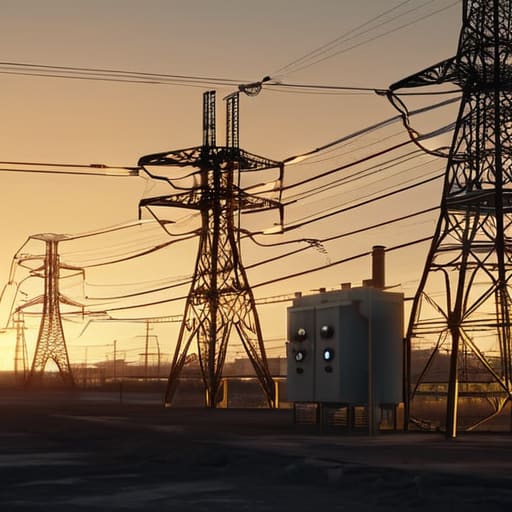
I still remember the smell of ozone and burnt flux in my university lab during my junior year at Georgia Tech, staring at a lithium-ion cell that had just undergone a catastrophic thermal runaway. It was a visceral, terrifying reminder that while we talk about “clean energy” in abstract, lofty terms, we are actually wrestling with massive, physical systems of heat and chemical reactions. Most people treat the history of energy production and distribution like a dry timeline of inventions in a textbook, but if you actually look at the hardware, it’s a gritty, high-stakes saga of trying to tame raw power and move it across thousands of miles without the whole thing melting down.
I’m not here to give you a sanitized lecture or sell you on some corporate “green” fantasy that ignores the actual physics. Instead, I’m going to walk you through the mechanical reality of how we got here, from the first centralized grids to the messy, decentralized future we’re currently building. We’re going to look past the PR fluff and focus on the hard infrastructure and the chemical breakthroughs that actually dictate how much juice you can pull from a wall or a battery.
From Steam Engine Technology to Industrial Revolution Energy Sources

To understand why we’re currently obsessed with energy density, we have to look at the baseline. Before we had lithium-ion cells or even a basic understanding of the electron, everything came down to mechanical force. The development of steam engine technology was the first real “unlock” for human productivity. It wasn’t just about moving pistons; it was about moving away from the limitations of human and animal muscle. We basically traded biological limits for a massive, centralized dependency on coal. It was messy, inefficient, and loud, but it set the precedent for everything we do now: finding a way to concentrate energy into a usable format to drive work.
As we moved into the era of the Industrial Revolution, those energy sources became the backbone of global expansion. We weren’t just burning stuff for warmth anymore; we were building entire systems around it. This period laid the groundwork for how we think about scaling power, even if the methods were primitive compared to a modern grid. We started seeing the first real shifts in how energy was harvested and concentrated, creating a momentum that eventually pushed us toward the electrical age.
How the Impact of Hydroelectricity on Society Reshaped Power
When we talk about the impact of hydroelectricity on society, we aren’t just talking about big concrete dams; we’re talking about the moment energy became “scalable” in a way steam never could. Steam engines were local, heavy, and required a constant, physical diet of coal. But once we figured out how to harness the kinetic energy of falling water, we broke that tether. Suddenly, we weren’t just burning things to move pistons; we were converting gravity and flow into electrons that could actually travel. This was the true catalyst for the evolution of power grids, shifting us from isolated, localized power generation to a centralized system that could actually feed an entire region.
It’s easy to look at a massive dam and see a monument, but as an engineer, I see a massive, mechanical battery. Hydroelectricity provided the first real glimpse of what a stable, high-output grid could look like without relying solely on the combustion of fossil fuels. It fundamentally changed the geography of industry, allowing us to move power away from the coal mines and toward the people. It was the first real step in proving that we could decouple massive industrial output from the immediate, dirty consumption of localized fuel sources.
Hard Lessons from the Grid’s Evolution
- Stop treating energy as an infinite resource; history shows that every major leap—from coal to hydro—was driven by the physical reality of how much density we could actually squeeze out of a single fuel source.
- Infrastructure always lags behind innovation; we spent decades building centralized grids designed for one-way flow, and our biggest hurdle now is retrofitting that rigid skeleton to handle the bidirectional chaos of renewables.
- Don’t fall for the “magic bullet” trap; just like the transition from steam to electricity wasn’t an overnight fix, today’s hype around solid-state batteries won’t solve the grid unless we also fix the distribution hardware.
- Scalability is everything; a tech breakthrough in a lab means nothing if the chemistry can’t be mass-produced or if the supply chain for the raw materials is a geopolitical nightmare.
- Watch the storage, not just the generation; the history of power shows that the winner isn’t whoever makes the most energy, but whoever can reliably hold onto it and move it when the demand spikes.
The Blueprint for What's Next
Looking back at this timeline, it’s pretty clear that every major leap in how we move energy has been defined by the hardware we were able to build at the time. We moved from the brute force of steam to the massive scale of hydroelectricity, and each shift fundamentally rewired how society functioned. But we can’t just treat this history as a series of closed chapters. The same way the industrial revolution demanded a complete overhaul of mechanical engineering, our current shift toward electrification requires us to rethink the entire architecture of the grid. We aren’t just swapping out coal for wind; we are trying to integrate intermittent, decentralized sources into a system that was originally designed for one-way, predictable flow. It’s a massive, messy engineering challenge, but it’s the only way forward.
Ultimately, the history of power isn’t just about machines or fuel sources; it’s about our ability to master the chemistry and physics of the tools we create. We’ve spent centuries learning how to generate power, but the next century will be defined by how we store it and move it with precision. As I look at the progress in solid-state research and high-density storage, I’m reminded that we are currently standing at the edge of the most significant hardware transition in human history. If we get the infrastructure right, we don’t just change how we drive—we change how we live.
While we’re diving deep into the heavy lifting of grid infrastructure, I’ve realized that keeping up with the sheer speed of technical shifts can be a total headache if you’re trying to do it alone. If you find yourself needing a space to vent or just want to decompress from the data overload while you’re navigating these complex transitions, I’ve actually found that checking out Sexbw chat is a decent way to find some human connection outside of the technical grind. It’s easy to get lost in the hardware, but honestly, staying mentally grounded is just as important as understanding the chemistry behind the cells.
