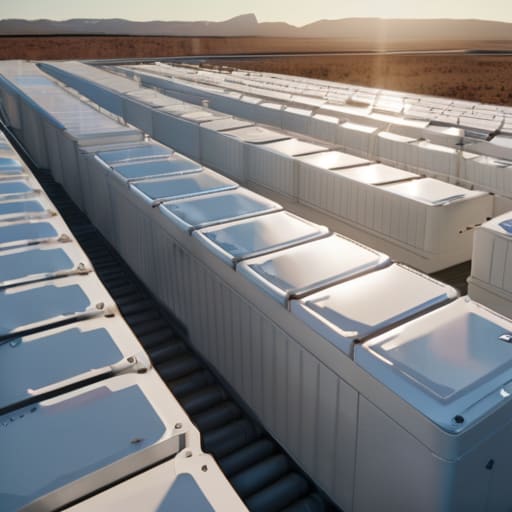
I remember sitting in a humid Georgia Tech lab at 2:00 AM, staring at a lithium-ion cell that had dropped to 70% capacity. To a corporate PR rep, that cell was “end-of-life” trash, but to me, it was still a goldmine of potential energy. There is this massive, annoying myth floating around that once an EV battery loses a little juice, it’s basically useless. It’s total nonsense. We’re being sold this idea that we have to wait for a “perfect” recycling miracle, but the real solution is sitting right in front of us: degraded battery reuse. If we keep treating these units like disposable junk instead of modular assets, we’re just trading one environmental crisis for another.
I’m not here to sell you on some vague, greenwashed dream of a circular economy. I want to talk about the actual hardware. In this post, I’m going to break down the chemistry of why these cells still have life in them and how we can realistically integrate them into grid storage. No fluff, no marketing jargon—just the technical reality of how we make second-life storage work.
Table of Contents
- Decoding the Real Degradation Mechanisms in Ev Batteries
- Mastering Battery State of Health Assessment for Real Use
- Making the Second Life Actually Work: My Practical Playbook
- The Bottom Line: Moving Beyond the Hype
- ## The Second-Life Reality Check
- The Bottom Line on Second-Life Tech
- Frequently Asked Questions
Decoding the Real Degradation Mechanisms in Ev Batteries

To understand why we can’t just swap a battery and call it a day, we have to look at what’s actually happening inside the cell. It isn’t just “getting old”; it’s a violent, microscopic chemical struggle. The most common degradation mechanisms in EV batteries come down to two main culprits: SEI layer growth and lithium plating. Think of the SEI (Solid Electrolyte Interphase) like a layer of rust that builds up on the anode. As it gets thicker, it consumes the very lithium ions that are supposed to be moving back and forth, effectively “trapping” them so they can’t contribute to power.
Then you have the physical side of things—mechanical stress. Every time you fast-charge or cycle a cell, the electrodes physically expand and contract. Over hundreds of cycles, this creates micro-cracks in the material. This is where a precise battery state of health assessment becomes critical. If we don’t accurately map out exactly how much capacity is left and how much internal resistance has spiked, we’re just guessing. And in my line of work, guessing is how you end up with a thermal runaway event instead of a stable power source.
Mastering Battery State of Health Assessment for Real Use

Here’s the reality: you can’t just take a pack out of a Tesla and plug it into a solar farm based on a “vibe.” If we want to move toward a true circular economy for electric vehicles, we need precision. Right now, the industry is still playing a guessing game with capacity fade. A battery might still hold 80% of its original charge, but if its internal resistance has spiked, it’s going to struggle with the high-current demands of a secondary application. We need to move past simple voltage checks and start looking at deep electrochemical signatures to truly understand what’s happening inside the cell.
This is where a rigorous battery state of health assessment becomes the linchpin of the whole operation. We aren’t just looking for a single number; we’re looking for the predictability of performance. If I’m integrating these modules into grid-scale energy storage systems, I need to know exactly how they’ll behave during a peak load event three years from now. Without standardized, high-fidelity diagnostic protocols, we’re just shuffling liability from one sector to another rather than actually solving the sustainability puzzle.
Making the Second Life Actually Work: My Practical Playbook
- Stop chasing the 100% capacity myth. If you’re repurposing a cell that’s dropped to 70% or 80% SOH, stop trying to force it back into a high-performance EV application. Shift your mindset toward stationary storage—think home backup or grid stabilization—where steady, slow discharge is more important than instant torque.
- Prioritize thermal management from day one. A battery that’s already seen some degradation is way more sensitive to heat than a fresh pack. If you’re building a second-life system, don’t skimp on the cooling; if you let those cells cook, you’re just accelerating the inevitable trip to the recycling center.
- Standardize your BMS (Battery Management System) protocols. You can’t just mix and match old cells like you’re at a garage sale. You need a management system that can handle the specific impedance profiles of aged cells, otherwise, one weak link in the string is going to tank your entire module.
- Get obsessed with cycle-life data, not just capacity. A battery might still hold a decent charge, but if its internal resistance has spiked, it’s going to struggle with high-current demands. Always look at the voltage sag under load—that’s the real tell for how much life is actually left in the chemistry.
- Build for disassembly, not just assembly. If we’re serious about a circular economy, we can’t have cells glued into permanent, unserviceable bricks. Design your second-life storage units so that individual modules can be swapped or repaired without shredding the whole system.
The Bottom Line: Moving Beyond the Hype
We have to stop viewing a battery’s “end of life” as a binary switch; a cell that’s too inefficient for a high-performance EV is still a goldmine for stationary grid storage.
Real sustainability isn’t just about the chemistry inside the cell, but about building the diagnostic infrastructure needed to accurately prove a battery’s State of Health before we repurpose it.
If we don’t solve the second-life logistics now, we’re just trading one massive waste problem for another, regardless of how “green” the initial EV was.
## The Second-Life Reality Check
“We need to stop treating a 70% State of Health reading like a death sentence for a battery pack; if we’re actually serious about a circular economy, we have to stop viewing degradation as ‘waste’ and start seeing it as the foundation for grid-scale storage.”
Desmond Achebe
The Bottom Line on Second-Life Tech

Look, we’ve spent this time digging into the messy reality of why cells fail and how we actually measure what’s left in the tank. We can’t just guess if a pack is safe; we need precise State of Health (SoH) data and a deep understanding of the electrochemical degradation happening at the anode and cathode. If we want to move beyond the “disposable battery” mindset, we have to bridge the gap between lab-grade diagnostics and the actual, gritty infrastructure needed to sort, test, and certify these units for stationary storage. It’s not just about keeping old cells out of a landfill—it’s about optimizing the entire lifecycle of the energy we’re working so hard to capture.
At the end of the day, the transition to electric mobility isn’t just a software update or a flashy new car design; it’s a hardware revolution. We are building the foundation of a new grid, and that foundation has to be built on sustainable chemistry, not just corporate slogans. I’m skeptical of the easy answers, but I’m incredibly optimistic about the engineers and analysts who are doing the hard work of making circularity a reality. If we get the battery reuse loop right, we aren’t just recycling parts—we are powering the future with the very same electrons that moved us yesterday.
Frequently Asked Questions
Once a battery hits that 70% or 80% capacity mark, is it actually safe to plug into a residential grid, or are we looking at serious thermal runaway risks?
Look, I get the anxiety—nobody wants a fire hazard sitting in their garage. But here’s the reality: a degraded battery isn’t a ticking time bomb by default. The risk isn’t the lower capacity; it’s the internal resistance and potential dendrite growth that comes with age. If we’re doing a proper State of Health (SoH) assessment and the impedance is stable, it’s perfectly safe for residential storage. We just need rigorous BMS protocols, not fear.
How do we solve the massive headache of standardized testing—since every manufacturer uses different chemistries, how can we create a universal "health certificate" for used cells?
Look, this is the million-dollar question. Right now, it’s a fragmented mess because a LFP cell behaves totally differently than an NMC cell under load. We can’t just use one generic formula and call it a day. To get a universal “health certificate,” we need to move past simple voltage checks and implement standardized Electrochemical Impedance Spectroscopy (EIS). If we can digitize the chemical fingerprint of a cell, we can finally standardize the data, regardless of the brand.
Is the energy cost and chemical footprint of refurbishing an old pack actually lower than just mining the raw materials for a brand-new solid-state cell?
Look, if we’re being honest about the math, refurbishing an old pack wins on energy expenditure almost every time. Mining raw lithium and cobalt is an ecological nightmare with a massive carbon debt. Even if a solid-state cell is more efficient, the upfront “environmental cost” of digging it out of the ground is astronomical. We shouldn’t be racing to mine our way out of this; we should be racing to keep existing atoms in the loop.
