
I still remember the smell of scorched electrolyte in my Georgia Tech lab during my junior year—a sharp, metallic tang that signaled a cell had gone rogue because we underestimated the heat soak. It wasn’t some high-level theoretical failure; it was a brutal, physical reminder that if you aren’t obsessing over battery thermal modeling, you’re basically just building a ticking time bomb. Most people in the industry want to talk about “magic” solid-state breakthroughs or flashy range numbers, but they completely gloss over the messy, chaotic reality of how heat actually moves through a pack during a fast charge.
I’m not here to feed you the corporate greenwashing or the vague promises of “optimized efficiency” that you see in every press release. Instead, I’m going to pull back the curtain on the actual hardware realities of managing temperature gradients. We are going to strip away the fluff and look at how precise battery thermal modeling serves as the actual bedrock for making EVs sustainable and long-lasting. If you want to understand the real chemistry and the math that keeps a battery from degrading into a paperweight, this is where we start.
Table of Contents
- Predicting Thermal Runaway Before the Chemistry Fails
- Solving Battery Pack Temperature Gradients With Precision
- Hard Truths: 5 Ways to Stop Guessing and Start Modeling
- The Bottom Line: Why Modeling Matters for the Next Generation of Hardware
- ## The Reality Check
- The Bottom Line on Thermal Integrity
- Frequently Asked Questions
Predicting Thermal Runaway Before the Chemistry Fails

We’ve all seen the scary headlines about EV fires, but the reality is that most of those incidents aren’t just “bad luck”—they’re failures in foresight. If we wait until a cell starts venting smoke to act, we’ve already lost. The real goal is to move from reactive cooling to proactive prevention. This is where thermal runaway prediction becomes the most critical part of the stack. We aren’t just looking for a temperature spike; we’re looking for the subtle, microscopic precursors in the voltage and heat signatures that signal a cell is about to lose its internal stability.
To get ahead of this, we can’t just rely on simple sensors scattered around the pack. We have to dive into the math of electrochemical-thermal coupling. This isn’t just about how hot the liquid coolant gets; it’s about understanding how the chemical reactions inside the cell actually feed back into the temperature rise. If the chemistry gets hot, the reaction speeds up, which makes it even hotter—it’s a feedback loop that can spiral out of control in seconds. If we don’t model that interconnected dance between the ions and the heat, we’re essentially flying blind.
Solving Battery Pack Temperature Gradients With Precision

The real headache isn’t just keeping the cells cool; it’s dealing with the fact that they never stay at the same temperature. In a massive EV pack, you might have one module sitting at a comfortable 25°C while its neighbor is pushing 40°C just because of how the coolant flows. These battery pack temperature gradients are silent killers. When one cell runs hotter than the rest, it ages faster, creating an uneven load that eventually forces the entire pack to underperform. It’s like trying to run a marathon when one of your legs is significantly more tired than the other—eventually, you’re going to limp.
To fix this, we can’t just rely on “good enough” cooling plates. We have to dive into computational fluid dynamics for batteries to see exactly how the coolant is moving through the channels. I’ve seen too many designs that look great on paper but fail once you account for the actual fluid dynamics and the heat generated by internal resistance. By using high-fidelity simulations, we can map out the heat distribution and ensure every single cell is playing by the same rules. If we don’t master this spatial precision, we’re just building expensive, unevenly degrading paperweights.
Hard Truths: 5 Ways to Stop Guessing and Start Modeling
- Stop relying on lumped-parameter models if you’re serious about safety. They’re fine for a quick napkin sketch, but if you want to see how heat actually moves through a high-density pack, you need multi-scale modeling that accounts for the specific geometry of your cells.
- Treat your cooling plates as more than just heat sinks. Your models need to simulate the fluid dynamics of the coolant itself; if your flow rate is inconsistent, your thermal gradients will spike, and your cells will age at completely different rates.
- Factor in the “chemistry lag.” Heat doesn’t just move; it’s generated by internal resistance that changes as the battery discharges. If your model doesn’t link the electrochemical state (SOC) to the thermal output, your predictions are basically just educated guesses.
- Don’t ignore the aging factor. A battery at 90% State of Health (SOH) behaves differently than one at 70%. You need to build degradation into your thermal simulations, or your model will be useless by the time the pack is halfway through its lifecycle.
- Validate with real-world sensor data, not just idealized lab conditions. I’ve seen too many “perfect” simulations fall apart the second they hit a real-world environment with fluctuating ambient temps and aggressive driving cycles. If your model doesn’t match the telemetry, scrap it and start over.
The Bottom Line: Why Modeling Matters for the Next Generation of Hardware
We have to move past “best guess” cooling strategies; precise thermal modeling is the only way to prevent the kind of localized hotspots that turn a high-performance pack into a liability.
Sustainable battery life isn’t just about the chemistry you choose, but how effectively you manage the heat that chemistry generates through every single charge cycle.
If we want to scale electric mobility, we need to stop treating thermal management as an afterthought and start treating it as the fundamental bedrock of battery safety and longevity.
## The Reality Check
“We can keep chasing higher energy densities and fancy new chemistries, but if we don’t master the thermal modeling first, we’re basically just building more expensive, high-stakes fire hazards instead of reliable infrastructure.”
Desmond Achebe
The Bottom Line on Thermal Integrity
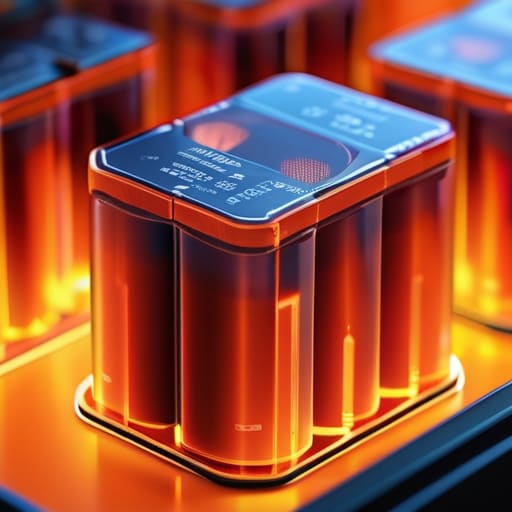
At the end of the day, battery thermal modeling isn’t just some academic exercise or a luxury for high-end R&D labs; it is the fundamental bridge between a theoretical cell design and a reliable, real-world vehicle. We’ve seen how failing to account for internal temperature gradients or ignoring the early warning signs of thermal runaway can turn a cutting-edge battery pack into a massive liability. By mastering the math behind the heat, we move away from the “guess and check” method that plagues so many mediocre EV platforms and move toward true hardware reliability. If we can’t accurately predict how these cells behave under stress, we aren’t actually building a sustainable future—we’re just building a more expensive version of our current problems.
We are standing at a massive inflection point in energy history. The transition to electric mobility is a mathematical certainty, but its success depends entirely on our ability to engineer for longevity rather than just chasing quick wins in energy density. I want to see a world where an electric vehicle isn’t just a tech gadget that degrades after three years, but a robust piece of infrastructure that lasts a decade. It starts with getting the chemistry and the cooling right at the molecular level. Let’s stop settling for vague promises about “green tech” and start doing the hard, precise work required to build the solid-state and lithium-ion reality we actually deserve.
Frequently Asked Questions
If we nail the thermal modeling, does that actually mean we can stop worrying about the degradation of lithium-ion cells over time?
Look, I wish I could say yes, but it’s not a magic bullet. Nailing thermal modeling is like having a perfect weather forecast—it helps you prepare, but it doesn’t stop the rain. Precise modeling lets us manage heat spikes and prevent localized hotspots that kill cells, which definitely slows down degradation. But you’re still fighting the fundamental chemistry: SEI layer growth and lithium plating. We’re managing the symptoms, but the underlying chemical aging is still a reality.
How much does the cost of running high-fidelity thermal simulations actually impact the final price tag of an EV battery pack?
Look, I get why people worry about the overhead. High-fidelity simulations aren’t cheap—you’re paying for massive compute time and specialized engineering hours. But here’s the reality: if you cheap out on the modeling now, you’re going to pay for it tenfold later in recalls or over-engineered, heavy cooling systems. Investing in precise thermal data actually lowers the final price tag by allowing us to trim the fat from the hardware without risking a meltdown.
Can these models realistically account for the rapid temperature spikes we see during ultra-fast charging, or are we still just making educated guesses?
Look, I get the skepticism. If we were still just using static lookup tables, we’d definitely be making educated guesses. But with high-fidelity electrochemical-thermal models, we’re moving past that. We can now simulate the internal heat generation from ion transport and Joule heating in real-time. We aren’t just watching the thermometer rise; we’re predicting the internal heat spike before the surface sensors even feel it. It’s the difference between reacting to a fire and preventing one.
