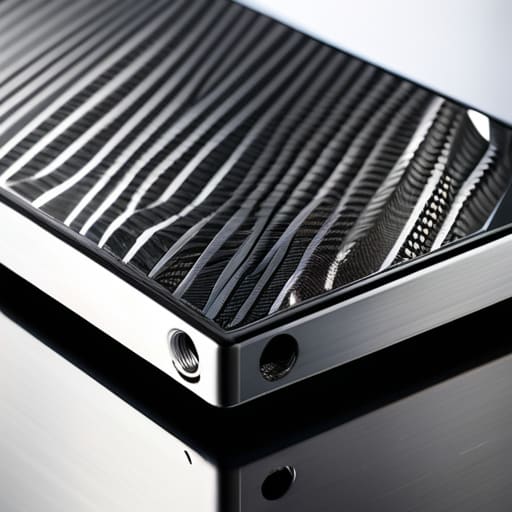
I still remember the smell of scorched resin and ozone in my Georgia Tech lab when a prototype cell casing failed during a thermal runaway test. It wasn’t some grand, cinematic explosion; it was a pathetic, localized meltdown that proved one thing: you can have the most advanced solid-state chemistry in the world, but if your battery enclosure materials are an afterthought, you’ve basically built a very expensive, very dangerous paperweight. Most industry whitepapers act like the shell is just a passive box to keep things tidy, but that’s a dangerous simplification that ignores the brutal reality of thermal management and structural integrity.
I’m not here to sell you on the latest marketing buzzwords or the “magic” alloys that promise the moon but crumble under real-world stress. Instead, I’m going to break down the actual trade-offs between aluminum, composites, and steel from a hardware-first perspective. We’re going to look at the data on weight-to-strength ratios and thermal conductivity to figure out which materials actually support a sustainable, long-term transition to electric mobility. No fluff, no greenwashing—just the engineering reality of what it takes to protect the cells that power our future.
Table of Contents
- Aluminum vs Composite Enclosures the Weight vs Durability Debate
- The Critical Role of Impact Resistance of Battery Shells
- Engineering for Reality: 5 Things to Look for Beyond the Spec Sheet
- The Bottom Line: Why Material Choice is More Than Just a Cost Calculation
- The Real Cost of Cheap Housing
- The Real Bottom Line
- Frequently Asked Questions
Aluminum vs Composite Enclosures the Weight vs Durability Debate
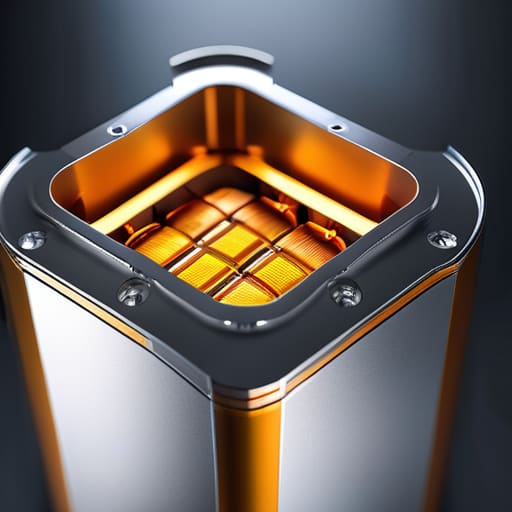
When you’re looking at the trade-offs between aluminum and composite enclosures, it’s easy to get bogged down in the spec sheets, but the real-world implications are what matter. Aluminum is the old reliable; it’s got incredible thermal conductivity, which is a massive win for thermal management in battery packs. If you can pull heat away from the cells efficiently, you’re slowing down that precious degradation I spent half my degree studying. Plus, it provides built-in electromagnetic interference shielding, which keeps the sensitive electronics from getting fried by the motor’s noise. But the downside is obvious: it’s heavy, and every extra kilogram is just more energy being wasted to move the vehicle.
Composites, on the other hand, are the “new school” approach. They offer a much better strength-to-weight ratio, which is the holy grail for extending range. However, I’ve always been a bit skeptical of how these materials handle extreme stress. We need to talk about the impact resistance of battery shells during a high-speed collision. While a composite might be lighter, if it can’t protect the cells from a puncture or a massive mechanical shock, all that extra range doesn’t mean much. It’s a constant tug-of-war between efficiency and pure, unadulterated safety.
The Critical Role of Impact Resistance of Battery Shells
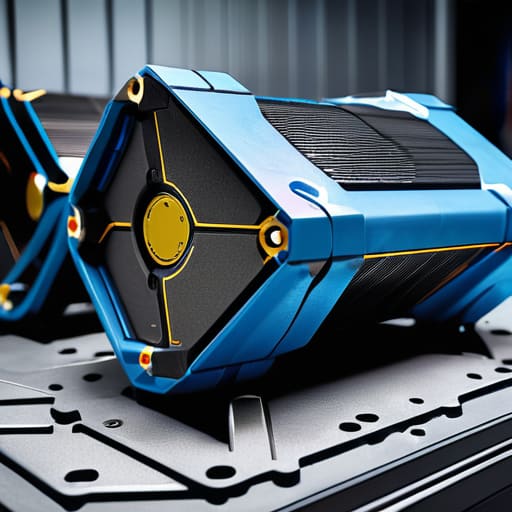
Look, we can talk about energy density and charging speeds all day, but if the shell fails during a collision, none of that math matters. When we discuss impact resistance of battery shells, we aren’t just talking about preventing a dent; we’re talking about preventing a catastrophic thermal runaway event. If a piece of road debris or a side-impact collision compromises the structural integrity of the housing, you’re looking at a direct path to internal short circuits. It’s not just about being “tough”—it’s about how the material manages the kinetic energy of a crash without allowing it to crush the cells inside.
This is where the debate over EV battery housing durability gets really intense. A material might be incredibly lightweight, which is great for range, but if it lacks the fracture toughness to withstand a high-velocity impact, it’s a liability. We need enclosures that act as a sacrificial shield, absorbing the brunt of the force while maintaining a sealed environment. If the casing cracks, you lose your primary defense against moisture and debris, and suddenly, your entire thermal management system is fighting a losing battle against a compromised cell.
Engineering for Reality: 5 Things to Look for Beyond the Spec Sheet
- Prioritize thermal conductivity over pure strength. It doesn’t matter how indestructible your enclosure is if the cells inside are cooking themselves because the material acts like a thermos instead of a heat sink.
- Don’t fall for the “lightweight” trap without checking the lifecycle. If a composite enclosure saves you 20kg but cracks after three years of road vibration, you haven’t built a sustainable solution—you’ve just built more e-waste.
- Evaluate the chemistry-material compatibility. You need to know exactly how that enclosure material reacts if a cell goes into thermal runaway; you don’t want your “protective” shell becoming a fuel source or releasing toxic fumes during a failure.
- Demand data on recyclability, not just “sustainability” buzzwords. If the enclosure uses a complex, bonded multi-material sandwich that can’t be separated at the end of the vehicle’s life, it’s a failure of engineering, plain and simple.
- Test for real-world corrosion, not just lab salt sprays. We’re talking about road salt, humidity, and temperature swings that happen every day—if the material can’t handle the grit of a real commute, it has no place in a grid-scale or EV application.
The Bottom Line: Why Material Choice is More Than Just a Cost Calculation
We have to stop treating the enclosure as just a “box” for the cells; it’s a critical component of the thermal and structural lifecycle that dictates whether a battery lasts five years or fifteen.
There is no perfect material, only trade-offs—aluminum offers the heat dissipation we need for high-performance loads, while composites can solve the weight issues that currently kill EV range.
If we want to move past the “greenwashing” phase of the industry, we need to prioritize materials that offer high impact resistance and long-term durability, ensuring these packs don’t become premature e-waste.
The Real Cost of Cheap Housing
“We can design the most efficient, high-density solid-state cells in the world, but if we wrap them in an enclosure that can’t handle real-world thermal stress or a minor collision, we haven’t built a battery system—we’ve just built a very expensive fire hazard.”
Desmond Achebe
The Real Bottom Line
At the end of the day, choosing a battery enclosure isn’t just a math problem involving weight-to-strength ratios or a simple procurement decision. We’ve looked at how aluminum offers that reliable thermal conductivity we need, how composites can shave off precious kilograms to extend range, and why impact resistance is the non-negotiable baseline for safety. But none of these technical wins matter if we ignore the lifecycle of the materials themselves. If we pick a high-performance shell that’s impossible to recycle or degrades under standard thermal cycling, we haven’t actually solved anything—we’ve just moved the problem from the chemistry to the structural housing.
We are standing at a massive inflection point in how humanity moves from point A to point B. The transition to electric mobility is inevitable, but it’s going to be messy, and it’s going to require us to stop settling for “good enough” engineering. I don’t want to see a future filled with “green” vehicles that are actually just disposable hardware wrapped in clever marketing. We need to build enclosures that are as resilient and sustainable as the cells they protect. If we get the hardware right now, we aren’t just building better cars; we’re building the foundation for a grid and a transport system that actually lasts.
Frequently Asked Questions
How do these enclosure materials affect the thermal management systems and the overall lifecycle of the lithium-ion cells inside?
It’s not just about keeping the cells safe from a crash; it’s about how the enclosure handles heat. If you pick a material with poor thermal conductivity, you’re basically wrapping your battery in a thermal blanket. That forces the cooling system to work overtime, draining your range and cooking the chemistry. Poor heat dissipation accelerates SEI layer growth, which is just a fancy way of saying your battery’s lifespan goes down the drain.
If we switch to more expensive, high-durability composites, does that actually kill the price competitiveness of entry-level EVs?
Look, it’s the classic engineering trade-off, and honestly, it’s a massive headache. If we go all-in on high-end composites, yeah, the MSRP of a budget EV is going to spike, which kills adoption rates. But we have to look at the lifecycle math. If a cheaper aluminum shell degrades or requires more frequent thermal management, you’re just trading upfront savings for long-term inefficiency. We shouldn’t be asking if composites are “too expensive,” but rather how we can scale their manufacturing to make them the baseline, not a luxury.
What happens to these enclosures at the end of the vehicle's life—are we just creating a new mountain of non-recyclable waste?
That’s the million-dollar question, and honestly, it’s what keeps me up. If we just build these massive, glued-together composite shells that can’t be separated, we’re basically just building future landfills. Right now, the industry is lagging. We need to move toward “design for disassembly”—using modular connections and recyclable alloys rather than permanent adhesives. If the enclosure itself isn’t part of the circular economy, then the whole EV transition is just greenwashing.
