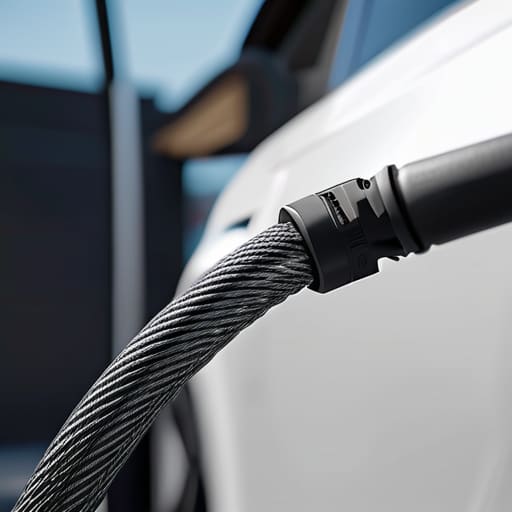
I remember sitting in my apartment last winter, staring at a tangled, stiff mess of plastic that felt more like a garden hose than a piece of high-tech hardware. I was trying to top off my custom electric skateboard after a long session, but the cheap, generic cable I’d picked up was getting uncomfortably warm to the touch. It’s a classic example of the disconnect in this industry: we spend billions talking about battery chemistry and autonomous driving, yet we treat ev charging cables like an afterthought, a mere commodity that anyone can slap together in a factory. If the physical link between the grid and your vehicle is mediocre, it doesn’t matter how advanced your cells are; you’re essentially trying to push a river through a straw.
I’m not here to sell you on some overpriced, “smart” cable that just adds a flashy LED ring and a higher price tag. Instead, I want to pull back the curtain on the actual material science and thermal management that separates a reliable lifeline from a potential fire hazard. We’re going to look at the real specs—gauge thickness, connector durability, and conductivity—so you can stop guessing and start investing in hardware that actually lasts.
Table of Contents
- Decoding the Truth of Charging Cable Amperage Ratings
- Why Level 2 Charging Station Cables Arent All Created Equal
- Don't Get Burned: 5 Real-World Rules for Your Charging Hardware
- The Bottom Line: Stop Treating Cables Like Afterthoughts
- The Bottleneck in the Circuit
- The Bottom Line on Your Connection to the Grid
- Frequently Asked Questions
Decoding the Truth of Charging Cable Amperage Ratings
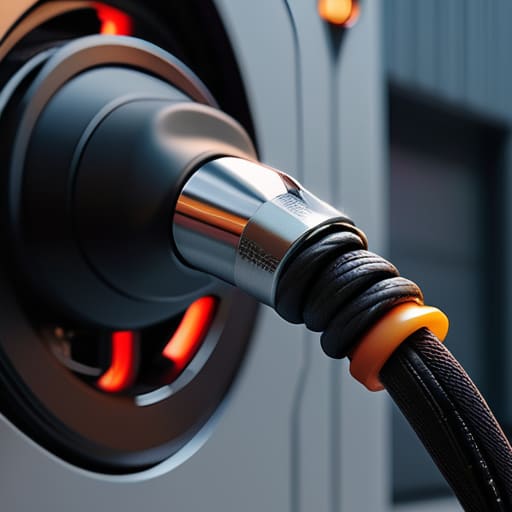
Look, if you’ve ever tried to pull a heavy-duty charger out of a trunk, you know the physics doesn’t lie. When we talk about charging cable amperage ratings, we aren’t just talking about numbers on a spec sheet; we’re talking about heat and resistance. I see people trying to run high-current loads through undersized lines all the time, and it’s a recipe for disaster. If the gauge is too thin for the current you’re pulling, that energy isn’t just going into your battery—it’s turning into wasted thermal energy right in your hands.
This is where the relationship between ev charging cable length and thickness becomes critical. In my lab days, we looked at how voltage drop can kill your efficiency over longer distances. If you buy a massive, 25-foot extension just because it’s convenient, you might be sacrificing significant charging speed due to that increased resistance. You have to treat your hardware like any other electrical component: if the math doesn’t add up, the performance won’t either. Don’t let a cheap, thin cable become the bottleneck in your entire power ecosystem.
Why Level 2 Charging Station Cables Arent All Created Equal
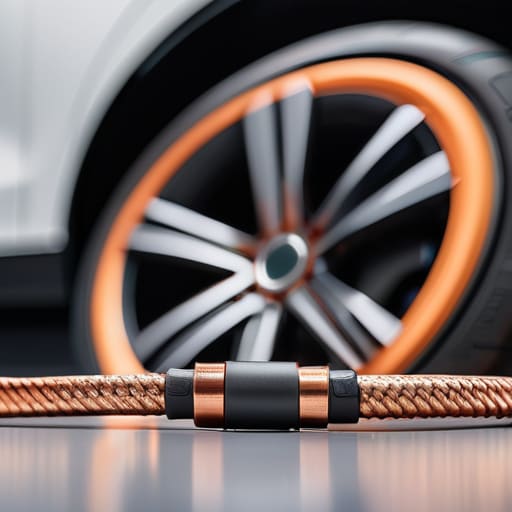
When you’re looking at level 2 charging station cables, it’s easy to fall into the trap of thinking any thick black cord will do the job. But as someone who has spent way too many hours in a lab looking at thermal runaway, I can tell you that the difference between a cheap knockoff and a high-quality unit is massive. It’s not just about getting juice into your car; it’s about the integrity of the copper and the quality of the insulation. If the internal gauge is too thin for the rated current, you aren’t just charging slowly—you’re essentially running a very expensive, very dangerous space heater right next to your vehicle.
This is where ev charging cable length and thickness become non-negotiable variables. People often want a twenty-foot cord for convenience, but physics doesn’t care about your convenience. A longer cable increases resistance, which leads to voltage drops and heat buildup. If you’re picking up a new setup, don’t just look at the price tag; look at the thermal management and build quality. You want hardware that can handle a continuous high-amperage load without the casing becoming soft or the connectors melting.
Don't Get Burned: 5 Real-World Rules for Your Charging Hardware
- Stop treating your cable like a generic extension cord. Check the gauge (AWG) and the temperature rating before you buy; if you’re running high amperage through a thin, cheap wire, you aren’t just charging slowly, you’re essentially running a space heater in your garage.
- Inspect the pins, not just the plastic. I’ve seen too many “budget” cables where the contact points show signs of pitting or oxidation—that’s a massive red flag for resistance buildup, which leads to heat and, eventually, melted connectors.
- Manage your cable’s “bend radius.” I know it’s tempting to coil a heavy-duty cable tightly to save space, but constant tight kinking stresses the internal copper strands and the insulation, which is a fast track to a short circuit.
- Watch out for the “phantom” compatibility. Just because a plug fits into your J1772 port doesn’t mean the internal communication handshake is going to be seamless; always verify that the cable is rated for the specific communication protocols your EV uses to prevent charging interruptions.
- Clean your contacts like your life depends on it. A little bit of grit or road salt in the connector can mess with the thermal management of the connection; keep a dedicated microfiber cloth and some contact cleaner handy to ensure you’re getting a clean, low-resistance path every single time.
The Bottom Line: Stop Treating Cables Like Afterthoughts
Don’t let a manufacturer’s marketing fool you; always verify the actual amperage rating and gauge of a cable before hooking it up to a high-draw charger, or you’re just asking for heat buildup and efficiency loss.
The physical integrity of your hardware—from the connector pins to the insulation thickness—is what actually determines how reliably you can pull power during a long-term charge cycle.
If we want to move past the “range anxiety” era, we have to stop prioritizing flashy software interfaces and start investing in the heavy-duty, high-quality copper and shielding that makes real-world power transfer possible.
The Bottleneck in the Circuit
“We spend all this time debating software updates and UI design, but if you’re running a high-current load through a cable with subpar thermal management or cheap copper, you aren’t building a future—you’re just building a fire hazard. The hardware is the reality check.”
Desmond Achebe
The Bottom Line on Your Connection to the Grid
At the end of the day, choosing an EV charging cable isn’t just about finding the cheapest option on a website; it’s about understanding the physical constraints of your hardware. We’ve looked at how amperage ratings can be misleading and why the build quality of Level 2 cables determines whether you’re actually getting the charge you paid for or just wasting energy through heat dissipation. If you ignore the specifications in favor of aesthetics, you’re essentially gambling with your vehicle’s battery health and your own safety. Don’t let a subpar cable become the bottleneck in your entire charging ecosystem.
I know it’s easy to get lost in the hype of autonomous driving and flashy infotainment screens, but the real revolution is happening in the copper and insulation. The transition to electric mobility is going to be won or lost on the quality of our physical infrastructure. We need to stop treating cables like disposable accessories and start treating them like the critical energy conduits they are. If we get the hardware right—the real, tangible, heavy-duty stuff—then we actually have a shot at a sustainable future that isn’t just built on corporate promises. Let’s build it on solid engineering instead.
Frequently Asked Questions
If I use a high-quality, heavy-duty cable with a lower-rated charging station, am I actually going to see a bottleneck in my charging speed?
Look, it’s a common misconception that a beefier cable acts like a wider pipe for more water. In reality, your charging speed is governed by the “weakest link” principle. If your station is capped at 32 amps, it doesn’t matter if you’re using a heavy-duty 50-amp cable; the station simply won’t push more juice than its internal hardware allows. You’re paying for extra copper and durability you won’t actually utilize for speed.
How much does the actual temperature of the cable during a high-speed session affect the long-term degradation of my vehicle's onboard charger?
Look, if your cable is getting hot enough to be uncomfortable, you’ve got a problem. High resistance in a cheap or damaged cable creates a thermal feedback loop. That heat doesn’t just stay in the cord; it conducts back toward the connector and your vehicle’s inlet. While the onboard charger has thermal management, constant exposure to extreme heat cycles can prematurely age the internal components and solder joints. Don’t let a subpar cable cook your car’s expensive hardware.
Are there specific physical wear patterns or connector issues I should be looking for to know if my cable is becoming a fire hazard before it actually fails?
Look, don’t wait for smoke to tell you there’s a problem. If you see discoloration—like browning or melting around the connector pins—that’s a massive red flag for high-resistance heating. Also, feel the cable while it’s charging; if it’s uncomfortably hot to the touch, the internal copper is likely compromised. If the cable feels “crunchy” when you bend it, the insulation is failing. If you see that, stop using it. It’s not worth the risk.
