
I still remember the smell of scorched lithium in my Georgia Tech lab during my junior year—a sharp, metallic scent that meant a cell had just failed a stress test. I was staring at a data sheet, realizing that all the marketing hype about “infinite range” meant nothing if the actual battery life cycle was being gutted by poor thermal management and aggressive charging habits. It’s frustrating because every manufacturer wants to sell you on the peak performance numbers, but nobody wants to talk about the inevitable decay that happens at the molecular level.
I’m not here to give you a sales pitch or a list of vague “green” promises. My goal is to strip away the corporate fluff and look at the actual hardware. We’re going to dive into the real chemistry of degradation, the infrastructure we need to support it, and what you can actually do to ensure your tech lasts a decade rather than a few years. If you want the unfiltered truth about how energy storage actually works in the real world, you’re in the right place.
Table of Contents
Why Lithium Ion Battery Degradation Is Not a Theory
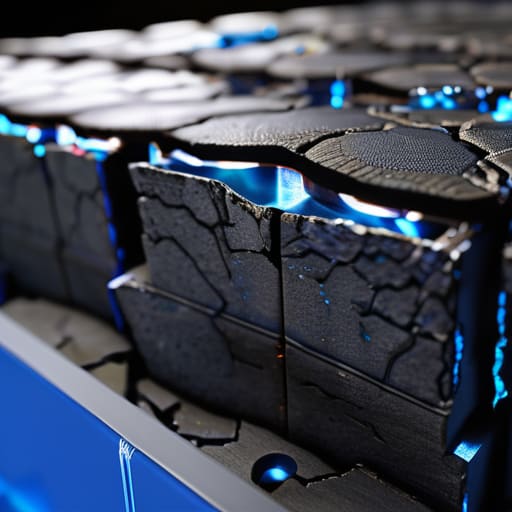
Look, when people talk about “battery health,” they often treat it like a software update—something that just happens or doesn’t. But in the lab, we know it’s a brutal, physical reality. Every time you run through charge and discharge cycles, you aren’t just moving electrons; you are physically stressing the internal architecture of the cell. It’s less like a digital countdown and more like wearing down the tread on a tire. Eventually, the chemical structure just can’t hold the same amount of juice it did on day one.
This isn’t some theoretical math problem we can solve with a better app. We’re seeing actual, measurable loss in battery capacity retention because of things like SEI layer growth and lithium plating. If you’re constantly fast-charging or letting your cells sit at 100% in a hot garage, you’re essentially accelerating the chemical aging process. It’s a hard physical limit imposed by the laws of thermodynamics, and no amount of clever marketing or “green” branding is going to bypass the fundamental reality of how these materials break down.
The Real Math Behind Charge and Discharge Cycles
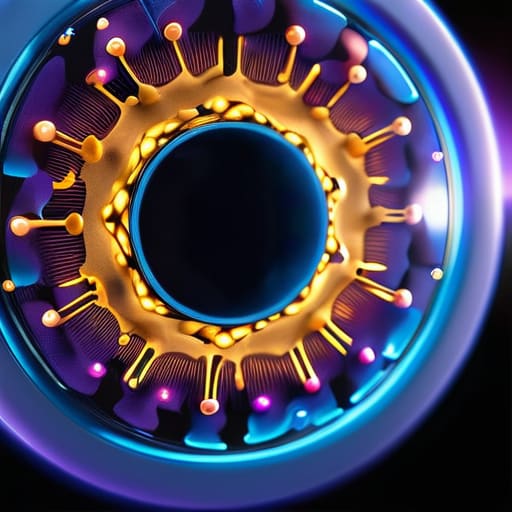
Look, if you want to understand why your phone or EV isn’t performing like it did on day one, you have to look past the percentage icons and get into the actual physics of charge and discharge cycles. Every time you plug in, you aren’t just “filling a tank”; you are initiating a massive chemical migration. Lithium ions are physically moving from the cathode to the anode, and while that process is supposed to be reversible, it’s never perfect. Think of it like a crowded subway station at rush hour—eventually, the sheer friction of everyone moving back and forth causes wear and tear on the infrastructure itself.
This mechanical stress is what drives lithium-ion battery degradation. As ions move, they can get “trapped” in the electrode structure or cause tiny cracks in the solid electrolyte interphase. This means that over time, fewer ions are available to do the heavy lifting, which directly kills your battery capacity retention. It’s not a mystery or a software glitch; it’s just the reality of moving microscopic particles through a medium thousands of times. If we don’t get the math right on how we manage these cycles, we’re just building tech that’s designed to fail.
How to Actually Protect Your Cells (Without Being Paranoid)
- Stop the “Zero to a Hundred” Habit: Deep discharges are the silent killer of lithium-ion chemistry. If you’re constantly draining your battery to 0% before plugging in, you’re putting massive mechanical stress on the anode. Aim to keep your state of charge between 20% and 80% whenever you can; it’s the “sweet spot” for minimizing chemical degradation.
- Heat is the Enemy of Longevity: I’ve seen too many people leave their EVs or e-scooters in direct sunlight or charge them right after a heavy discharge. High temperatures accelerate the growth of the Solid Electrolyte Interphase (SEI) layer, which basically acts like gunk clogging up your battery’s internal plumbing. Keep your hardware cool, or pay for it in capacity later.
- Slow Charging is Better Than Fast Charging: We all want that quick top-off, but extreme fast charging pushes high currents through the cells that can cause lithium plating. Think of it like trying to cram a whole box of clothes into a suitcase in five seconds versus folding them neatly—the fast way creates internal friction and damage. Use Level 2 charging for your daily routine and save the DC fast charging for emergencies.
- Avoid “Trickle Charge” Obsession: Leaving your device plugged in at 100% all night keeps the cells at a high voltage state, which is chemically stressful. It’s like keeping a rubber band stretched to its absolute limit indefinitely; eventually, it loses its elasticity. If your gear has a “smart charging” feature that caps the charge at 80%, turn it on.
- Manage Your Thermal Cycles: It’s not just about the heat itself, but the constant swinging between freezing and boiling temperatures. Rapid thermal expansion and contraction can cause microscopic cracks in the electrode material. If you’re storing a battery for a while, do it in a climate-controlled environment, not a freezing garage or a sweltering shed.
The Bottom Line on Battery Longevity
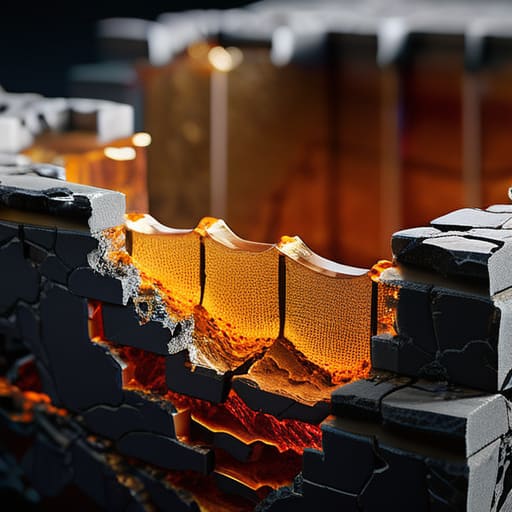
Stop chasing the “0 to 100%” range hype; real-world longevity is won or lost in how you manage the temperature and the depth of discharge during your daily routine.
Battery degradation isn’t a mystery—it’s just chemistry. Every time you push a cell to its physical limits, you’re essentially accelerating the irreversible breakdown of the internal structure.
We need to shift the conversation from how much energy a battery can hold today to how much it can reliably hold five years from now, because that’s the only metric that actually matters for sustainable mobility.
## The Reality Check
“We need to stop treating a battery like a gas tank that you just refill; it’s more like a biological organism that’s slowly aging from the very first time you plug it in. If we don’t respect the chemistry, the hardware will eventually stop respecting us.”
Desmond Achebe
The Bottom Line on Battery Longevity
At the end of the day, we have to stop treating battery life like some mysterious, inevitable countdown clock. We’ve looked at the math and the chemistry: degradation isn’t just a random occurrence; it’s a direct result of how we manage heat, how deep our discharge cycles go, and how much stress we put on the ions during rapid charging. If we keep ignoring the physical realities of lithium-ion chemistry in favor of chasing bigger, shinier range numbers, we’re just going to end up with a massive mountain of premature electronic waste. Understanding these cycles is the difference between a vehicle that lasts a decade and one that becomes a glorified paperweight in four years.
I’m not saying the road ahead is easy, but I am saying it’s worth the effort. The transition to a truly electric world won’t be won by the companies with the best marketing, but by the engineers who master sustainable energy density and smarter management systems. We have the data, and we have the hardware; now we just need the discipline to build things that actually last. I truly believe that once we move past the hype and focus on the real science of storage, we can build an infrastructure that doesn’t just power our lives, but actually preserves the planet for the people coming after us.
Frequently Asked Questions
If I only charge my EV to 80% most of the time, how much longer will my battery actually last compared to someone who hits 100% every night?
Look, it’s not just a placebo effect; the math actually backs you up. When you top off to 100%, you’re forcing the lithium ions into a high-voltage state that stresses the electrolyte and accelerates SEI layer growth. It’s like redlining an engine every single day. By capping it at 80%, you’re staying in that “sweet spot” of voltage stability. In real-world terms? You could easily add years of usable life to that pack before capacity hits the floor.
Are we actually getting closer to solid-state batteries that won't degrade like the lithium-ion tech we're stuck with right now?
Look, the hype is real, but we need to be careful about the “magic bullet” narrative. Solid-state is the holy grail because replacing that liquid electrolyte with a solid one theoretically stops the dendrite growth that kills our current cells. It’s like moving from a leaky sponge to a solid block of ice. We’re getting closer in the lab, sure, but scaling the manufacturing without breaking the bank is the real hurdle. It’s not a matter of if, but when the chemistry meets the factory floor.
When a battery finally hits its end-of-life for a car, is there a realistic way to repurpose it for grid storage, or is it just going to end up in a landfill?
Look, we aren’t just tossing these into landfills—at least, we shouldn’t be. Once a pack drops below 70-80% capacity, it’s “dead” for a high-performance EV, but it’s still a powerhouse for stationary storage. I’m talking about buffering solar loads or stabilizing the grid. It’s called second-life application. We just need the infrastructure to standardize the repackaging process so we aren’t stuck rebuilding every single module from scratch. It’s the ultimate way to squeeze value out of the chemistry.
