I remember sitting in my dorm at Georgia Tech, surrounded by half-disassembled lithium cells and the smell of burnt flux, staring at a data sheet that promised a range that simply didn’t exist in the real world. It’s frustrating because whenever I bring up the technical limitations of current energy density, people pivot to these polished marketing slogans about “freedom” and “limitless travel.” Let’s be real: electric vehicle range anxiety isn’t some phantom psychological glitch that can be cured with a better UI or a more optimistic dashboard display. It is a raw, unvarnished hardware problem rooted in the gap between theoretical chemistry and the actual thermal realities of long-distance driving.
I’m not here to sell you on the hype or tell you that every problem is solved by a software update. In this post, I’m stripping away the corporate greenwashing to look at the actual math behind the miles. We are going to dive into the real chemistry of degradation and the infrastructure bottlenecks that actually dictate your driving habits. My goal is to give you a grounded, data-driven perspective so you can stop worrying about the myths and start understanding the actual tech powering your future.
Table of Contents
Decoding Kilowatt Hour Efficiency and Real World Chemistry
When we talk about range, most people look at the odometer, but I’m looking at the kilowatt hour efficiency. It’s easy to get seduced by a manufacturer’s EPA estimate, but those numbers are often calculated in a vacuum. In the real world, your energy consumption is a moving target. If you’re fighting a headwind or pushing 80 mph on the interstate, your discharge rate is going to spike. You aren’t just moving a car; you’re managing a chemical reaction that is highly sensitive to load and temperature.
This is where the physics gets messy. One of the biggest variables I see in my data is winter driving range loss. When the ambient temperature drops, the internal resistance of the lithium-ion cells increases, making it harder for ions to move efficiently. You end up spending energy just to keep the battery at an operational temperature, let alone actually propelling the vehicle. We need to stop treating “range” as a static number and start treating it as a dynamic calculation of chemistry, climate, and kinetic energy management.
The Harsh Reality of Winter Driving Range Loss
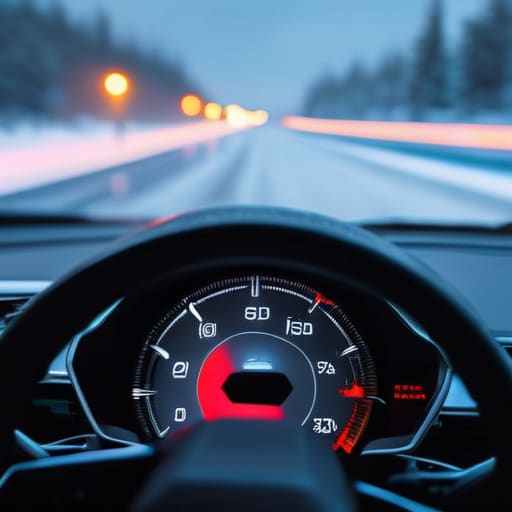
If you’ve ever seen a fellow EV driver staring blankly at a dashboard readout during a cold snap, you aren’t looking at a lack of willpower—you’re looking at physics in action. When the temperature drops, the internal resistance within the cells spikes, making it harder for ions to move through the electrolyte. This isn’t just a minor inconvenience; winter driving range loss can easily slash your usable capacity by 30% or more. It’s the same reason my vintage skateboard battery struggles to hold a charge when I’m riding through a damp, chilly morning.
The struggle isn’t just about the chemistry getting sluggish, though. You also have to factor in the massive energy drain from cabin heating. Unlike an internal combustion engine that uses “free” waste heat from the block, an EV has to actively pull power from the pack to keep you from freezing. This creates a double whammy: your cells are less efficient, and your primary consumer is hungrier than ever. If you aren’t factoring in aggressive thermal management during your electric vehicle trip planning, you’re going to end up stranded on the shoulder.
Tactical Moves to Stop Chasing Percentages
- Stop treating your battery like a smartphone; if you want to preserve the long-term health of your lithium-ion cells, try to keep your State of Charge (SoC) between 20% and 80% for daily commutes rather than constantly topping it off to 100%.
- Learn to read your regenerative braking settings like a pro, because maximizing that kinetic energy recovery is the difference between coasting into your driveway and watching your projected range plummet in stop-and-go traffic.
- Don’t fight the physics of thermodynamics—if you’re heading out on a long trip in the cold, pre-condition your cabin while the car is still plugged into the charger so you aren’t draining your precious kWh just to defrost the windshield.
- Map your route based on charger reliability and power output, not just proximity; there’s nothing worse than arriving at a “fast” charger only to realize it’s a crippled 7kW unit that’ll take half a day to juice you up.
- Keep an eye on your rolling resistance by maintaining proper tire pressure, because even a slight drop increases the energy required to overcome friction, effectively turning your high-efficiency EV into a less efficient heater for the road.
The Bottom Line: Moving Beyond the Range Myth
Range anxiety is a symptom, not the disease; the real issue lies in the mismatch between theoretical battery capacity and the actual chemical efficiency of cells under real-world stressors like temperature and discharge rates.
Stop obsessing over total miles and start looking at kWh/mile efficiency and charging infrastructure density, because a massive battery is useless if the grid can’t support the rapid throughput you need.
True progress won’t come from bigger, heavier battery packs that just add more mass to move, but from breakthroughs in solid-state chemistry and smarter thermal management systems that stabilize performance.
## The Infrastructure Mirage
“We need to stop treating range anxiety like it’s a mental health issue for drivers and start treating it like the engineering bottleneck it actually is. You can’t ‘mindset’ your way through a depleted lithium-ion pack when the local grid is lagging and the charging station is a ghost town.”
Desmond Achebe
The Long Game: Moving Beyond the Anxiety

At the end of the day, range anxiety isn’t something we can just “market” away with better apps or prettier dashboards. We’ve seen how the math breaks down when you factor in real-world chemistry—from the way lithium ions struggle in a freezing Georgia winter to the sheer efficiency loss when you’re pushing a high-capacity pack to its limits. It’s a multifaceted problem involving energy density, thermal management, and a charging grid that is still catching up to our ambitions. If we want to move past the era of gas guzzlers, we have to stop treating range as a psychological hurdle and start treating it as a fundamental engineering challenge that requires better hardware, not just better software.
I know it feels like we’re constantly chasing a moving target, but the progress being made in solid-state research and grid-scale storage gives me actual reason to be optimistic. We are currently in the “awkward teenage years” of the electric transition, where the tech is revolutionary but still unrefined. But once we bridge the gap between lab-scale breakthroughs and mass-market infrastructure, the concept of “range” will become a footnote rather than a barrier. We aren’t just building better cars; we are re-architecting how humanity moves, and that kind of shift is always messy before it’s truly transformative.
Frequently Asked Questions
If solid-state batteries actually hit the market, will they solve the range issue or just make the charging infrastructure even more obsolete?
Solid-state isn’t a magic wand that makes chargers disappear, but it changes the math entirely. If we swap liquid electrolytes for solid ones, we’re looking at much higher energy density—meaning more miles without a massive, heavy pack. It won’t make the infrastructure “obsolete,” but it will shift the demand from slow, trickle-style charging to high-speed, high-throughput stations. We won’t be sitting for an hour; we’ll be in and out like a gas station stop.
How much of my range loss is actually due to the battery's chemistry versus just the inefficiency of the thermal management system?
It’s a bit of both, but the thermal management system is usually the immediate culprit for that sudden drop in efficiency. Think of it like this: the chemistry is the engine, but the thermal management is the radiator. If your system is fighting to keep the cells in that “Goldilocks zone” (usually around 25-35°C), it’s burning energy just to keep the battery from dying. You’re losing range to the heater, not just the cold.
Is the push for faster DC fast-charging actually killing the long-term health of my battery through accelerated degradation?
The short answer? Yes, but it’s not a death sentence—it’s a trade-off. When you slam a massive amount of current into a cell, you’re essentially forcing ions through the electrolyte at high speeds, which generates heat and can cause lithium plating. Think of it like redlining an engine; you’ll get there faster, but you’re stressing the hardware. The goal isn’t to avoid fast charging entirely, but to understand that “fast” is a luxury that comes with a chemistry tax.
