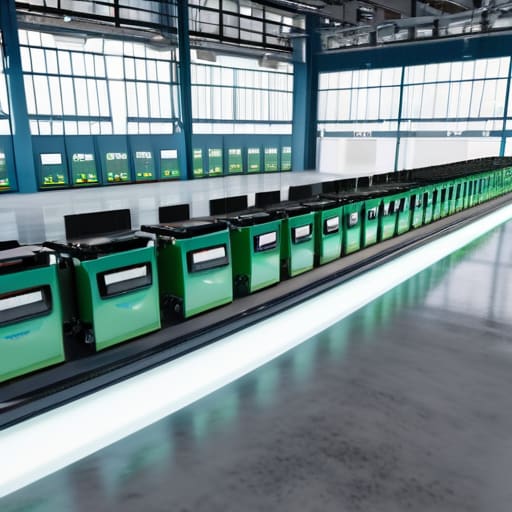
I remember sitting in a humid lab at Georgia Tech, staring at a lithium-ion cell that had been pulled from a test vehicle. It wasn’t “dead”—it just didn’t have the punch required to move a two-ton car at highway speeds anymore. But seeing the industry’s reaction to these cells felt like watching a massive waste of potential. There’s this persistent, annoying myth that once an EV battery drops below 80% capacity, it’s basically just expensive scrap metal waiting for a landfill. We keep hearing these glossy corporate slogans about circular economies, but most of the talk around second life batteries is just high-level fluff that ignores the actual hardware challenges.
I’m not here to sell you on a fairy tale or some vague “green” promise. I want to pull back the curtain on what happens when we actually try to repurpose this chemistry for grid storage or home backup. In this post, I’m going to break down the real technical hurdles of testing and integrating these modules, from degradation patterns to the sheer cost of the infrastructure needed to make it work. No marketing jargon—just the data and the reality of how we turn “spent” cells into something actually useful.
Table of Contents
Managing Lithium Ion Battery Degradation Without the Fluff

Look, we need to stop treating battery health like some mysterious black box. If you want to talk about lithium-ion battery degradation, you have to talk about the actual stressors: thermal runaway, depth of discharge, and those brutal fast-charging cycles that cook the internal chemistry. In my lab days at Georgia Tech, we saw firsthand how even a few degrees of temperature fluctuation could shave months off a cell’s effective life. It’s not just about how much juice is left; it’s about the structural integrity of the electrodes themselves.
If we’re going to make EV battery lifecycle management actually work, we have to move past the “set it and forget it” mentality. We can’t just hope the hardware lasts; we need smart, granular monitoring that tracks the SOH (State of Health) in real-time. When we transition these cells from a vehicle to stationary BESS applications, we aren’t just swapping one use case for another—we are essentially managing a controlled decay. We need to be surgical about how we monitor this decay so we don’t end up with a massive, expensive pile of hazardous waste before we’ve actually squeezed every possible kilowatt-hour out of the chemistry.
Why Ev Battery Lifecycle Management Is the True Metric
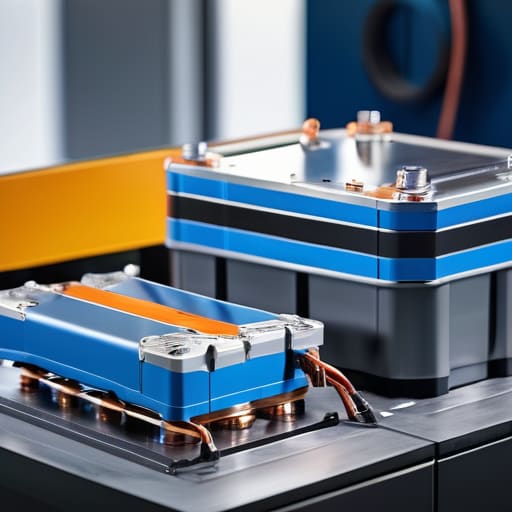
Look, everyone loves talking about the “wow” factor of a new EV, but as an analyst, I don’t care about the 0-60 time if the battery is a ticking clock of inefficiency. The real way to judge if a company is actually moving the needle is through EV battery lifecycle management. It’s easy to build a car that runs great for the first 30,000 miles, but the true test is how that cell behaves when it hits 70% of its original capacity. If we don’t have a roadmap for that decline, we’re just creating a massive pile of high-tech waste.
We need to stop treating batteries like disposable consumer electronics. If we want a genuine circular economy in the energy sector, we have to design for the “afterlife” from day one. This means the hardware needs to be modular and the data needs to be transparent. We shouldn’t be guessing when a pack is ready for a new job; we should know its exact state of health. To me, the metric of success isn’t just how much energy we can cram into a cell today, but how many times we can reuse that chemistry before it finally hits the recycling bin.
The Real-World Playbook for Repurposing EV Cells
- Stop looking at State of Health (SoH) as a binary. An EV battery is “dead” for a car when it hits 70-80% capacity, but for stationary storage, that’s still a massive amount of usable energy. We need to stop treating anything below 80% as scrap.
- Prioritize modularity in the design phase. If we want to actually reuse these cells, we can’t have them encased in proprietary, unopenable resin blocks. We need standardized architectures that allow us to pull out healthy modules without a surgical team.
- Build the BMS (Battery Management System) for the second act before the first one ends. You can’t just slap an old Tesla module into a solar backup system and hope for the best; you need a controller that understands the specific degradation profile of those specific cells.
- Focus on “low-stress” applications. Second-life batteries shouldn’t be used for high-drain, rapid-discharge scenarios like powering a heavy industrial motor. They are best suited for slow, steady tasks like grid stabilization or residential solar buffering where the thermal stress is minimal.
- Don’t ignore the supply chain for the “re-life” process. Repurposing is only sustainable if the logistics of collecting, testing, and re-certifying these packs don’t end up costing more carbon than just mining new lithium. We need a closed-loop logistics system, not just a recycling one.
The Bottom Line: Moving Beyond the Hype
Stop treating “end-of-life” as a single event; a battery’s value doesn’t vanish just because its capacity has dropped below the threshold for an EV.
True sustainability isn’t just about making better cells, it’s about building the actual grid-scale infrastructure to catch those second-life cells and put them to work.
We have to move past the corporate greenwashing and focus on the hardware—if we don’t solve the repurposing math now, we’re just creating a massive future waste problem.
The Real Math of Battery Longevity
“We need to stop treating an EV battery like a disposable consumer gadget. Just because a cell has dropped to 80% capacity doesn’t mean it’s trash; it just means it’s graduated from the highway to the grid. If we don’t build the infrastructure to catch that chemistry before it hits a landfill, we aren’t actually building a sustainable future—we’re just delaying a massive waste crisis.”
Desmond Achebe
The Real Path Forward

Look, we’ve spent enough time talking about the theoretical benefits of second-life batteries. We’ve looked at the degradation curves and the reality of how much capacity is actually left when an EV hits the end of its road. The takeaway is simple: we cannot treat these cells like disposable single-use plastics. If we want to claim the electric transition is actually “green,” we have to move past the hype and build the physical infrastructure required to transition these modules from high-performance vehicles into stationary grid storage. It’s about maximizing the energy density ROI of every single gram of lithium we pull out of the ground.
I’m not interested in corporate press releases that promise a circular economy without showing the math. I want to see the standardized testing protocols and the repurposed arrays actually stabilizing our local grids. The tech is there, and the chemistry is ready; what we’re missing is the systemic will to stop treating battery life as a linear path to a landfill. If we get this right, we aren’t just building better cars—we’re building a resilient, decentralized energy backbone for the next century. Let’s stop chasing the shiny new object and start making the most of the hardware we already have.
Frequently Asked Questions
If an EV battery is "spent" for driving, how do we actually know if the internal chemistry is still stable enough to be used for home storage without being a fire hazard?
That’s the million-dollar question. We can’t just guess. To avoid turning a home into a bonfire, we rely on Electrochemical Impedance Spectroscopy (EIS). Think of it like a medical stress test for cells; we send small AC signals through the battery to measure internal resistance and charge transfer. If the internal chemistry shows high impedance or unpredictable voltage swings, it’s unstable. If the data doesn’t clear that threshold, that pack goes straight to recycling, not your garage.
Is the cost of testing and refurbishing these old cells actually lower than just buying new, cheap LFP stationary storage?
Honestly? Right now, it’s a massive headache. If you’re just looking at the raw $/kWh of a brand-new LFP cell, the new stuff wins on paper. But that’s a shallow metric. When you factor in the specialized testing rigs, the labor to disassemble packs, and the certification needed to ensure they won’t catch fire, the “savings” evaporate. We aren’t just buying cells; we’re buying the cost of verifying they aren’t junk. Until we scale automated testing, new LFP is the pragmatic winner.
Who is going to own the liability when a repurposed battery bank fails—the original car manufacturer or the company that integrated it into the grid?
That’s the million-dollar question, and honestly, it’s a legal minefield. Right now, there’s no standard playbook. If a repurposed pack fails, the manufacturer will point to the fact that the battery is out of its original warranty and “misused” in a new application. That leaves the integration company holding the bag. Until we codify clear liability hand-offs for second-life assets, the companies taking the risk are going to be playing a very dangerous game.
