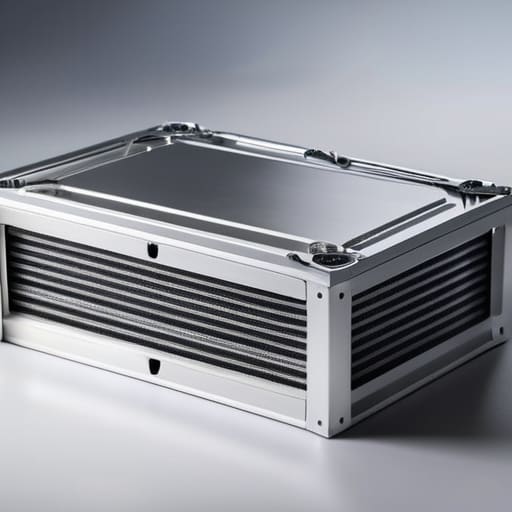
I still remember the smell of scorched electrolyte in my junior year lab at Georgia Tech—a sharp, metallic tang that lingers in your nose long after the fire suppression system kicks in. I was staring at a prototype that looked perfect on a CAD model, but the moment we pushed the thermal load, the housing buckled like a soda can under a boot. It was a brutal lesson in why most corporate whitepapers treat battery enclosure design as an afterthought or a simple “box” problem. Everyone wants to talk about energy density and fancy solid-state breakthroughs, but they completely ignore the mechanical reality of how these cells actually behave when things get hot.
I’m not here to sell you on the marketing gloss or the “future of mobility” slogans that don’t mean anything without structural integrity. Instead, I want to get into the weeds of how we actually build hardware that lasts. We’re going to strip away the hype and look at the real-world engineering required to balance thermal management, crashworthiness, and weight. If we want this transition to be more than just a trend, we need to start designing enclosures that respect the chemistry inside them.
Table of Contents
- Material Selection for Battery Casings Beyond the Vague Promises
- Crushing the Hype Engineering Crashworthiness in Battery Packs
- The Real-World Checklist: Designing for Longevity, Not Just the Spec Sheet
- The Bottom Line: Real-World Engineering Over Marketing Fluff
- ## The Real Cost of Cutting Corners
- The Bottom Line on Battery Enclosures
- Frequently Asked Questions
Material Selection for Battery Casings Beyond the Vague Promises

When companies talk about “sustainable materials,” they usually mean they’ve swapped a bit of plastic for recycled aluminum and called it a day. But if we’re being real, material selection for battery casings isn’t just a checkbox for a CSR report; it’s a high-stakes engineering trade-off between weight, cost, and safety. If you go too heavy with steel to ensure maximum crashworthiness in battery packs, you’re killing the vehicle’s range and making the whole EV transition harder to sell to the average consumer. On the flip side, if you go too light with unoptimized composites, you’re inviting disaster.
We need to look at how these materials behave when things actually go wrong. A casing isn’t just a box; it’s a thermal barrier. If we don’t prioritize thermal runaway mitigation during the initial design phase, we’re basically building high-tech ovens. I’ve seen too many “innovative” designs that look great on a CAD render but fail to account for how heat propagates through the housing during a cell failure. We need materials that handle the heat, shield the electronics, and actually survive a decade of road salt and vibration.
Crushing the Hype Engineering Crashworthiness in Battery Packs
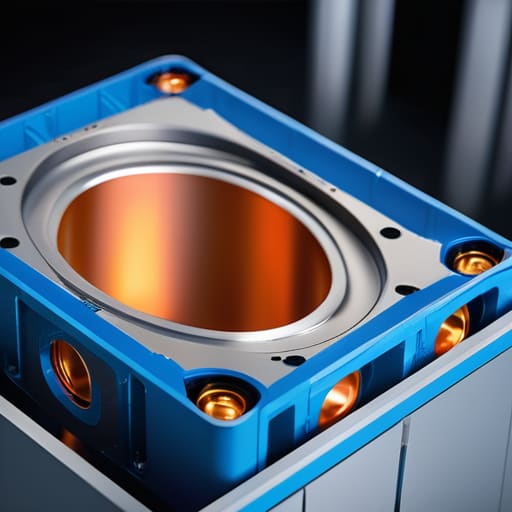
Let’s be real: a battery pack that can’t survive a fender bender isn’t just a bad product; it’s a liability. When we talk about crashworthiness in battery packs, the industry loves to hide behind pretty CAD models, but the physics don’t care about your aesthetics. If a vehicle takes a side-impact hit, the enclosure has to do more than just stay intact; it has to prevent the internal cells from being crushed or deformed. Once you compromise that internal geometry, you’re essentially inviting a catastrophic failure.
This is where the real engineering happens. It’s not just about making a “strong box.” We have to design for thermal runaway mitigation by ensuring that even if one module is compromised during a collision, the enclosure architecture prevents that heat from cascading through the entire pack. We’re talking about managing massive kinetic energy while simultaneously protecting the delicate chemical balance inside. If we don’t get the structural integrity right from day one, all the high-density chemistry in the world won’t matter once the hardware hits the pavement.
The Real-World Checklist: Designing for Longevity, Not Just the Spec Sheet
- Stop treating thermal management as an afterthought. If your enclosure doesn’t facilitate uniform heat dissipation across the cells, you’re essentially building a slow-motion thermal runaway trap. You need to design the housing with integrated cooling channels that account for the specific heat signatures of the chemistry inside, not just a generic cooling loop.
- Prioritize modularity over “sleek” integrated designs. When a single module fails in a massive, monolithic pack, the whole thing becomes expensive e-waste. I’d much rather see an enclosure that allows for easy cell-level serviceability; it’s the only way we’re going to make high-density storage actually sustainable in the long run.
- Watch your ingress protection (IP) ratings like a hawk. It’s easy to design a sealed box that looks good on a CAD model, but real-world vibration and thermal cycling will find every single microscopic gap in your seals. If road salt or moisture gets into that enclosure, it doesn’t matter how good your chemistry is—your pack is dead.
- Account for the “breathing” of the pack. As batteries charge and discharge, they physically expand and contract. If your enclosure is too rigid and doesn’t allow for that volumetric change, you’re going to end up with mechanical stress that degrades the cells or, worse, cracks your mounting points.
- Design for the end of life, not just the first mile. We need to move away from using permanent adhesives that make recycling impossible. If I can’t get into the enclosure to recover the high-value materials once the cells hit their cycle limit, then we haven’t actually solved the sustainability problem—we’ve just delayed it.
The Bottom Line: Real-World Engineering Over Marketing Fluff
Stop treating the enclosure as just a protective box; it’s a critical thermal and structural component that dictates whether the chemistry inside survives or fails.
Material selection has to balance weight and durability with actual sustainability, because a “green” EV is a lie if the battery casing is impossible to recycle.
Safety isn’t a checkbox for a slide deck—it’s about designing for the chaotic, high-impact reality of the road, not just the controlled environment of a lab.
## The Real Cost of Cutting Corners
“If we keep treating battery enclosures like glorified metal boxes instead of critical thermal and structural interfaces, we’re just building expensive paperweights that’ll fail the second they hit real-world stress.”
Desmond Achebe
The Bottom Line on Battery Enclosures
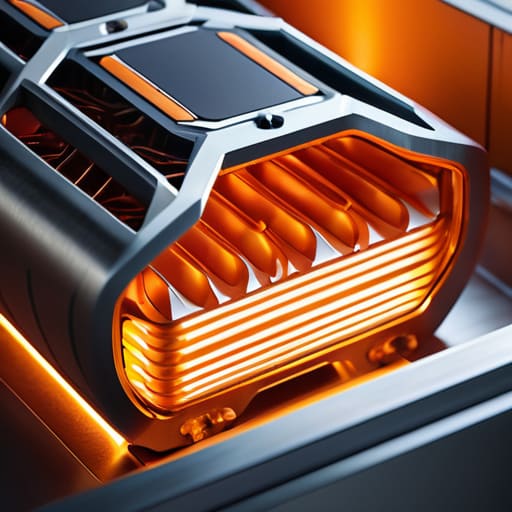
At the end of the day, designing a battery enclosure isn’t just about picking a shiny new alloy or checking a box for crash safety standards. It’s a delicate balancing act between thermal management, structural integrity, and the brutal reality of material lifecycles. We’ve talked about why we can’t just throw any old metal at the problem and why we need to engineer for real-world mechanical stress rather than just theoretical models. If we ignore the chemistry inside or the way these packs actually age under thermal load, we’re just building expensive paperweights that will end up in a landfill before they’ve even hit their halfway point. We have to get the hardware foundation right if we want the software promises to mean anything.
We are standing at the edge of a massive shift in how the world moves, but that transition won’t be won by marketing departments or flashy concept cars. It’ll be won by the engineers who obsess over the small stuff—the seals, the cooling channels, and the structural housing that keeps a cell stable during a collision. I’m tired of seeing companies prioritize “lightweighting” at the expense of long-term durability. If we want a future where electric mobility is truly ubiquitous, we need to build it on a bedrock of rugged, sustainable engineering. Let’s stop chasing the hype and start building the gear that actually lasts.
Frequently Asked Questions
How do we balance the need for heavy-duty crash protection with the massive weight penalty that kills EV range?
It’s the ultimate engineering headache: the “weight spiral.” If you beef up the enclosure to survive a side-impact, you add mass, which demands more battery, which adds more mass. To break the cycle, we have to move away from just adding thicker steel. I’m looking at multi-functional structures—think high-strength aluminum extrusions or even carbon-fiber composites that act as both the protective cage and a structural part of the chassis. We need smart geometry, not just brute force.
If we switch to solid-state cells, does the enclosure design actually change, or are we just solving for the same thermal management issues?
It’s a common misconception that solid-state is a “magic bullet” for everything. While you’ll likely see a shift in thermal management—since we’re ditching the volatile liquid electrolytes that demand such aggressive cooling—the enclosure design definitely changes. You’re moving from managing thermal runaway risks to managing mechanical pressure. Solid-state cells often require high stack pressure to maintain contact between layers. So, we aren’t just solving the same old heat problems; we’re re-engineering for structural integrity.
How much of the current cost spike in battery packs is due to over-engineering the casing instead of optimizing the actual chemistry?
Honestly, we’re seeing a massive amount of “safety padding” that’s driving up costs. A lot of OEMs are over-engineering these enclosures with heavy, expensive alloys just to meet basic crash specs, rather than using smarter, integrated structural designs. It’s easier to throw more metal at a problem than to actually engineer a lightweight, optimized housing. We’re essentially paying a premium for dead weight that doesn’t even improve energy density—it just eats into the margins.
