I remember sitting in a cramped lab at Georgia Tech, surrounded by the smell of ozone and overheated solder, staring at a data sheet that promised “revolutionary” performance. The marketing fluff said one thing, but the actual thermal loss in the copper windings said another. It’s the same thing I see now with the industry’s obsession with flashy infotainment screens while we ignore the real math. Everyone wants to talk about how fast an EV can go from 0 to 60, but nobody wants to talk about the actual ev motor efficiency that dictates whether you’re actually getting the range you paid for or just driving a glorified, expensive heater.
I’m not here to sell you on the “green dream” or repeat the polished talking points you’ll hear in a corporate keynote. My goal is to strip away the marketing gloss and look at the actual hardware that determines how much energy we’re wasting every time we hit the pedal. I’m going to break down the physics of heat loss, magnetic drag, and why the most efficient motor isn’t always the one with the biggest battery. We’re going to look at the real engineering that matters if we ever want electric mobility to be more than just a luxury niche.
Table of Contents
- Permanent Magnet vs Induction Motors Sorting Fact From Fiction
- The Hidden Cost of Torque Density and Energy Loss
- Cutting the Waste: How to Actually Optimize an EV Powertrain
- The Bottom Line: What Actually Matters for the Next Decade of EVs
- ## The Real Metric of Progress
- The Bottom Line on Efficiency
- Frequently Asked Questions
Permanent Magnet vs Induction Motors Sorting Fact From Fiction
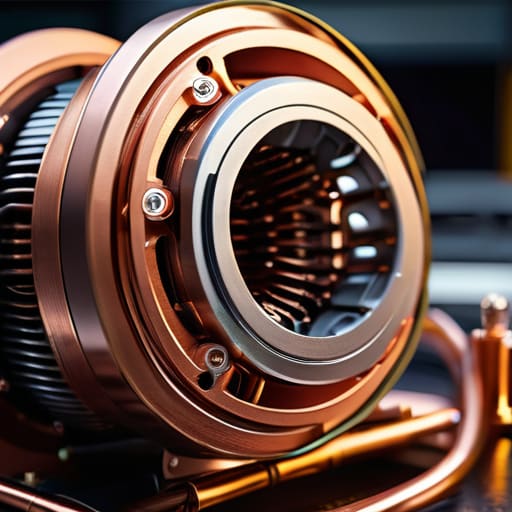
You’ll see a lot of debate online about permanent magnet vs induction motors, and most of it is just marketing fluff. Here’s the reality: it’s a trade-off between raw performance and long-term sustainability. Permanent magnet motors are the heavy hitters when it comes to torque density and energy loss; they’re incredibly efficient because they don’t need to run current through the rotor to create a magnetic field. This makes them perfect for city driving where you want that instant punch. But there’s a catch—they rely on rare-earth elements that are a nightmare for the supply chain and environmental ethics.
Induction motors, on the other hand, are the workhorses of the “keep it simple” crowd. They don’t need those controversial magnets, which makes them easier to recycle and cheaper to source. The downside? They tend to run hotter, meaning you have to get way more aggressive with your thermal management in electric motors to keep them from losing efficiency as they heat up. If we’re actually serious about a sustainable transition, we can’t just pick the most efficient option on paper; we have to pick the one that doesn’t wreck the planet just to get us from A to B.
The Hidden Cost of Torque Density and Energy Loss
Here’s the reality: engineers are constantly chasing higher torque density, trying to cram as much grunt as possible into the smallest footprint. On paper, a compact motor that can launch a heavy EV from zero to sixty in three seconds looks like a win. But in the lab, we see the trade-off immediately. When you push for that level of power density, you’re essentially creating a localized furnace. If the thermal management in electric motors isn’t top-tier, that heat doesn’t just sit there; it actively fights your efficiency, turning precious electrons into wasted ambient heat.
It’s a delicate balancing act between raw performance and actual range. If you design a motor that’s optimized solely for high-torque bursts, you’re likely going to see a massive spike in energy loss during steady-state cruising. We also can’t ignore how these fluctuations impact the rest of the powertrain. High-demand spikes directly affect battery discharge rates and motor load, meaning a motor that’s too “aggressive” might actually be shortening the effective life of your cells. We need to stop designing for the 0-60 sprint and start designing for the thousand-mile reality.
Cutting the Waste: How to Actually Optimize an EV Powertrain
- Stop ignoring thermal management. If your motor gets too hot, resistance spikes, and you’re basically just turning your battery’s hard-earned electrons into useless heat instead of kinetic energy.
- Prioritize wide-bandgap semiconductors. Swapping out standard silicon for Silicon Carbide (SiC) in your inverters is one of the fastest ways to slash switching losses and keep more juice in the pack.
- Map your efficiency islands. Most people think a motor is “efficient” as a blanket statement, but you need to tune the control algorithms so the motor hits its sweet spot during the driving cycles people actually use, not just some theoretical lab test.
- Watch the parasitic loads. There is zero point in having a hyper-efficient motor if your auxiliary systems—like heavy-duty cooling pumps or inefficient DC-DC converters—are constantly bleeding the system dry.
- Optimize the gear ratio for real-world physics. A single-speed reduction is great for simplicity, but if the ratio is off, you’re forcing the motor to operate in a high-RPM, low-efficiency zone just to maintain highway speeds.
The Bottom Line: What Actually Matters for the Next Decade of EVs
Stop chasing top-line horsepower numbers; true efficiency is found in minimizing heat loss and maximizing the energy density of the motor-inverter package.
The debate between permanent magnet and induction motors isn’t about which is “better,” but about whether you’re prioritizing raw efficiency or the ethical sourcing of rare earth minerals.
Real progress in electric mobility won’t come from better marketing, but from optimizing the thermal management systems that keep these motors from wasting energy as useless heat.
## The Real Metric of Progress
“We keep obsessing over how fast an EV can hit sixty, but if we’re burning through half our battery just to manage heat and electromagnetic drag, we’re not actually building a revolution—we’re just building a more expensive way to waste energy.”
Desmond Achebe
The Bottom Line on Efficiency
At the end of the day, maximizing EV motor efficiency isn’t just about picking the “best” motor type; it’s a constant tug-of-war between magnetic performance and thermal management. We’ve seen how permanent magnet motors dominate when you need that instant torque, but we can’t ignore the massive resource footprint and the efficiency losses that happen when you’re fighting heat. Whether it’s the clever engineering of induction motors or the struggle to maintain high torque density without turning your battery into a heater, the reality is that every single watt counts. If we aren’t optimizing the hardware at a granular level, we’re just building expensive paperweights that fail to deliver on their environmental promises.
I’m tired of seeing manufacturers treat efficiency like a marketing buzzword they can just slap on a spec sheet. True progress isn’t going to come from a slightly more aerodynamic chassis or a prettier dashboard; it’s going to come from the engineers who refuse to compromise on the actual physics of energy conversion. We are standing at the edge of a total grid transformation, and if we want it to stick, we need hardware that is as resilient as it is efficient. Let’s stop settling for “good enough” and start demanding the kind of technical excellence that actually powers a sustainable future.
Frequently Asked Questions
If we're moving away from permanent magnets to avoid rare-earth issues, how much range am I actually going to lose in the real world?
Look, here’s the reality: if you swap a permanent magnet motor for an induction setup to dodge those rare-earth supply chain headaches, you’re going to see a hit. Realistically, expect a 5% to 10% drop in efficiency, which translates directly to less range per charge. It’s a trade-off between ethical sourcing and raw performance. We aren’t just losing miles; we’re losing the ability to keep the motor “on” without constant drag.
Does the thermal management system actually impact motor efficiency, or is it just a way for manufacturers to add more expensive hardware?
Look, it’s definitely not just a way for OEMs to pad their margins. If you let a motor run too hot, you’re basically fighting a losing battle against physics. Heat increases electrical resistance in the copper windings, which means you’re burning more energy just to maintain the same output. It’s like trying to run a marathon in a sauna; your efficiency tanks. Proper thermal management keeps the motor in its “sweet spot,” ensuring we aren’t just wasting juice as heat.
At what point does the energy cost of manufacturing a high-efficiency motor outweigh the actual electricity savings I'll see over the car's lifespan?
It’s the classic engineering trade-off: the “embodied energy” vs. operational gain. If you’re chasing a 2% efficiency bump by using rare-earth magnets or exotic cooling systems, you might actually end up in the red. To break even, that extra efficiency has to offset the massive carbon footprint of mining and refining those materials. For most consumer EVs, if the manufacturing complexity adds more than a few hundred kilograms of CO2 equivalent, the math just doesn’t pencil out.
