
I still remember sitting in a humid lab at Georgia Tech, staring at a lithium-ion cell that had basically turned into a paperweight because of one tiny thermal management oversight. It was a brutal lesson in how much the industry loves to talk about “revolutionary range” while completely ignoring the actual engineering required to keep those cells alive. Everyone is obsessed with how far a car can go on a single charge, but if we don’t get the fundamental electric vehicle battery pack design right, we’re just building high-tech junk that ends up in a landfill in five years. We need to stop chasing marketing numbers and start focusing on how these packs actually behave under stress.
I’m not here to sell you on the latest corporate greenwashing or some vague promise of a “solid-state future” that’s always ten years away. Instead, I want to pull back the curtain on the hardware itself—the cooling loops, the cell-to-pack architecture, and the real chemistry that dictates whether a battery is a sustainable asset or a massive liability. My goal is to give you a pragmatic, data-driven look at what makes a battery pack truly efficient and, more importantly, actually sustainable for the long haul.
Table of Contents
- Mastering Battery Energy Density Optimization and Real Chemistry
- Structural Battery Pack Engineering Beyond the Marketing Hype
- The Real-World Checklist for Designing a Pack That Actually Lasts
- The Bottom Line: What Actually Matters for the Next Decade of EVs
- ## The Real Bottleneck
- The Real Road Ahead
- Frequently Asked Questions
Mastering Battery Energy Density Optimization and Real Chemistry
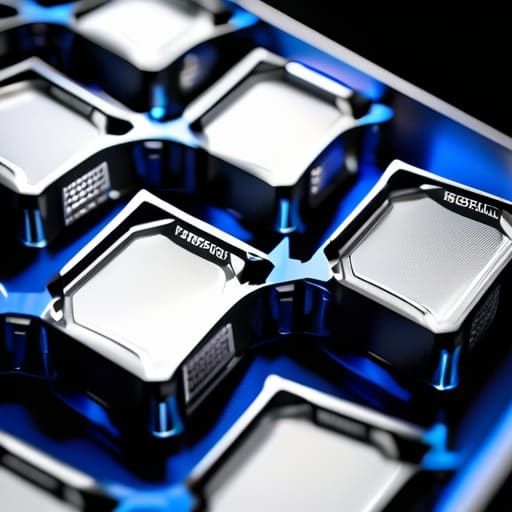
When we talk about pushing the limits of range, we’re really talking about a brutal tug-of-war between chemistry and physics. Most people think you just cram more cells into a box, but that’s a rookie mistake. If you ignore battery energy density optimization, you end up with a massive, heavy brick that kills your efficiency. I spent way too many late nights in the Georgia Tech labs realizing that the real magic isn’t just about the cathode chemistry; it’s about how much “dead weight”—like heavy modules and redundant housing—we can strip away.
This is where we see the shift toward cell-to-pack technology trends actually making sense. By eliminating the intermediate module layer, we can pack cells tighter and use the battery structure itself to handle mechanical loads. But there’s a massive catch: the more tightly you pack those cells, the more you’re playing with fire. You can’t just ignore the heat. If your cooling loops aren’t perfectly integrated, you’ll see rapid degradation or, worse, thermal runaway. It’s a high-stakes balancing act between maximum energy density and long-term thermal stability.
Structural Battery Pack Engineering Beyond the Marketing Hype
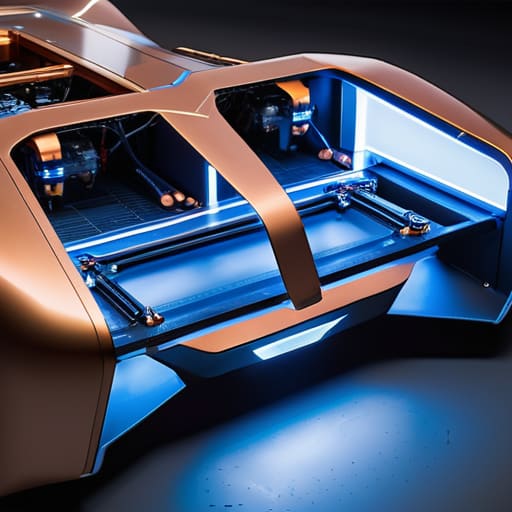
Here’s the thing: most car manufacturers treat the battery pack like a heavy suitcase they’re just shoving into the chassis. That’s old-school thinking, and it’s incredibly inefficient. If we want to maximize every single kilowatt-hour, we have to stop treating the battery as dead weight and start treating it as a load-bearing component. This is where structural battery pack engineering actually matters. By integrating the cells directly into the vehicle’s framework, we can slash the total mass of the car, which is a massive win for efficiency.
But don’t let the sleek marketing fool you; this isn’t just about saving weight. When you move toward cell-to-pack technology trends, you’re fundamentally changing how the vehicle handles stress and heat. You can’t just cram cells together and hope for the best; you have to account for the fact that these components are now part of the car’s skeleton. If the structural integrity fails or the thermal load isn’t perfectly distributed, the whole system becomes a liability. We need to move past the “range at any cost” mindset and focus on building hardware that is actually robust enough to survive a decade of real-world abuse.
The Real-World Checklist for Designing a Pack That Actually Lasts
- Prioritize Thermal Management over Peak Power. Everyone wants to talk about 0-60 times, but if your cooling channels aren’t precision-engineered to prevent localized hot spots, you’re just cooking your cells. A pack that can’t maintain a uniform temperature is a pack that’s destined for premature degradation.
- Stop Ignoring Cell-to-Pack (CTP) Integration. We need to move past the era of heavy, redundant modules. If we want to hit the density targets that actually make EVs affordable, we have to rethink how cells sit in the chassis. Less dead space means more energy per kilogram, period.
- Design for Disassembly, Not Just Assembly. This is where the industry is failing. If a single faulty cell or a blown BMS component requires a specialized team and a sledgehammer to replace, the design is a failure. We need modularity that allows for easy repair and, more importantly, easy recycling at the end of life.
- Optimize the Busbar Geometry for Vibration. I’ve seen too many designs that look great on a CAD screen but fall apart on a real road. The electrical connections between cells need to handle constant micro-vibrations without creating resistance spikes or mechanical fatigue.
- Implement Robust BMS Logic, Not Just Voltage Monitoring. A Battery Management System shouldn’t just be a glorified voltmeter. It needs to be smart enough to predict state-of-health (SoH) trends by analyzing impedance shifts, rather than just reacting when a cell hits a critical low.
The Bottom Line: What Actually Matters for the Next Decade of EVs
Forget the “range anxiety” marketing; the real battle is being won in the lab by engineers solving cell-to-pack integration and minimizing parasitic mass.
Sustainability isn’t a buzzword you can slap on a brochure—if we don’t solve the lifecycle chemistry and mineral sourcing issues now, we’re just trading one environmental crisis for another.
True innovation won’t come from just making bigger batteries, but from smarter thermal management and structural designs that turn the battery pack from a heavy passenger into a functional part of the vehicle’s chassis.
## The Real Bottleneck
“We need to stop treating battery packs like black boxes that just magically provide range; if we don’t solve the thermal management and cell-to-pack integration issues now, we’re just building expensive, heavy paperweights that won’t survive the decade.”
Desmond Achebe
The Real Road Ahead

At the end of the day, designing a world-class battery pack isn’t just about slapping more cells into a bigger box to chase a range number. We’ve looked at how optimizing energy density requires a deep dive into the actual molecular stability of the chemistry, and how structural integration is the only way to stop treating the battery as a heavy, dead weight. If we keep ignoring the trade-offs between thermal management, cycle life, and structural integrity, we’re just building expensive paperweights. To make this transition stick, we have to solve the engineering bottlenecks that currently prevent these packs from being truly sustainable and long-lasting.
I know it’s easy to get lost in the corporate press releases promising “miracle” solid-state breakthroughs next year, but the real revolution is happening in the grit of the hardware. It’s in the cooling loops, the cell-to-pack architectures, and the way we manage degradation over a decade of use. We are still in the early innings of this energy transition, and while the road is messy, the potential is massive. If we focus on the hard physics and the real-world chemistry instead of the marketing fluff, we won’t just build better cars—we’ll build a reliable, electrified foundation for everything that comes next.
Frequently Asked Questions
How do we actually scale solid-state tech without the manufacturing costs becoming totally ridiculous?
That’s the billion-dollar question. Right now, solid-state is basically a boutique tech—it works great in a lab, but scaling it is a manufacturing nightmare because of the extreme pressure and precision required during assembly. To avoid ridiculous costs, we can’t just build bigger versions of current lines; we need to pivot toward roll-to-roll manufacturing processes, similar to how we print newspapers. If we can’t move away from batch processing, solid-state stays a luxury toy.
When we talk about "sustainable" packs, how much of that is real chemistry versus just clever recycling marketing?
Honestly? A lot of it is clever marketing. Companies love slapping a “sustainable” label on a pack just because they have a roadmap for recycling by 2035. But real sustainability happens at the molecular level right now. If we aren’t actively reducing cobalt dependency or engineering cathodes that don’t degrade after 500 cycles, we’re just delaying the landfill problem. We need to stop celebrating “recyclable” goals and start demanding better chemistry today.
If we're moving toward cell-to-pack designs to save weight, what does that actually do to the long-term repairability of the vehicle?
Honestly? It’s a nightmare for repairability. By cutting out the module layer to save weight and boost density, we’re essentially turning the battery into a single, monolithic block. If one cell goes rogue or develops a dendrite issue, you can’t just swap a module like you used to. You’re often looking at replacing the entire pack. It’s great for efficiency on paper, but it’s a massive step backward for the circular economy.
