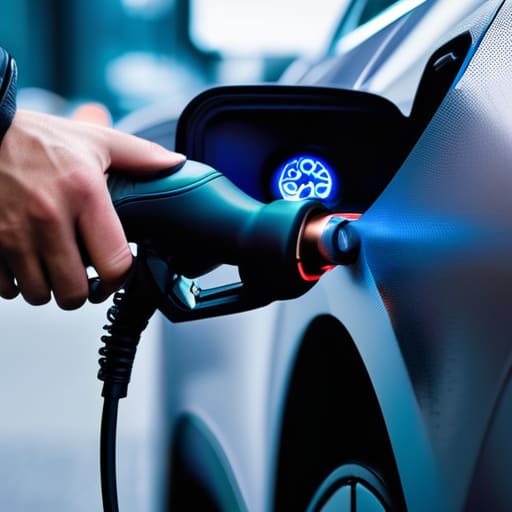
I remember sitting in a Georgia Tech lab at 2:00 AM, staring at a degradation curve that looked like a cliff face, realizing that all the fancy software in the world couldn’t fix a battery being abused by a driver who didn’t understand the basics. We talk endlessly about range anxiety and charger availability, but we’re missing the most critical variable in the entire equation: ev charging behavior. People treat these cars like gas tanks that just happen to have a cord, completely ignoring how their personal habits—like letting a cell sit at 100% in a hot parking lot or slamming a DC fast charger every single day—are actually killing the chemistry that makes this transition possible.
I’m not here to give you a corporate brochure or a list of “top ten tips” written by a marketing intern. I want to talk about the actual physics of how you interact with your vehicle. In this post, I’m breaking down the real-world data on how your daily routines impact long-term cell health and grid stability. We’re going to look past the hype and get into the practical hardware realities of how you charge, so you can actually get the most out of your tech without burning through your battery’s lifecycle.
Table of Contents
- Decoding Ev Driver Psychology the Battle Between Convenience and Chemistry
- Residential vs Public Charging Usage Where the Real Degradation Happens
- Stop Treating Your Battery Like a Bottomless Pit: 5 Real-World Rules for Longevity
- The Bottom Line: Stop Chasing Percentages and Start Managing Heat
- The Myth of the 'Perfect' Charge
- The Real Road Ahead
- Frequently Asked Questions
Decoding Ev Driver Psychology the Battle Between Convenience and Chemistry
Here’s the reality: most people don’t think about ion migration or thermal management when they plug in; they just want to know if they have enough juice to get to work tomorrow. This gap between technical necessity and human habit is where EV driver psychology gets messy. We see this constantly in the data—drivers tend to treat their vehicles like gas cars, seeking out the most immediate, high-speed fix rather than the most efficient one. It’s a mental shortcut that prioritizes instant gratification over the long-term health of the cells.
When we look at residential vs public charging usage, a clear pattern emerges. People are naturally inclined to “top off” whenever possible, which sounds fine on paper but creates massive, unpredictable spikes in load. If we want to achieve true smart charging optimization, we have to design systems that account for this human desire for convenience. We can’t just build better batteries; we have to build interfaces that nudge people toward better habits without making it feel like a chore.
Residential vs Public Charging Usage Where the Real Degradation Happens
When we look at residential vs public charging usage, we aren’t just talking about convenience; we’re talking about the electrochemical health of the cell. Most people treat their home charger like a slow, steady drip—which is actually ideal. Charging overnight at a low amperage is the “gentle workout” for a battery, minimizing heat buildup and keeping the lithium ions from getting too agitated. This is where the real longevity is built.
Public charging, on the other hand, is a different beast entirely. When you’re hitting a DC fast charger on a road trip, you’re essentially forcing high-voltage current through the system to minimize downtime. While the infrastructure is getting better, these high-rate sessions are basically stress tests for the battery’s thermal management. If we don’t lean into smart charging optimization to balance these high-intensity bursts with steady residential cycles, we’re going to see premature capacity fade. It’s a delicate dance between the urgency of the driver and the physical limits of the chemistry inside the pack.
Stop Treating Your Battery Like a Bottomless Pit: 5 Real-World Rules for Longevity
- Respect the 20-80 Rule. I know, it’s a pain to constantly monitor your SoC, but pushing your cells to a 100% state of charge—especially on a DC fast charger—is basically like redlining an engine for hours. If you want that capacity to actually be there in five years, try to keep your daily buffer within that sweet spot.
- Chill on the “Panic Charging” sessions. We’ve all been there, staring at a 5% reading and sprinting to the nearest Level 3 station. But slamming high-voltage current into a cold, low battery causes massive lithium plating. If you can, give the car a few minutes to warm up or drive a bit before you hit the ultra-fast chargers.
- Stop the “Charge-to-Full” habit at home. If you’re plugging in every night just to hit 100% because it feels “safe,” you’re actually accelerating chemical degradation. Set your home charger to an 80% limit for your daily commute; save the full soak for those long weekend trips.
- Mind the thermal soak. Charging generates heat, and heat is the absolute enemy of battery chemistry. If you’ve just finished a high-speed highway run, give your car a moment to settle before you plug into a high-output charger. Let the thermal management system do its job before you add more stress.
- Don’t ignore the “Slow and Steady” option. We’re obsessed with charging speeds, but Level 2 AC charging is the unsung hero of battery health. It’s much easier on the internal resistance of the cells. If you have the option to charge overnight at home rather than hitting a public charger every single day, take it—your battery (and your wallet) will thank you.
The Bottom Line: Stop Chasing Percentages and Start Managing Heat
Stop treating your battery like a smartphone; constant “top-offs” to 100% or draining to zero might feel convenient, but you’re essentially forcing the lithium ions into a stressful, high-wear cycle that kills long-term capacity.
The real enemy isn’t just mileage, it’s thermal management—relying exclusively on high-speed DC fast chargers is the quickest way to bake your cells and accelerate degradation through heat soak.
For a sustainable grid and a long-lasting car, we need to shift our mindset toward “smart” residential charging, using slow, overnight AC sessions to maintain chemical stability rather than treating every public charger like a life raft.
The Myth of the 'Perfect' Charge
“We need to stop pretending that every charging session is a clean data point on a spreadsheet. In reality, it’s a constant tug-of-war between a driver’s frantic schedule and the delicate electrochemical limits of the battery; if we don’t start accounting for these human-driven spikes in demand, our projections for grid stability are basically just wishful thinking.”
Desmond Achebe
The Real Road Ahead
At the end of the day, we have to stop looking at EV charging as just a convenience and start seeing it as a complex dance between human habit and electrochemical limits. Whether it’s the slow, steady trickle of a residential Level 2 charger or the high-heat stress of a DC fast-charging session during a road trip, every single plug-in event leaves a fingerprint on the battery’s health. We’ve seen how the psychological urge for “range security” often drives us toward aggressive charging habits that, while convenient in the moment, are essentially accelerating the aging process of the cells. If we want to maximize the lifespan of these expensive energy assets, we need to bridge the gap between how we actually drive and how the chemistry actually functions.
The transition to electric mobility isn’t just about replacing every gas tank with a battery pack; it’s about mastering the management of that energy. We are still in the early, messy stages of this revolution, but that’s where the real innovation happens. As we refine our infrastructure and our own habits, we aren’t just preserving battery capacity—we are building the foundation for a truly sustainable grid. I’m genuinely optimistic that as we move past the “novelty” phase of EVs, we’ll develop a more sophisticated relationship with our hardware. Let’s stop treating batteries like bottomless tanks and start treating them like the precision engineering marvels they actually are.
Frequently Asked Questions
Does frequent use of DC fast chargers actually tank my battery's long-term capacity, or is the thermal management system enough to handle it?
Look, here’s the reality: thermal management systems are incredible, but they aren’t magic. While your car’s liquid cooling is working overtime to keep those cells from cooking, frequent DC fast charging still accelerates chemical aging. It’s basically a high-stress workout for your battery. You’re forcing ions through the electrolyte at high speeds, which can lead to lithium plating. Use them when you need to, but don’t make them your primary diet if you want longevity.
If I’m trying to maximize my battery's lifespan, should I be prioritizing overnight slow charging even if it’s less convenient for my schedule?
Look, if you’re playing the long game, the answer is a hard yes. Think of your battery like an athlete: constant, high-intensity sprints (DC fast charging) are fine occasionally, but if you do them every day, you’re going to burn out. Overnight Level 2 charging is like steady, controlled breathing. It minimizes heat buildup and reduces the chemical stress that causes lithium plating. It’s less convenient for your schedule, but your battery’s health will thank you.
How much does my driving style—like heavy regenerative braking versus aggressive acceleration—actually impact how much I need to rely on public charging infrastructure?
Look, it’s not just about miles; it’s about how you treat the chemistry. If you’re constantly flooring it, you’re essentially asking the battery to dump massive amounts of current all at once, which spikes internal heat and kills efficiency. On the flip side, mastering regen is like getting free energy back into the system. Smooth driving keeps your SoC (state of charge) stable, meaning you can stretch those home sessions longer and avoid the headache of hunting for public chargers.
