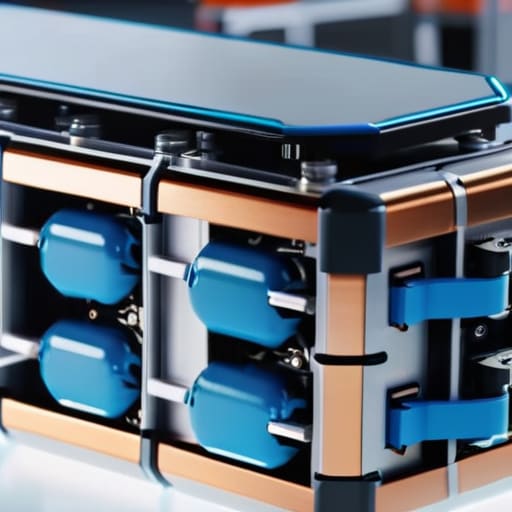
I remember sitting in my dorm at Georgia Tech, surrounded by half-disassembled lithium cells and the sharp, metallic scent of electrolyte leakage, staring at a massive, monolithic battery pack that felt more like a tombstone than a power source. The industry loves to sell us on these seamless, “all-in-one” energy blocks, but from an engineering standpoint, they’re a nightmare waiting to happen. When one single cell in a massive, integrated slab fails, you don’t just fix a part; you essentially trash the entire car. This is why we need to stop romanticizing these sealed black boxes and start getting serious about electric vehicle battery modularity. If we can’t repair, swap, or upgrade the hardware, we aren’t building a sustainable future—we’re just building more high-tech landfill.
I’m not here to give you a marketing brochure or repeat the vague sustainability promises you see in corporate press releases. Instead, I’m going to pull back the curtain on the actual hardware. We’re going to look at the real chemistry, the structural trade-offs, and why modular architecture is the only way to make high-density storage actually affordable for the next generation.
Table of Contents
- Mastering Lithium Ion Cell Interconnectivity for Real World Longevity
- Standardized Battery Module Dimensions the End of Custom Waste
- Hard Truths: How to Build Modules That Don't End Up in a Landfill
- The Bottom Line: Why Modularity is Non-Negotiable
- The Death of the Disposable Battery
- The Bottom Line on Modular Hardware
- Frequently Asked Questions
Mastering Lithium Ion Cell Interconnectivity for Real World Longevity

When you’re looking at a single cell, it’s easy to get lost in the chemistry of the anode and cathode. But once you start scaling up to a full pack, the real battleground is lithium-ion cell interconnectivity. If your connections aren’t rock-solid, you aren’t just losing efficiency; you’re creating hot spots. I’ve seen how even a tiny amount of resistance at a busbar or a poorly crimped tab can turn a high-performance pack into a thermal nightmare. It’s not just about making sure the electricity flows; it’s about ensuring that every single cell in the chain is pulling its weight without stressing its neighbors.
This is where the hardware gets tricky. You can have the most advanced chemistry in the world, but if your thermal management in modular batteries is an afterthought, the whole system is going to degrade prematurely. We need to stop thinking about cells as isolated units and start seeing them as a synchronized network. If we can’t manage the heat distribution across these modules during rapid discharge, we’re basically just building expensive heaters that happen to move cars. Real longevity comes from precision engineering at the junction points, not just better electrolytes.
Standardized Battery Module Dimensions the End of Custom Waste

Right now, the industry is a mess of proprietary shapes and sizes. Every OEM is out here trying to reinvent the wheel, designing bespoke enclosures that look great on a marketing slide but are a nightmare for the supply chain. This fragmentation is a massive bottleneck for EV battery manufacturing efficiency. When every manufacturer uses a unique footprint, we lose the ability to scale production across the board. It’s like trying to build a Lego set where every single brick is a slightly different, custom-molded shape—it’s inefficient, expensive, and frankly, it’s a waste of resources.
If we actually want to drive down costs, we need to push for standardized battery module dimensions. Imagine a world where a module designed for a compact commuter car could be repurposed for a stationary grid storage unit with minimal redesign. By moving toward universal form factors, we can optimize the entire lifecycle of the hardware. This isn’t just about making assembly lines faster; it’s about creating a secondary market for used modules. We can’t claim to be building a sustainable future if we’re still designing hardware that’s destined for a landfill the moment a car is decommissioned.
Hard Truths: How to Build Modules That Don't End Up in a Landfill
- Prioritize serviceability over “glued-in” designs. If a single cell goes south and you have to crack open a proprietary, resin-poured pack to fix it, you haven’t built a battery—you’ve built a very expensive paperweight.
- Standardize your form factors now. We need to stop the industry-wide obsession with custom, vehicle-specific footprints that make it impossible to repurpose old modules for second-life grid storage.
- Implement granular Battery Management Systems (BMS). A modular architecture is useless if your software can’t talk to individual modules; you need real-time data on cell-level impedance to catch degradation before it cascades.
- Design for thermal symmetry. When you’re stacking modules, heat is your biggest enemy. If your cooling channels aren’t uniform across the entire array, you’re going to end up with hot spots that kill your cycle life prematurely.
- Focus on mechanical interlocking, not just electrical. A truly modular system should be able to withstand high-G vibrations without relying on heavy, permanent adhesives that make recycling a nightmare.
The Bottom Line: Why Modularity is Non-Negotiable
We have to move away from the “black box” design philosophy where a single cell failure bricks an entire multi-thousand dollar pack; modularity allows us to repair, not replace.
Standardized form factors are the only way to scale the circular economy, turning battery modules into reusable assets for grid storage rather than just specialized EV scrap.
True sustainability isn’t just about the chemistry inside the cell—it’s about building hardware that is easy to disassemble, upgrade, and reintegrate into the energy ecosystem.
The Death of the Disposable Battery
“We need to stop treating EV batteries like sealed-off black boxes that you toss in a landfill the second one cell goes wonky. If we actually want a sustainable grid and a viable transport sector, we have to design for modularity—building hardware that can be repaired, upgraded, and repurposed, rather than just replaced.”
Desmond Achebe
The Bottom Line on Modular Hardware
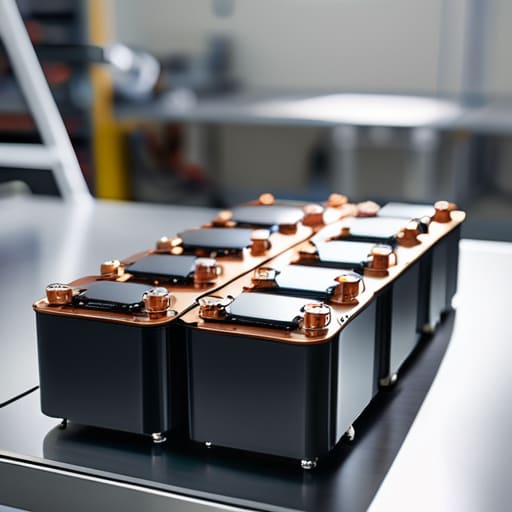
At the end of the day, we can’t keep pretending that the current “black box” approach to EV design is sustainable. We’ve talked about why mastering cell interconnectivity is non-negotiable for long-term reliability and why moving away from custom, one-off dimensions is the only way to stop the tide of specialized electronic waste. If we don’t transition to a system where modules are standardized and easily serviceable, we aren’t actually building a green revolution—we’re just swapping one type of disposable tech for another. Modularity isn’t just a design choice; it is the fundamental requirement for a circular battery economy.
I’m tired of hearing corporate PR teams talk about “net-zero” while they design hardware that’s meant to be shredded the moment a single cell fails. We need to demand better engineering. The shift toward modularity is going to be messy, and the legacy manufacturers will likely fight it to protect their proprietary ecosystems, but the math doesn’t lie. If we get the hardware right, we create a world where energy storage is as scalable and repairable as the tools we use every day. Let’s stop settling for vague promises and start building the durable infrastructure our future actually deserves.
Frequently Asked Questions
If we move to standardized modules, are we going to sacrifice the energy density we get from those highly integrated, "cell-to-chassis" designs that big manufacturers love?
Look, that’s the million-dollar question. If you go cell-to-chassis, you’re basically turning the battery into part of the car’s skeleton, which is great for shaving off weight and boosting density. But it’s a nightmare for repairs. It’s like gluing your phone’s battery directly to the screen. Yeah, you get a slightly thinner device, but the second something goes wrong, the whole thing is e-waste. I’d rather take a slight density hit for modularity than build cars that are unfixable.
How do we handle the software side of things—can a BMS (Battery Management System) actually balance a pack if I swap in a module from a different manufacturer or a different year?
Here’s the reality: software is usually the biggest bottleneck. Most current BMS setups are locked down with proprietary algorithms designed for a very specific cell chemistry and internal resistance profile. If you swap in a module from a different year or manufacturer, you’re essentially asking the software to play a game where the rules just changed. Without a universal communication protocol, the BMS will likely freak out, trigger a fault, or—worse—fail to balance the pack safely.
Is the added weight of the housing and connectors required for modularity actually going to tank the vehicle's overall range?
Look, I get the math. Adding housings and connectors adds mass, and in physics, mass is the enemy of range. If we just slap heavy plastic boxes around every cell, yeah, we’re tanking the efficiency. But we have to look at the trade-off. We’re trading a tiny percentage of theoretical range for a massive leap in lifecycle utility. A slightly heavier car that’s repairable is better than a lighter one that’s a paperweight once the pack dies.
