I remember sitting in my Georgia Tech thermodynamics lab, surrounded by half-disassembled lithium cells and the faint, metallic scent of electrolyte, realizing that the industry was lying to us. Everyone talks about EVs like they’re just glorified smartphones on wheels, but that’s a massive oversimplification that ignores the actual engineering. If you think electric vehicle architecture is just about slapping a heavy battery pack under a chassis and calling it a day, you’re falling for the marketing fluff. The real magic—and the real headache—lies in how the thermal management, power electronics, and cell topology actually talk to each other.
I’m not here to sell you on a lifestyle or some vague “green” utopia. My goal is to strip away the corporate gloss and look at the actual hardware that determines whether an EV is a reliable machine or a depreciating paperweight. We’re going to dive deep into the structural integration and energy distribution systems that define modern electric vehicle architecture. I promise to give you a breakdown grounded in real chemistry and electrical engineering, focusing on the technical realities that will actually dictate how we move in the next decade.
Table of Contents
- The Skateboard Platform Design More Than Just a Pretty Chassis
- Modular Ev Platforms Building for Scalability Not Just Promises
- Real-World Architecture: 5 Things to Look for Beyond the Spec Sheet
- The Bottom Line: Why Architecture Matters More Than the Badge
- The Hardware Reality Check
- The Real Road Ahead
- Frequently Asked Questions
The Skateboard Platform Design More Than Just a Pretty Chassis
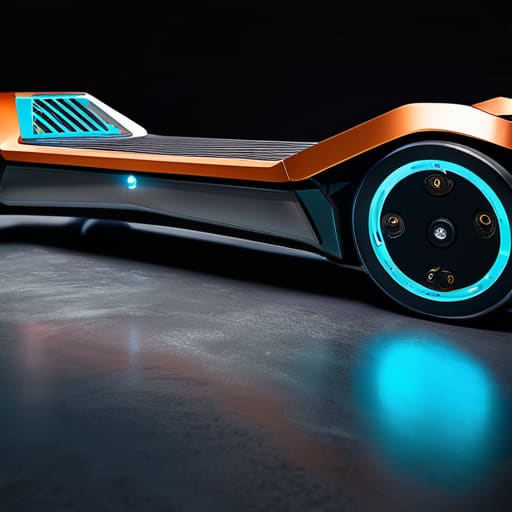
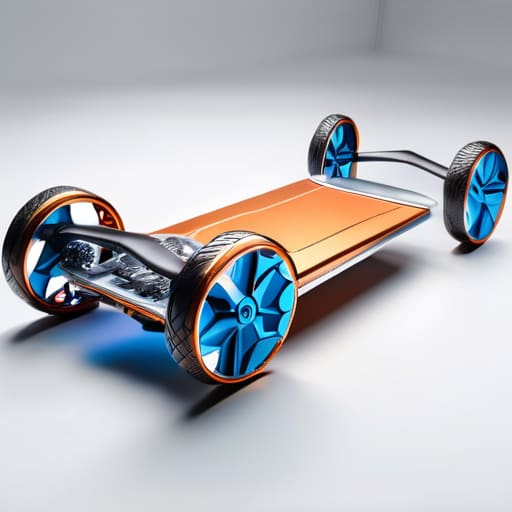
When people talk about EVs, they usually picture the sleek exterior or the massive touchscreen inside. But as an engineer, I’m looking at what’s happening underneath. The industry has shifted toward the skateboard platform design, and it’s honestly a game-changer. By laying the battery pack flat between the wheels, we aren’t just lowering the center of gravity for better handling; we’re fundamentally changing how the car is built. Instead of cramming components into a legacy internal combustion engine frame, we’re building the vehicle around the energy source.
This isn’t just about aesthetics, though. It’s about how we handle the heavy lifting of powertrain integration. When you have a modular layout, you can optimize how the motors, inverters, and battery modules talk to each other. This proximity is crucial for effective thermal management systems, because if you can’t keep those cells at an optimal temperature, your range and lifespan go down the drain. We need to stop treating the battery like an afterthought tucked under a seat and start treating it as the literal foundation of the entire machine.
Modular Ev Platforms Building for Scalability Not Just Promises
The real problem with most legacy automakers isn’t their lack of vision; it’s their lack of flexibility. They’re trying to shoehorn electric components into chassis originally designed for internal combustion, which is a massive waste of engineering potential. This is where modular EV platforms actually change the game. Instead of designing a unique, expensive architecture for every single model, we can use a standardized “building block” approach. This allows a manufacturer to scale from a compact commuter car to a heavy-duty SUV by simply adjusting the wheelbase or the battery pack dimensions within the same fundamental framework.
But scalability isn’t just about making things bigger; it’s about how you handle the underlying complexity. When you’re working with these modular setups, you have to prioritize powertrain integration and thermal management from day one. If the modules don’t communicate perfectly, you end up with uneven cell degradation or, worse, a system that can’t handle rapid charging without overheating. We need to stop treating these platforms like static pieces of hardware and start seeing them as dynamic, scalable ecosystems that can evolve as battery chemistry improves.
Real-World Architecture: 5 Things to Look for Beyond the Spec Sheet
- Prioritize thermal management over raw range. I’ve seen too many “revolutionary” battery packs die prematurely because the architecture couldn’t handle heat dissipation during rapid charging; if the cooling system isn’t integrated into the very bones of the chassis, that high-density cell is just a ticking clock.
- Demand modularity in the battery pack, not just the car. We need architectures where you can swap or repair individual modules rather than tossing an entire $15,000 pack just because one cell went rogue—that’s the only way we make this tech actually sustainable.
- Watch the weight distribution, not just the center of gravity. A good EV architecture uses the battery mass to lower the center of gravity, but if the engineers haven’t accounted for the way that mass affects suspension geometry, you’re just driving a heavy, uninspired brick.
- Check the software-hardware handshake. An EV is basically a rolling computer, so the architecture has to allow for seamless over-the-air updates that actually optimize power draw from the inverter to the motor, rather than just being a marketing gimmick.
- Look for “Cell-to-Pack” efficiency. The old way of stuffing cells into modules, then modules into packs, is incredibly wasteful in terms of space; I’m looking for architectures that integrate cells directly into the structure to squeeze every single watt-hour out of the available volume.
The Bottom Line: Why Architecture Matters More Than the Badge
We have to stop treating EVs like they’re just heavy gas cars with batteries slapped in. A true EV revolution depends on the “skateboard” approach—integrating the powertrain and energy storage into a single, low-center-of-gravity foundation that maximizes space and efficiency.
Scalability isn’t just a corporate buzzword; it’s a survival tactic. Modular platforms allow manufacturers to swap battery chemistries or motor configurations without redesigning the entire car from scratch, which is the only way we’re going to drive down costs for the average person.
The real bottleneck isn’t just how much range a car has, but how the underlying architecture handles thermal management and energy distribution. If the hardware isn’t built to manage heat and discharge cycles efficiently, all the “green” marketing in the world won’t save a degraded battery pack.
The Hardware Reality Check
“Everyone wants to talk about the software updates and the massive touchscreens, but if the underlying architecture isn’t designed to handle thermal management and cell-to-pack efficiency, you’re just putting a high-tech wrapper on a fundamentally broken machine.”
Desmond Achebe
The Real Road Ahead
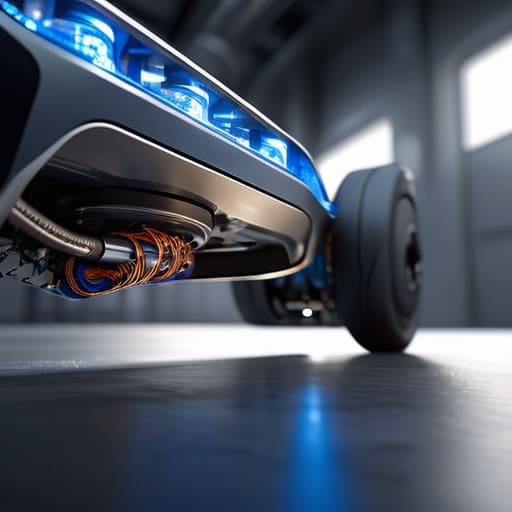
At the end of the day, building an EV isn’t just about slapping a massive battery pack into a frame designed for an internal combustion engine. We’ve seen how that fails—it’s inefficient, heavy, and fundamentally flawed. Real progress happens when we embrace the integrated logic of the skateboard platform and the flexibility of modularity. By decoupling the chassis from the body and optimizing the electrical architecture from the ground up, we move away from clunky, repurposed designs and toward systems that are actually built for the future. It’s about making sure the hardware is as smart as the software running it, ensuring that every kilowatt-hour is used with maximum efficiency.
I’m not interested in the marketing fluff or the “zero emissions” slogans that don’t account for the lifecycle of the components. I want to see architectures that are easy to repair, simple to scale, and—most importantly—built around sustainable chemistry and hardware. The transition to electric mobility is a massive engineering hurdle, but if we stop chasing superficial aesthetics and start focusing on the grit of the electrical architecture, we can actually build something that lasts. The tech is finally catching up to the ambition; now we just need to make sure we build the foundation correctly.
Frequently Asked Questions
If we go all-in on these skateboard platforms, how much are we actually sacrificing in terms of cabin space and interior flexibility compared to traditional ICE layouts?
Honestly, it’s a massive trade-off, but usually in our favor. In a traditional ICE layout, you’re losing floor space to a transmission tunnel and a bulky engine block. With a skateboard platform, you’re basically working with a flat, open floor. You gain way more legroom and interior flexibility, though you might lose some “frunk” depth if the battery pack is packed too tight. We’re trading mechanical complexity for living space.
With modularity being the big selling point, how do manufacturers prevent the "jack of all trades, master of none" problem where a platform is too generic to be efficient for specific vehicle types?
It’s a valid concern. If you try to make one platform fit a heavy-duty truck and a tiny city commuter, you end up with a compromise that satisfies neither. Manufacturers dodge this by using “variable architecture.” They don’t just change the body; they tweak the cell chemistry and the battery pack’s physical footprint. For a truck, you might swap high-density cells for high-power cells to handle heavy loads, even if it means a slightly different modular layout.
From a long-term sustainability standpoint, how much harder is it to recycle these integrated, modular architectures once the battery pack is physically fused into the chassis?
Honestly? It’s a massive headache. When we fuse the battery pack directly into the chassis to save weight and lower the center of gravity, we’re basically creating a “monolithic” nightmare for recyclers. Instead of just popping out a modular pack, they’re stuck dealing with structural adhesives and integrated components that are a pain to deconstruct. It’s a classic engineering trade-off: better performance today, but a much harder time recovering those precious minerals tomorrow.
