
I remember sitting in a cramped lab at Georgia Tech, staring at a lithium-ion cell that had just undergone a thermal runaway event. The smell of scorched polymer and the sight of a bloated casing was a brutal reality check against the glossy, optimistic press releases coming out of the big automotive players. Everyone loves to talk about the “revolution” of electric mobility, but most of that conversation is just marketing fluff designed to keep stock prices high. If we’re actually going to solve the range and safety issues that keep people from ditching their gas guzzlers, we need to stop treating solid electrolyte materials like some magical, upcoming miracle and start looking at the brutal chemical realities of interface resistance and dendrite growth.
I’m not here to sell you on a fantasy or repeat the same vague corporate promises you see on LinkedIn. My goal is to strip away the hype and look at the actual hardware. I’m going to break down the current state of solid electrolyte materials by looking at the real data—from sulfide-based conductors to oxide ceramics—so you can understand which technologies are actually scalable and which ones are just expensive lab curiosities.
Table of Contents
- Solving Lithium Ion Battery Safety Through Real Chemistry
- Decoding the Electrochemical Stability Window for Real Gains
- Cutting Through the Noise: 5 Hard Truths About Implementing Solid Electrolytes
- The Bottom Line: Moving Beyond the Hype
- ## Moving Past the Liquid Bottleneck
- The Bottom Line on Solid-State Tech
- Frequently Asked Questions
Solving Lithium Ion Battery Safety Through Real Chemistry
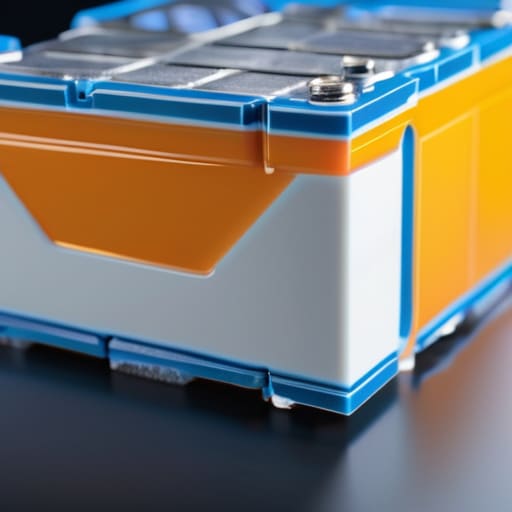
The biggest anxiety I hear when people talk about EVs isn’t range—it’s the fear of a thermal runaway event. Let’s be real: current liquid electrolytes are basically fuel waiting for a spark. If a cell gets punctured or overheats, that liquid is highly flammable, and once a fire starts, it’s incredibly hard to stop. This is where the shift toward all-solid-state batteries becomes a game-changer rather than just a buzzword. By replacing that volatile liquid with a solid medium, we aren’t just tweaking the design; we are fundamentally removing the primary fuel source for battery fires.
However, it’s not as simple as just swapping one material for another. The real engineering headache lies in the interfacial resistance in electrolytes. When you move to a solid-to-solid interface, getting the ions to move smoothly between the electrode and the electrolyte is a nightmare. If the contact isn’t perfect, you lose efficiency and stability. We have to master the chemistry of sulfide-based solid electrolytes or ceramic alternatives to ensure we can actually handle high voltages without the system breaking down. We need hardware that is inherently safe, not just “safe enough” with more cooling loops.
Decoding the Electrochemical Stability Window for Real Gains

Here is the technical reality most marketing brochures skip: the electrochemical stability window is where the dream of high-energy density either lives or dies. In a standard liquid setup, we’re constantly fighting against the electrolyte decomposing at the electrode surfaces. When we transition to all-solid-state batteries, we aren’t just swapping a liquid for a solid; we are fundamentally changing how the ions navigate the voltage limits of the material. If the window is too narrow, the electrolyte itself begins to break down under high voltage, creating a messy layer of degradation that kills your cycle life.
This is where things get messy with the two main contenders: sulfide-based solid electrolytes and oxide-based ceramic electrolytes. Sulfides are great for conductivity, but they can be temperamental when they hit the high-voltage cathode. On the flip side, oxides are incredibly stable, but they bring a massive headache in the form of interfacial resistance in electrolytes. If the contact between the solid particles isn’t perfect, the ions just can’t move efficiently. We can’t just engineer better materials; we have to engineer the entire interface to survive the stress of real-world charging.
Cutting Through the Noise: 5 Hard Truths About Implementing Solid Electrolytes
- Stop obsessing over energy density alone. If your solid electrolyte can’t maintain a stable interface with the lithium anode during cycling, that high density is just a theoretical number on a spec sheet that won’t survive a real-world charge cycle.
- Watch the mechanical properties, not just the conductivity. A material might have great ionic conductivity in a lab setting, but if it’s too brittle to handle the volume expansion of the electrodes, the battery will crack and fail before it even hits the consumer market.
- Demand transparency on manufacturing scalability. It’s easy to make a perfect thin-film solid electrolyte in a controlled university lab, but if we can’t produce it at scale without massive defects, it’s not a solution—it’s a science project.
- Don’t ignore the “interfacial resistance” trap. The biggest hurdle isn’t just moving ions through the solid medium; it’s getting them to jump from the electrode to the electrolyte without hitting a massive wall of resistance at the contact point.
- Look for “all-solid-state” synergy, not just a component swap. You can’t just drop a solid electrolyte into an existing liquid-based architecture and expect magic; you have to redesign the entire cell chemistry to actually leverage the benefits of a solid state.
The Bottom Line: Moving Beyond the Hype
Safety isn’t just a feature; it’s the foundation. Swapping out flammable liquid electrolytes for solid-state alternatives is the only way we move past the “thermal runaway” anxiety that keeps people from going fully electric.
Energy density is a chemistry game, not a marketing one. If we want real-world range that competes with gas, we have to master the electrochemical stability window to prevent the battery from literally eating itself at high voltages.
Sustainability requires more than just a “green” label. We need to focus on the actual hardware and material science—specifically finding solid electrolytes that don’t rely on fragile, high-cost supply chains—if we want this tech to actually scale for everyone.
## Moving Past the Liquid Bottleneck
“We can keep tweaking liquid electrolytes to squeeze out another 1% of efficiency, but if we don’t solve the fundamental instability of the interface with solid-state materials, we’re just rearranging deck chairs on a sinking ship. The future of energy density isn’t in better additives; it’s in the actual architecture of the solid electrolyte.”
Desmond Achebe
The Bottom Line on Solid-State Tech

At the end of the day, we can’t just wish our way into a decarbonized grid or a world of long-range EVs. We’ve looked at how solid electrolytes fundamentally rewrite the safety playbook by removing those volatile liquid components, and we’ve seen why mastering the electrochemical stability window is the only way to actually squeeze more energy out of every gram of material. It’s not about the flashy press releases from car manufacturers; it’s about the granular reality of interface resistance and ion conductivity. If we don’t get the chemistry right at the molecular level, all the fancy software in the world won’t stop a battery from degrading prematurely or, worse, failing under stress.
We are standing at a massive inflection point in energy density and safety. Transitioning away from the “gas guzzler” era isn’t just a dream—it’s a massive engineering challenge that requires us to be ruthlessly pragmatic about the hardware we build. I’m tired of seeing companies pivot to vague sustainability goals without showing the math on their cell chemistry. But if we stay focused on the real science—the actual solid-state breakthroughs that make high-density storage stable and scalable—then the future of mobility isn’t just inevitable; it’s actually going to be better than what we have now. Let’s stop chasing the hype and start building the infrastructure.
Frequently Asked Questions
If solid electrolytes solve the safety issues, why aren't we seeing them in consumer EVs right now instead of just hearing about them in lab papers?
Look, it’s the classic “lab-to-pavement” gap. In the lab, we can make a solid-state cell work perfectly under controlled conditions, but scaling that to a million cars is a different beast. We’re fighting massive hurdles with interfacial resistance—basically, getting the solid layers to actually touch and exchange ions efficiently at scale. Plus, manufacturing processes for these materials are still incredibly expensive compared to the liquid electrolyte lines we use now. We’re not there yet.
How do we actually solve the interface problem—specifically, how do we stop the solid electrolyte from cracking when the lithium metal expands during charging?
This is the million-dollar question. When you charge a battery, that lithium metal doesn’t just sit there; it grows like a crystal, and that mechanical stress is a killer for solid electrolytes. We can’t just hope it doesn’t crack. We have to engineer “compliant” interfaces—think of it like adding a microscopic shock absorber between the metal and the electrolyte. Whether it’s using polymer coatings or designing architectures that can physically accommodate that volume expansion, we need mechanical resilience, not just chemical stability.
From a manufacturing standpoint, is it even possible to scale these solid-state cells without making the price tag so high that they're only for luxury cars?
Honestly, that’s the million-dollar question. Right now, we’re stuck in the “lab-scale trap”—everything works perfectly in a controlled environment, but scaling up often kills the margins. If we rely on expensive vapor deposition or high-pressure sintering for every single cell, yeah, they’ll stay luxury-only. To win, we have to bridge the gap between boutique lab processes and high-throughput roll-to-roll manufacturing. We don’t just need better chemistry; we need better factory floors.
