
I remember sitting in my Georgia Tech lab, surrounded by half-disassembled lithium-ion cells and the faint, metallic tang of electrolyte, realizing that the industry’s obsession with “perfect” new cells was a massive distraction. Everyone talks about the miracle of solid-state tech like it’s a magic wand, but they’re ignoring the massive mountain of spent hardware sitting in warehouses right now. If we want to actually claim we’re building a green future, we need to stop treating retired EV packs like hazardous waste and start mastering second life battery use. It’s not about waiting for some futuristic breakthrough; it’s about the real-world chemistry we already have in our hands.
Look, I’m not here to sell you on corporate greenwashing or vague ESG promises that don’t hold up under a multimeter. I want to talk about the actual logistics of repurposing these modules for grid storage and stationary power. In this post, I’m going to break down the hardware realities and the infrastructure gaps that determine whether second life battery use is a viable solution or just another expensive pipe dream. No hype, just the data.
Table of Contents
- Why Lithium Ion Battery Degradation Isnt the End of the Road
- Moving Beyond Vague Promises Toward a True Circular Economy for Batteries
- Stop Treating Old Cells Like Scrap: 5 Ways to Actually Scale Second-Life Tech
- The Bottom Line on Battery Longevity
- The Myth of the "Dead" Battery
- The Real Bottom Line
- Frequently Asked Questions
Why Lithium Ion Battery Degradation Isnt the End of the Road

When we talk about lithium-ion battery degradation, most people think of it as a death sentence. They see a drop in capacity and assume the hardware is junk. But from an engineering standpoint, that’s a massive misconception. A battery that has lost 20% of its original capacity is still a powerhouse; it just isn’t fit for a high-performance EV that needs to hit 0-60 in three seconds. In my lab days at Georgia Tech, we looked at how chemical aging shifts the performance curve, but it doesn’t mean the ions have stopped moving. It just means the energy density has shifted out of the premium bracket.
Instead of seeing a “dead” battery, we should see a transition in purpose. Once a pack no longer meets the rigorous demands of a vehicle, it becomes prime real estate for grid-scale energy storage solutions. We can repurpose these modules to buffer solar farms or stabilize local grids during peak hours. We aren’t just delaying the inevitable; we are building a functional bridge between high-mobility tech and stationary infrastructure, ensuring the chemistry actually works as hard as possible before it ever hits a recycling facility.
Moving Beyond Vague Promises Toward a True Circular Economy for Batteries
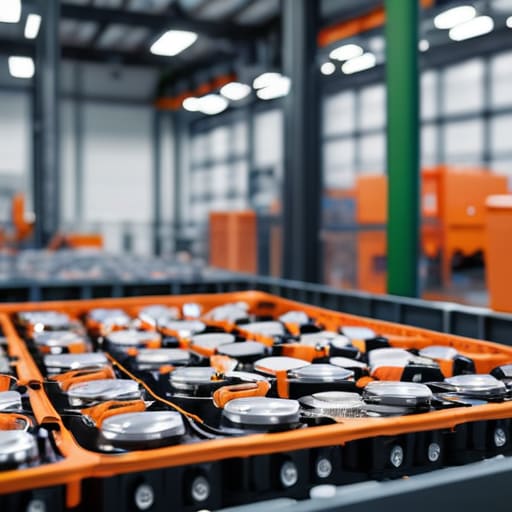
The problem with most corporate sustainability reports is that they treat the term “circular economy” like a buzzword rather than a logistical necessity. It’s easy to print a glossy PDF claiming carbon neutrality, but it’s a lot harder to actually build the infrastructure required for a real circular economy for batteries. We can’t just keep pulling raw materials out of the ground, using them once, and then tossing the spent cells into a landfill because they lost 20% of their capacity. That’s not a loop; that’s just a slower way to deplete the planet.
To actually make this work, we need to move past the hype and focus on standardized battery health assessment methods. If we want to transition these packs from EVs into stationary energy storage system applications, we need data we can actually trust. I’m talking about rigorous, automated testing that tells us exactly how much life is left in a module before we attempt to integrate it into a grid-scale project. Until we bridge the gap between “it’s an old battery” and “it’s a reliable asset,” we’re just spinning our wheels.
Stop Treating Old Cells Like Scrap: 5 Ways to Actually Scale Second-Life Tech
- Stop looking for perfection; if a battery pack drops to 70% or 80% capacity, it’s “dead” for a high-performance Tesla, but it’s a goldmine for stationary grid storage.
- We need standardized modularity—if every manufacturer uses a proprietary, glued-shut casing, we’ll never be able to efficiently pull cells out for reuse without a massive headache.
- Prioritize “Smart” BMS (Battery Management Systems) that track health data from day one; if we don’t have a digital paper trail of how those cells were charged and discharged in their first life, we’re just guessing at their safety in the second.
- Focus on localized microgrids rather than massive, centralized plants; using retired EV batteries to stabilize neighborhood solar arrays is a much faster way to build real resilience.
- Demand transparency on the chemistry; we can’t build a circular economy if we don’t know exactly what’s inside the cells, especially when it comes to recycling the cobalt and nickel once the second life is finally over.
The Bottom Line on Battery Longevity
We need to stop viewing a 70% state-of-health battery as “broken” and start seeing it as a high-value asset for stationary storage.
True sustainability isn’t a marketing buzzword; it requires building the actual physical infrastructure to test, sort, and repurpose cells before they ever hit a recycling plant.
The transition to electric mobility only works if we solve the lifecycle problem now, ensuring we aren’t just trading a carbon crisis for a massive, unmanaged pile of lithium-ion waste.
The Myth of the "Dead" Battery
“We need to stop treating an EV battery with 70% capacity like it’s a piece of scrap metal. To an engineer, that’s not a failure; it’s a massive, ready-to-use energy reservoir that’s just waiting for a new job in the grid.”
Desmond Achebe
The Real Bottom Line
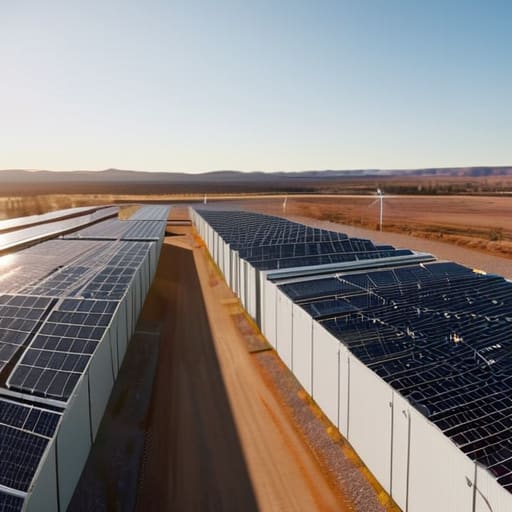
Look, we can’t keep pretending that a battery is “dead” just because it can’t power a Tesla from 0 to 60 anymore. We’ve established that degradation is a spectrum, not a cliff, and that the chemistry inside those packs still has massive potential for stationary storage or grid stabilization. If we actually implement the circular economy models we’ve discussed—moving from EV traction to secondary grid use—we solve two problems at once: we extend the lifecycle of expensive materials and we bridge the gap for renewable energy storage. The math is simple: reusing what we already have is objectively more efficient than constantly digging more lithium out of the ground to replace what we’ve already extracted.
The transition to electric mobility is going to be messy, and it’s definitely not going to happen overnight through corporate press releases alone. It’s going to happen through smart engineering and the grit to build the infrastructure that treats every single cell as a valuable asset rather than a future waste problem. I’m optimistic because I see the hardware getting better every day, but I’m skeptical of anyone who says we can go green without a serious plan for the hardware lifecycle. We have the chemistry; now we just need the collective willpower to build a system that actually lasts.
Frequently Asked Questions
If these batteries are being repurposed for stationary storage, how do we actually track their health and safety profiles once they leave the vehicle?
That’s the million-dollar question. We can’t just rip a pack out of a Tesla and hope for the best; that’s how you end up with a thermal runaway event in a warehouse. We need standardized Battery Management System (BMS) data logging. Ideally, every pack should have a digital “passport” that tracks its cycle count, temperature spikes, and internal resistance. If we don’t mandate a transparent, interoperable way to read that health data, second-life storage is just a massive liability.
Is the energy required to collect, test, and reconfigure these old modules actually lower than the carbon footprint of just manufacturing new ones?
Look, I get the skepticism. If we spend more energy processing an old module than we save by not mining new lithium, we’ve failed. But the math actually leans heavily in favor of reuse. Manufacturing a new cell is an energy-intensive nightmare of high-heat smelting and chemical synthesis. Testing and reconfiguring existing modules is mostly just mechanical work and low-voltage electronics. It’s a fraction of the embodied energy cost. We aren’t just saving materials; we’re dodging the massive carbon debt of new production.
What's the real-world bottleneck preventing companies from scaling second-life infrastructure right now—is it the chemistry, the logistics, or just the lack of regulation?
Honestly? It’s a messy trifecta, but logistics and regulation are the real killers. The chemistry is actually fine—a battery that’s too “tired” for a Tesla still has massive potential for stationary grid storage. The problem is we don’t have a standardized way to test and certify that state-of-health across different manufacturers. Without a clear regulatory framework or a streamlined way to move these heavy, volatile packs from EVs to warehouses, the economics just don’t scale.
