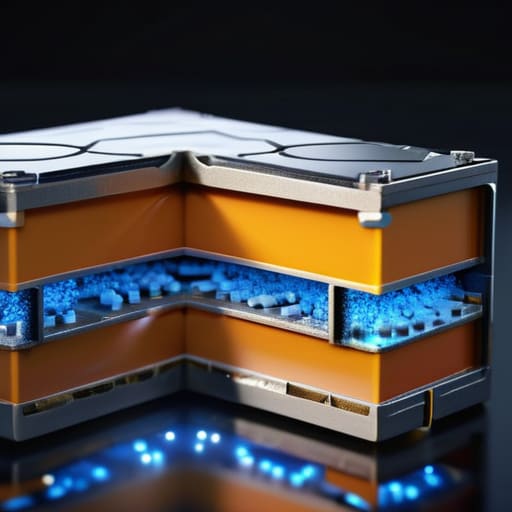
I still remember the smell of ozone and scorched solder in my Georgia Tech lab during finals week, staring at a lithium-ion cell that had just hit its breaking point. I was trying to push a prototype to its absolute limit, convinced that if I could just map the exact moment of failure, I’d solve the longevity puzzle. But the reality wasn’t some clean, mathematical curve; it was a messy, violent struggle of ions fighting through electrolyte. Most people treat battery discharge cycles like they’re just a countdown clock on a smartphone, but if you actually look at the chemistry, every single cycle is a microscopic tug-of-war that physically reshapes the internal structure of the cell.
I’m not here to give you the sanitized, corporate version of how energy storage works. We’ve all seen the marketing fluff promising “infinite life,” but I want to talk about the actual hardware and the brutal physics that dictate how long your tech will actually last. In this post, I’m breaking down the real-world impact of battery discharge cycles without the greenwashing. We’re going to look at the data, the degradation patterns, and what you actually need to know to make sure your transition to electric isn’t just a temporary fix.
Table of Contents
- State of Charge vs Depth of Discharge the Chemistry of Decay
- Why Lithium Ion Battery Longevity Is More Than Just Marketing
- How to Stop Killing Your Cells: 5 Real-World Rules for Longevity
- The Bottom Line: How to Actually Protect Your Hardware
- ## The Myth of the "Infinite Cycle"
- The Bottom Line on Battery Life
- Frequently Asked Questions
State of Charge vs Depth of Discharge the Chemistry of Decay

People love to treat their battery percentage like a simple countdown timer, but the chemistry doesn’t care about your convenience. When we talk about state of charge (SoC) vs depth of discharge (DoD), we aren’t just talking about numbers on a screen; we’re talking about the physical stress placed on the internal lattice of the cell. If you constantly run your device or EV down to zero, you’re forcing the lithium ions to migrate through the electrolyte under extreme gradients, which is basically like asking a marathon runner to sprint while dehydrated. This deep cycling is one of the most aggressive battery degradation factors out there, causing permanent structural shifts in the electrodes.
It’s a delicate balancing act. If you keep your battery pinned at 100% all the time, you’re essentially keeping the cells in a high-voltage state of tension that accelerates oxidation. To maximize lithium-ion battery longevity, the “sweet spot” is usually somewhere in the middle. Think of it like a rubber band: you don’t want it completely slack, but if you keep it stretched to its absolute limit 24/7, it’s eventually going to lose its elasticity. Real-world battery cycle life optimization means learning to live in that middle zone.
Why Lithium Ion Battery Longevity Is More Than Just Marketing
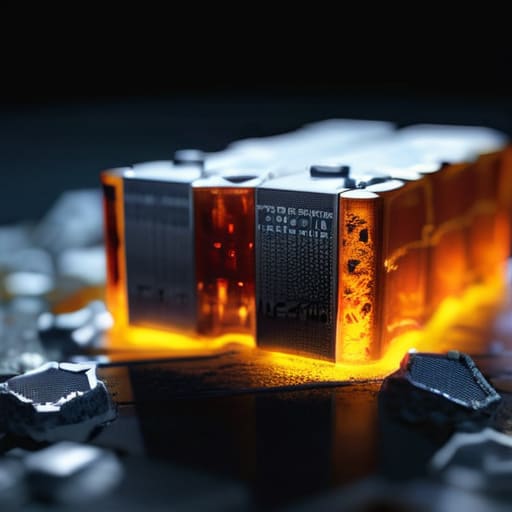
Look, every EV manufacturer loves to throw around numbers like “10-year warranties” or “300,000 miles of range,” but those are often calculated in a vacuum. In the real world, lithium-ion battery longevity isn’t just a static number on a spec sheet; it’s a moving target influenced by how you actually treat the hardware. You can have the most advanced cell chemistry in the world, but if you’re constantly slamming the throttle or letting the pack sit at zero percent in a freezing garage, those marketing claims are going to evaporate pretty quickly.
The truth is, there are several hidden battery degradation factors that the glossy brochures conveniently gloss over. It’s not just about how many times you plug the car in; it’s about the thermal stress and the internal resistance building up every single time the ions migrate through the electrolyte. If we want to move past the hype, we have to acknowledge that managing the physical limits of the chemistry is way more important than whatever sticker they slapped on the window.
How to Stop Killing Your Cells: 5 Real-World Rules for Longevity
- Stop treating your battery like a gas tank. If you’re constantly running it from 100% down to 0%, you’re basically putting your cells through a stress test every single day. Aim for that 20-80% sweet spot; it keeps the internal voltage from getting too aggressive and slows down that inevitable chemical decay.
- Heat is the silent killer. I’ve seen too many people leave their EVs or e-bikes sitting in a sun-baked parking lot while they’re at 100% charge. High temperatures combined with high voltage is like a pressure cooker for lithium plating. If you can, keep your gear in the shade or a climate-controlled space.
- Fast charging is a necessary evil, but don’t make it your default. Those massive currents are great when you’re on a road trip, but they force ions to move so fast they can actually get stuck in the anode, creating dendrites. Use slow, trickle-style charging for your daily routine to keep the internal structure stable.
- Don’t let your gear sit “dead” in a drawer. If you’re storing a battery for a few months, don’t leave it at 0% or 100%. A completely depleted cell can undergo a permanent chemical shift that makes it refuse to take a charge ever again. Store it around 50%—it’s the most stable state for the chemistry to rest in.
- Watch the “phantom drain” and deep discharge cycles. If you notice your device is constantly losing juice even when it’s not in use, or if you’re frequently letting it die completely, you’re accelerating the degradation of the electrolyte. Treat every deep discharge like a tiny bit of your battery’s lifespan is being burned away.
The Bottom Line: How to Actually Protect Your Hardware
Stop treating your battery like a gas tank; frequent deep discharges are essentially “micro-traumas” to the lithium-ion structure that accelerate capacity loss.
The “sweet spot” isn’t just a suggestion—keeping your charge between 20% and 80% is the single most effective way to minimize the chemical stress of voltage fluctuations.
Don’t let manufacturers fool you with vague longevity claims; true sustainability depends on managing thermal loads and cycle depth, not just how many miles the car says it can go.
## The Myth of the "Infinite Cycle"
We need to stop treating battery life like a countdown timer and start seeing it as a chemical budget; every time you push a cell to its absolute limit, you’re essentially spending the very stability that keeps the system alive.
Desmond Achebe
The Bottom Line on Battery Life
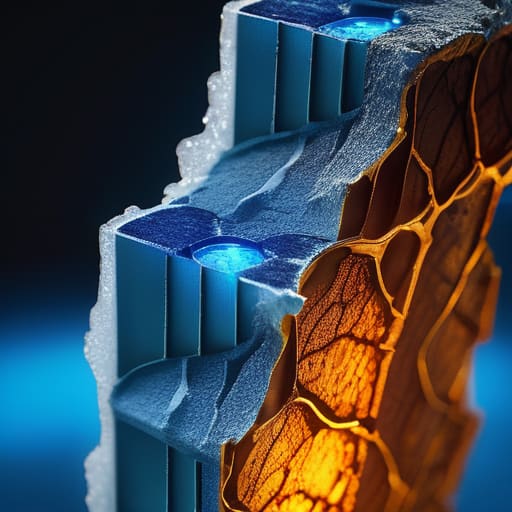
At the end of the day, managing your battery isn’t about following some arbitrary rulebook; it’s about respecting the physical limits of the chemistry inside the cell. We’ve looked at how shallow discharge cycles and managing your state of charge can prevent the kind of rapid degradation that turns an expensive EV into a driveway ornament. If you treat your battery like a bottomless pit of energy, the chemistry is going to punish you through plating and structural decay. Understanding the nuance between a simple charge level and the actual stress of a deep discharge cycle is what separates a smart user from someone just riding the hype wave.
We are standing at the edge of a massive energy transition, but we can’t build a sustainable future on hardware that’s designed to be disposable. If we want to move away from the gas-guzzler era for good, we have to demand better stability and more transparent data regarding how these cells actually age in the real world. I’m optimistic because the engineering is getting better every single day, but we need to stay grounded in the hard science rather than the marketing gloss. Let’s focus on building a grid and a fleet that actually lasts.
Frequently Asked Questions
Does fast charging actually accelerate the degradation caused by deep discharge cycles, or is that just a myth?
It’s definitely not a myth, but it’s also not a simple one-to-one relationship. Think of it like this: deep discharge cycles are like running a marathon every single day—it’s pure mechanical stress on the ions. Fast charging is like trying to shove a gallon of water through a tiny funnel in five seconds. It creates massive heat and “plating,” where lithium builds up on the anode instead of moving through it. When you combine both, you’re basically redlining the chemistry from both ends.
If I keep my EV battery between 20% and 80% to save the chemistry, am I actually losing out on the range I paid for?
Look, it’s a trade-off, and honestly, it’s a bit of a psychological trap. You aren’t “losing” the range you paid for; you’re just choosing not to use the full capacity of the tank to avoid the high-stress zones. Think of it like redlining an engine—you can do it, but you wouldn’t want to every single day. If you need the full 100% for a road trip, use it. Just don’t make a habit of living at the extremes.
How much of the "battery health" decline is actually physical wear on the electrodes versus just software-induced throttling?
It’s a mix, but don’t let the software excuses fool you. When you see your range drop, a chunk of that is definitely the Battery Management System (BMS) throttling performance to prevent a total meltdown. That’s the software “protecting” you. But the real killer is the physical wear—the actual fracturing of the electrode lattice and the buildup of the SEI layer. The software just manages the symptoms; the chemistry is what’s actually dying.
